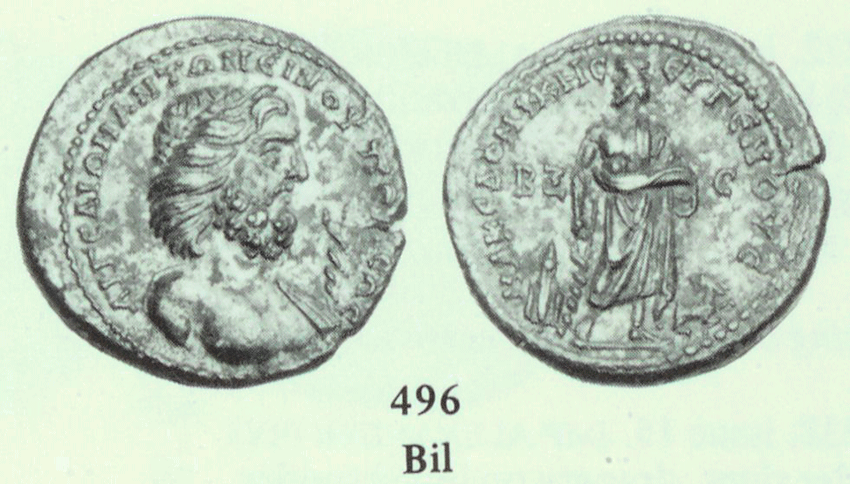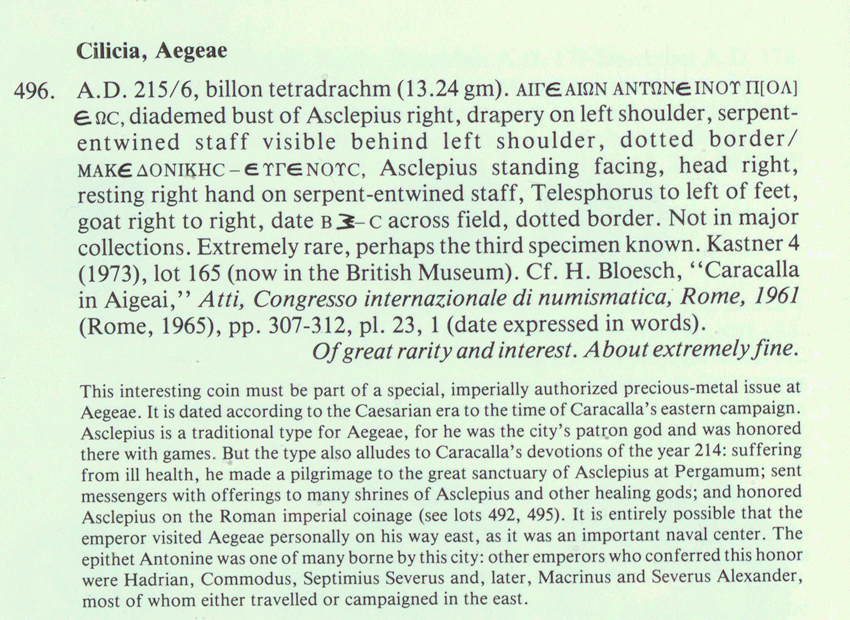
Roman Empire, Cilicia, Aegae. Pseudo-autonomous issue. temp. Caracalla. 198-217 AD. c. 215/216 AD (RY 262)
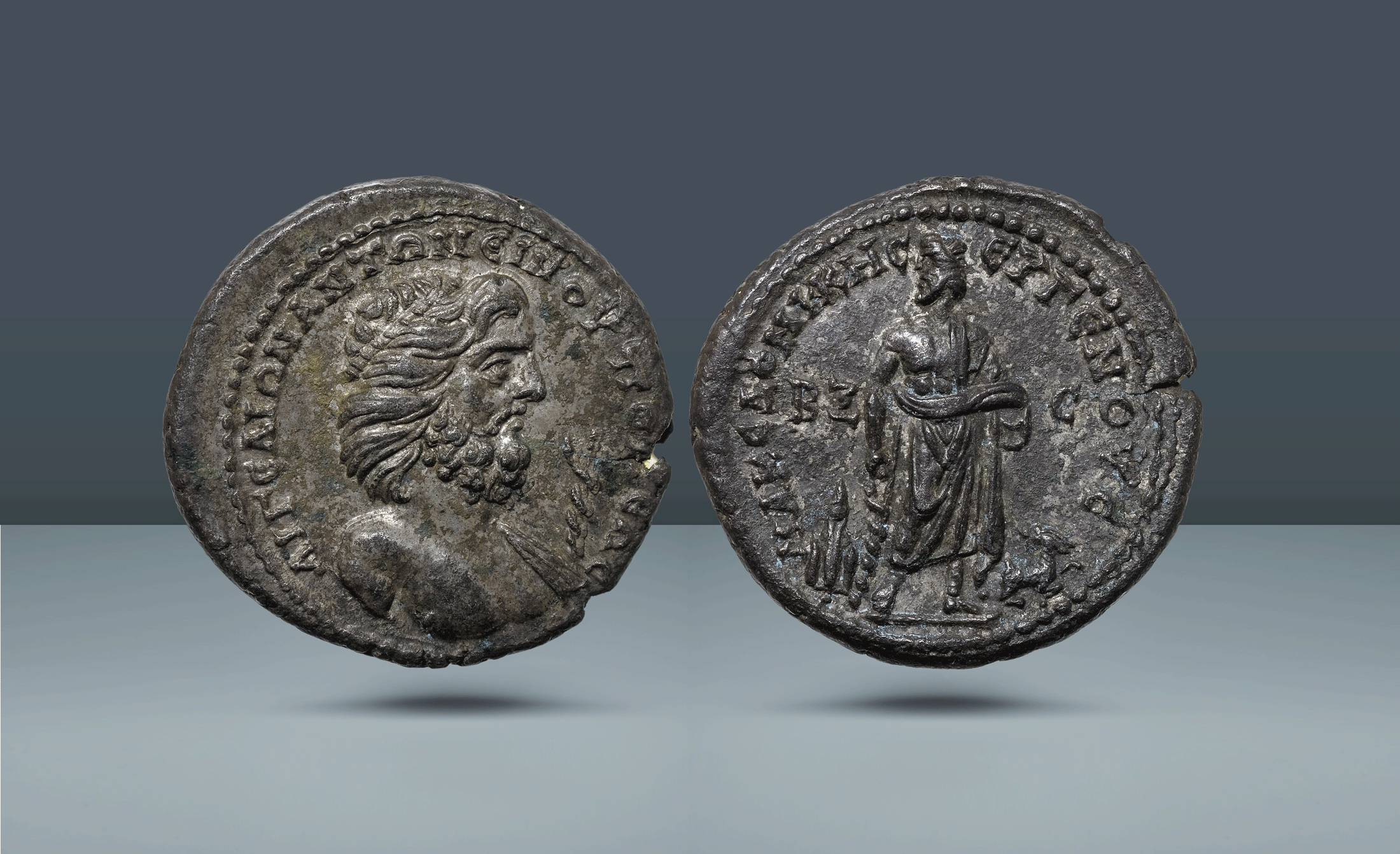
Roman Empire, Cilicia, Aegae. Pseudo-autonomous issue. temp. Caracalla. 198-217 AD. c. 215/216 AD (RY 262)
AR Tetradrachm, 13.31g (29mm, 5h)
AIΓЄAIΩN ANTΩNЄINOY ΠO[Λ]ЄΩC, bust of Asclepius to r., wearing taenia and with serpent-entwined staff before / MAKЄΔONIKHC ЄYΓЄNOYC, Asclepius standing facing, head to l., leaning on serpent-entwined staff; to his l., Telesphorus standing facing and to his r., goat kneeling; BΞ–C (date) across central field.
Pedigree: Ex NFA XVI, December 1985, lot 496; CNG Triton XX, 2017, lot 458; Triton XVIII, 2015, lot 886. From the Dr. Patrick H. C. Tan and Edoardo Levante Collections.
References: Haymann 101a; Prieur 723 (this and 2 examples); H. Bloesch, "Caracalla in Aigeai," Congresso internazionale di numismatica Roma 1961, vol. 2: Atti (Rome: 1965), pp. 307-8, pl. 23, 1 var. (date written out in words rather than expressed in numerals) SNG France –; Kastner 4, 1973, lot 165 var. (date arranged differently in field).
Grade: Undoubtedly the finest known of this type. It is a rare die with only a few known. Wonderfully struck with lovely surfaces. FDC
re1483
Scroll down for more information about this coin.
The Asclepieion at Aegeae, a port in Cilicia, ranked among the best known healing sanctuaries of the Roman Empire, and it may have rivaled Epidaurus, Kos, and Pergamon for pilgrims. It thrived in the second and third centuries AD, until Constantine ordered it demolished around 326. No one has ever excavated the site, so our knowledge of it rests on coins, monumental inscriptions, and ancient writers.
The sanctuary followed the Greek medical practice of incubation. A supplicant would undergo purification, sacrifice an animal (often a rooster), and then spend the night in a special hall, hoping Asclepius would come to them in a dream to cure them outright or tell them what treatment to follow. Eusebius, no friend of the cult, conceded that the god “sometimes appeared to those who passed the night in his temple.” According to Philostratus, the young Apollonius of Tyana took up residence in the temple itself, and visitors traveled from across Cilicia to meet him.
Aegeae also had unusually close ties to the emperors. Coins suggest that Caracalla visited in 215 on his way to Antioch, though nothing else confirms it. The record for his successors is firmer. In 231 Severus Alexander made the city neokoros, or “temple-warden,” of Asclepius and took the post of high priest of the cult for himself. Under Decius the city was renamed Asklepioupolis, “city of Asclepius,” a title no other city in the empire held.