
Anglo-Saxon, England. Harold II, Ulfketill (moneyer). 1066 AD. York, c. 1066 AD
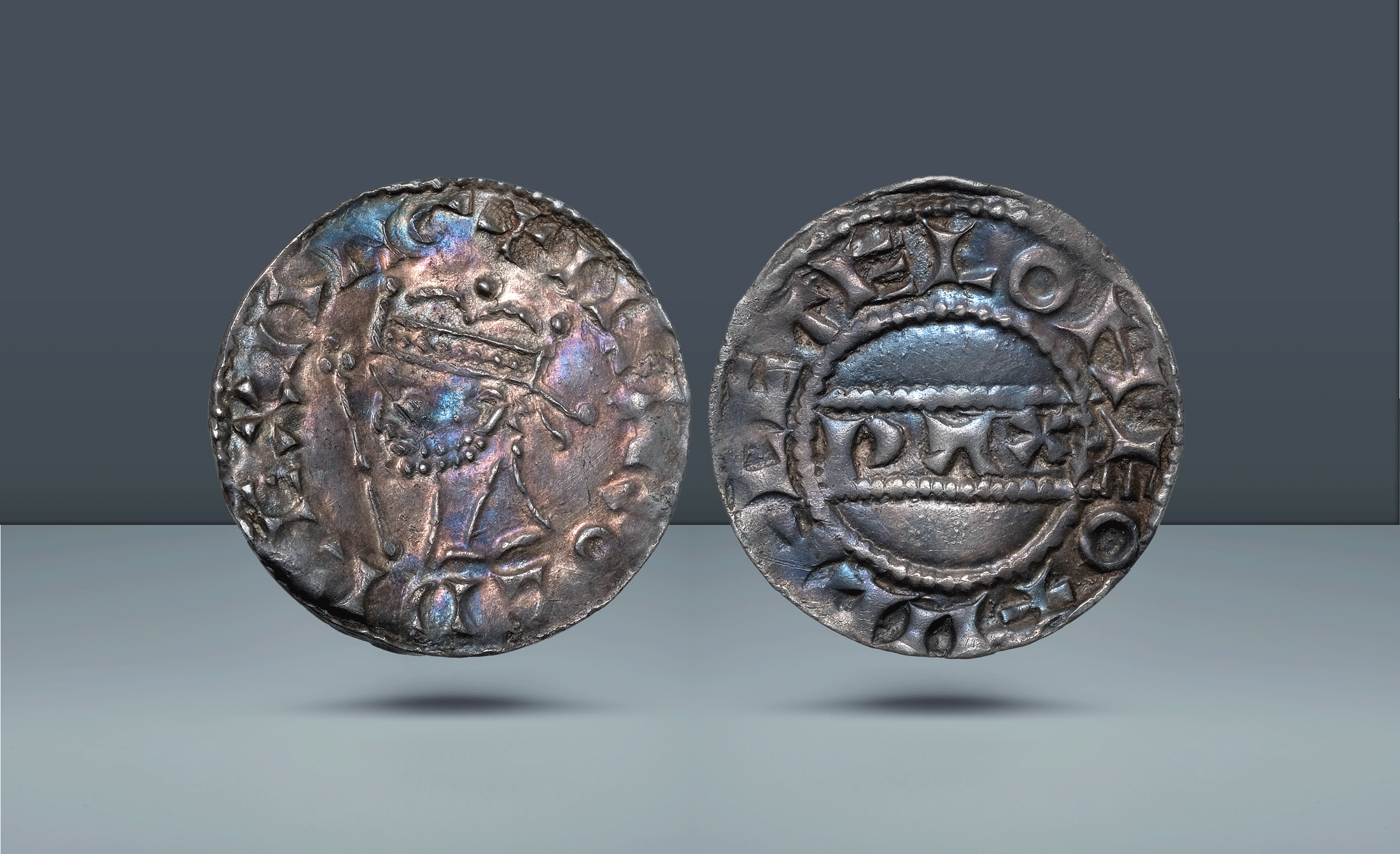
Anglo-Saxon, England. Harold II, Ulfketill (moneyer). 1066 AD. York, c. 1066 AD
AR Penny, 1.35g (18mm, 11h)
Pax type - Crowned head left, scepter to left / PΛX across central field.
References: SCBI 21 (Yorkshire), 693 (same dies); North 836; SCBC 1186.
Grade: Lovely iridescent toning. Rare and EF
wc1377
Scroll down for more information about this coin.
Harold was the son of Earl Godwin of Wessex, the most powerful nobleman in England under Edward the Confessor. The family's position was not always secure. In 1051, following a dispute with the king, Godwin and his sons were exiled. However, they returned in force the following year and were restored to their earldoms. When Godwin died in 1053, Harold succeeded him as Earl of Wessex. Over the following decade, he became Edward's most important military commander, most notably leading a successful campaign against Gruffydd ap Llywelyn of Wales in 1063.
Edward the Confessor died on 5 January 1066, and according to English sources he named Harold as his successor on his deathbed. Harold was crowned the following day. As such, his reign lasted only from 6 January to 14 October. Throughout the summer, Harold kept an army and fleet on the south coast in anticipation of a Norman invasion. By early September, however, his supplies were exhausted, and he was forced to disband them.
The first invasion came from the north. Harald Hardrada of Norway, joined by Tostig, landed in Yorkshire and defeated the northern earls Edwin and Morcar at Fulford on 20 September. Harold marched north and, on 25 September, won a decisive victory at Stamford Bridge, in which both Hardrada and Tostig were killed. Meanwhile, William sailed on 27 September and landed at Pevensey, forcing Harold to march his exhausted army back south. On 14 October 1066, less than three weeks after Stamford Bridge, Harold was killed at the Battle of Hastings. He was the last Anglo-Saxon king of England.