
British Historical Medals, Abolition of Slavery, William IV - by J. Davis, 1830 - 1837, 1834
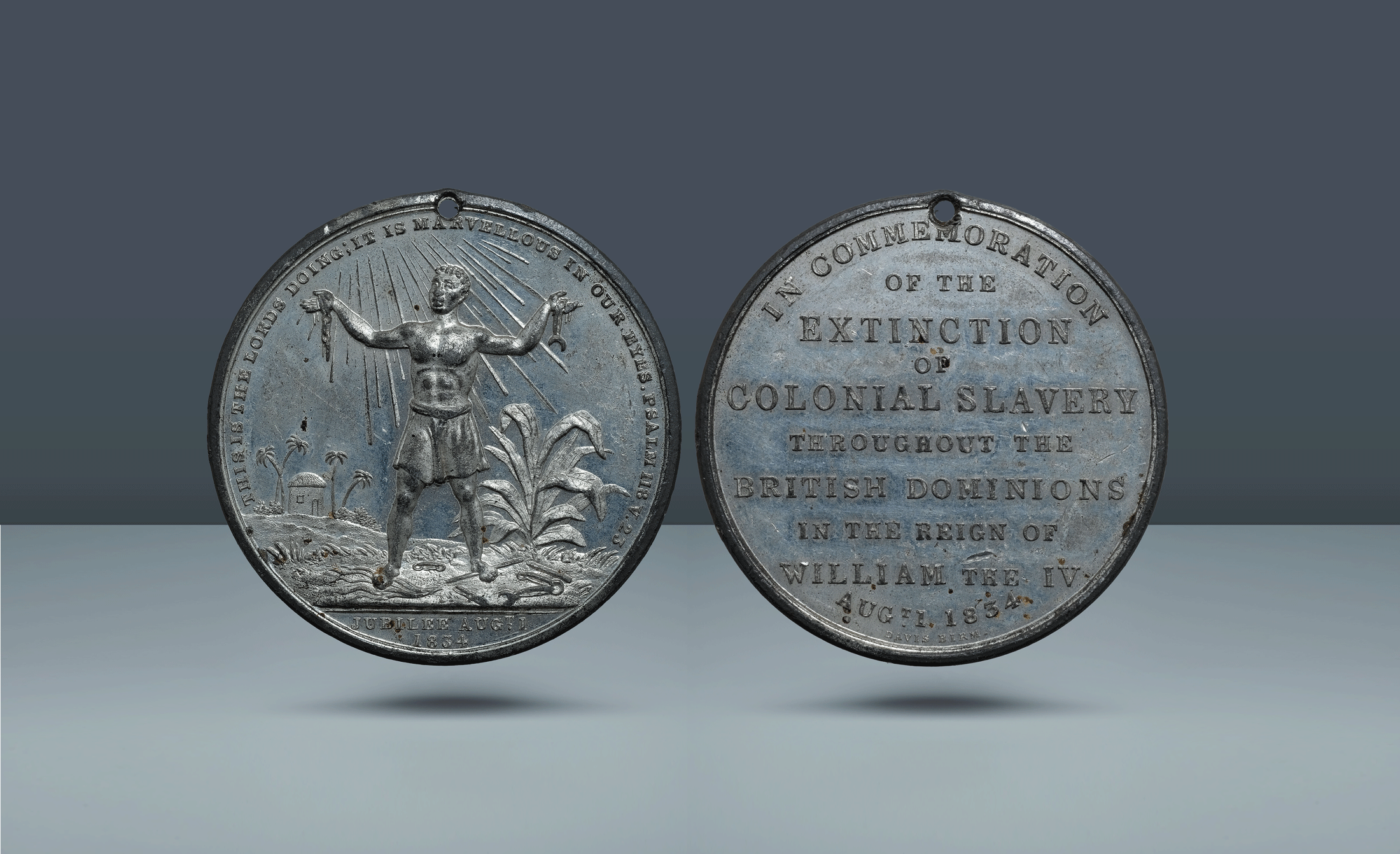
British Historical Medals, Abolition of Slavery, William IV - by J. Davis, 1830 - 1837, 1834
White metal, 25.10g (42mm, 12h).
THIS IS THE LORDS DOING; IT IS MARVELLOUS IN OUR EYES. PSALM 118 V. 23, Slave standing, raising his arms with shackles broken; in exergue, JUBILEE AUG T[he] 1. 1834 / IN COMMEMORATION / OF THE / EXTINCTION / OF/ COLONIAL SLAVERY / THROUGHOUT THE / BRITISH DOMINIONS / IN THE REIGN OF / WILLIAM THE IV / AUG T[he] 1. 1834 / DAVIS BIRM
Pedigree: Ex John Kraljevich
References: BHM 1665; Roehrs-1696
Grade: Proof-like with a hole for suspension. Attractive silvering with tiny marks but otherwise in good condition
wc1340
Scroll down for more information about this coin.
This commemorative medal marks the abolition of slavery throughout the British Empire in 1834 during William IV's reign, representing one of the most significant humanitarian achievements of the 19th century. The obverse features powerful allegorical imagery: a freed enslaved man stands with arms raised toward heaven in thanksgiving, with broken chains at their feet and divine rays streaming down from above. The scene includes palm trees and a plantation building, while the inscription "AM I NOT A MAN AND A BROTHER" references the famous abolitionist slogan. The reverse simply but momentously commemorates the extinction of colonial slavery throughout the British dominions in August 1834.
The medal's historical importance is multifaceted. It commemorates the Slavery Abolition Act of 1833, which freed approximately 800,000 enslaved people across British colonies in the Caribbean, South Africa, and Canada on August 1, 1834, culminating decades of abolitionist campaigning by figures like William Wilberforce and Thomas Clarkson. The medal served as both a celebration of moral progress and propaganda affirming Britain's self-image as a beacon of liberty and humanitarian reform. The artistic choice to depict the freed person in a posture of religious gratitude challenged prevailing racist imagery while reinforcing certain paternalistic narratives about emancipation. Struck in various metals and distributed widely, these medals remain important material artifacts of the abolitionist movement and powerful reminders of both the achievement of emancipation and the long struggle against human bondage.