
United Kingdom, London. Charles I, 1625-1649 Tower Mint, c. 1634-1635
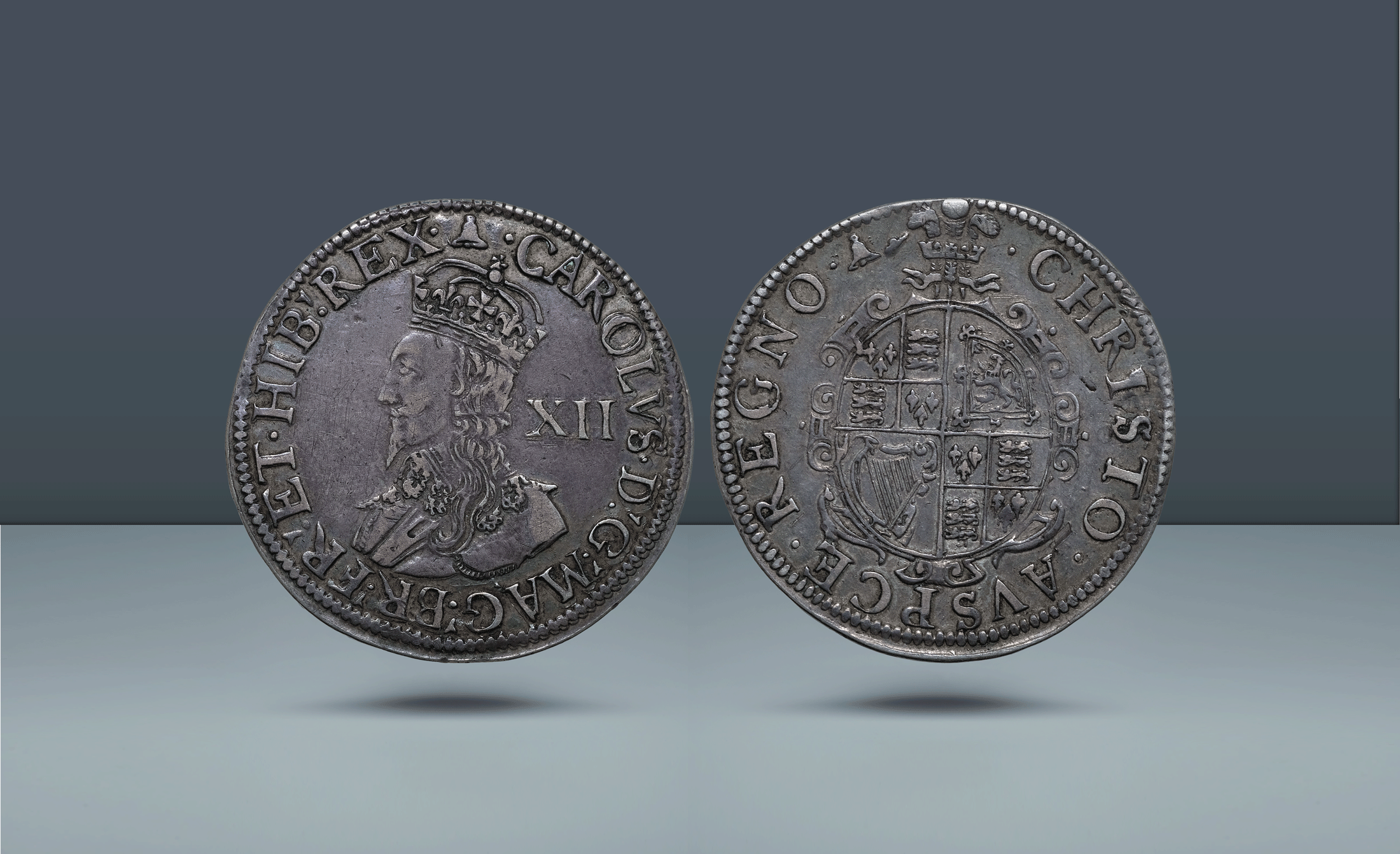
United Kingdom, London. Charles I, 1625-1649 Tower Mint, c. 1634-1635
AR shilling, 5.89g (30mm, 3h).
Crowned bust to l., XII in field to r.; CAROLVS D G MAG BR FR ET HIB REX around / Oval garnished shield of arms with plume on top; CHRISTO AVSPICE REGNO around
References: Group C. Bust 2. Bell i.m. (bell left of plume on reverse), S.2793, N.2226, Sharp E2/3
Grade: Overall light wear. Toned and pleasant. In incredibly fine condition for the type.
wc1343
Scroll down for more information about this coin.
Thomas Rawlins and his fellow engravers under Nicholas Briot's influence gave Charles I's Tower coinage a stylistic range unmatched by any other English king, and this shilling, struck under the mintmark bell of 1634 to 1635, falls squarely within the classic sequence issued in the king's own name at the height of his personal rule. By this date Charles had been governing for five years without Parliament, financing the crown through prerogative revenue alone, and the reverse legend chosen for his silver, CHRISTO AVSPICE REGNO, "I reign under the auspices of Christ," reads almost as a manifesto for the period: an assertion of divine right at precisely the moment he needed no other justification for his authority. The obverse presents the crowned bust left in the Group C style, with the denomination XII marked plainly in the field to indicate the coin's value of twelve pence, encircled by the abbreviated royal titulature CAROLVS D G MAG BR FR ET HIB REX proclaiming him king of Great Britain, France, and Ireland by the grace of God. The reverse centers the oval, garnished shield of the royal arms, quartering the lions of England, the fleur-de-lis of France, the lion of Scotland, and the harp of Ireland, surmounted by a plume, with the bell privy mark repeated left of the plume to tie both faces of the coin to the same mint period under Master Worker Sir Robert Harley's tenure at the Tower. This example shows only light, even wear consistent with modest circulation, its surfaces retaining an attractive, undisturbed tone that gives the portrait real presence, a pleasing survivor of a coinage struck in the last calm years before the political tensions embedded in its own legend erupted into civil war.