United Kingdom of Great Britain and Ireland, Northumberland. George III, 1760-1820 AD, c. 1763 AD
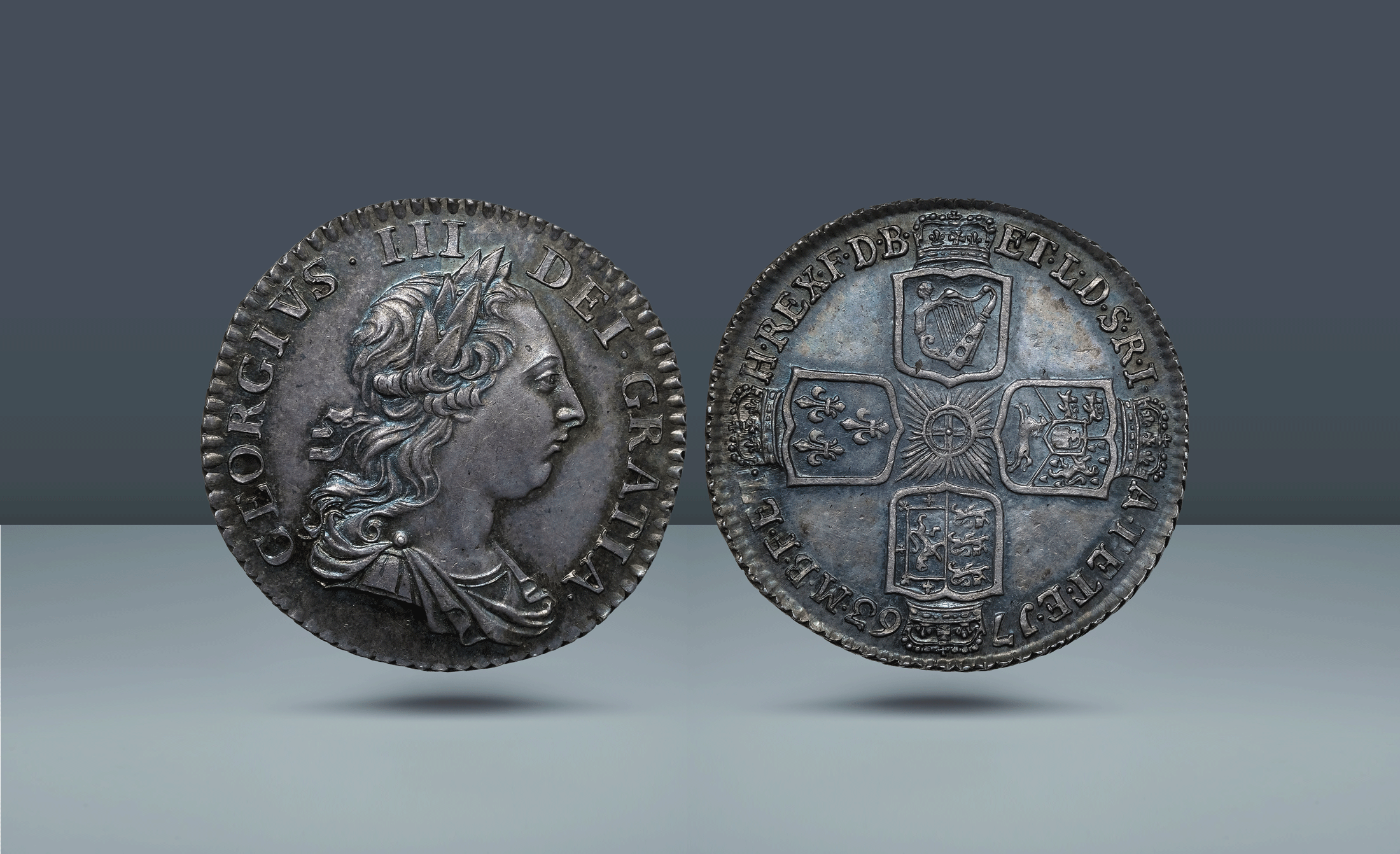
United Kingdom of Great Britain and Ireland, Northumberland. George III, 1760-1820 AD, c. 1763 AD
AR Shilling, 6.07g (26.5mm, 11h).
First laureate, draped and cuirassed bust to r. / crowned shields cruciform, eight strings to harp, edge obliquely grained
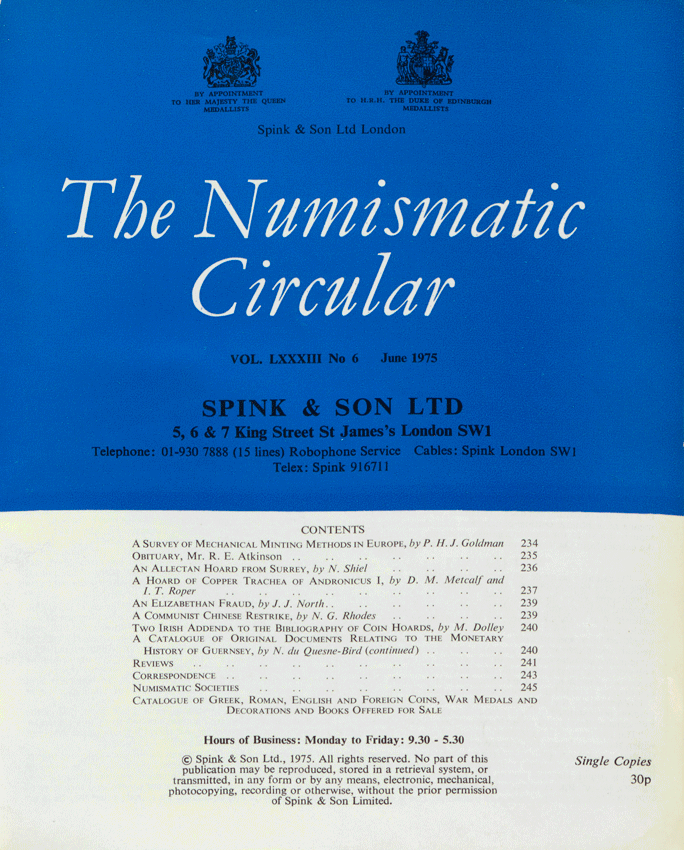
Pedigree: Ex SNC (Spink Numismatic Chronicle), June 1975 (5559). From the Dr. Irving Schneider Collection
References: Bull 2124, ESC 1214, S.3742.
Grade: Previously encapsulated and graded MS62 by NGC. Lovely toned surfaces. Very minor marks, otherwise aEF. Comes with all the original tickets
wc1332
Scroll down for more information about this coin.
This shilling represents the early coinage of George III, struck during the opening years of his reign when the nation was on the cusp of profound change. The date c. 1763 places this coin squarely within the aftermath of the Treaty of Paris, which concluded the Seven Years' War and established Britain as the preeminent global power. Domestically, these were the years preceding the American Revolution, when imperial authority still seemed unchallenged and the coins of the realm bore the confident stamp of a supreme maritime nation.
The obverse presents the first of George III's laureate busts-a portrait style that departed from the conventions established under his predecessors and asserts a more classical, Augustan ideal. The laureate wreath recalls the emperors of Rome, evoking a lineage of imperial power stretching back to antiquity. The drapery and cuirass speak to authority tempered by civilization; this was no mere tyrant, but a monarch clothed in the virtues of antiquity. The execution is refined and assured, capturing the young king in an idealized but not unfamiliar manner.
The reverse displays the familiar arrangement of the cruciform shields bearing the arms of England, Scotland, and Ireland, each crowned and arranged in the traditional pattern. The eight strings to the Irish harp-a detail that draws the eye of the cognoscente-are characteristic of this early period, before later modifications altered the representation. The obliquely grained edge is a security measure, a practical assertion that this coin contained its stated weight of fine silver and was not fraudulently clipped or sweated down.
The shilling occupied the middle ground of British silver denominations, valued at twelve pence and struck in sterling silver (92.5% fine). It was a coin of everyday commerce for the better-off-a merchant's or tradesman's piece, common enough to circulate but valuable enough to be carefully preserved by those who possessed them. The production standards of this period reflect the excellence of the Royal Mint, and this example demonstrates that excellence admirably.