
Byzantine Empire, . Constantine IX Monomachus, Constantinople, c. 1042-1055 AD
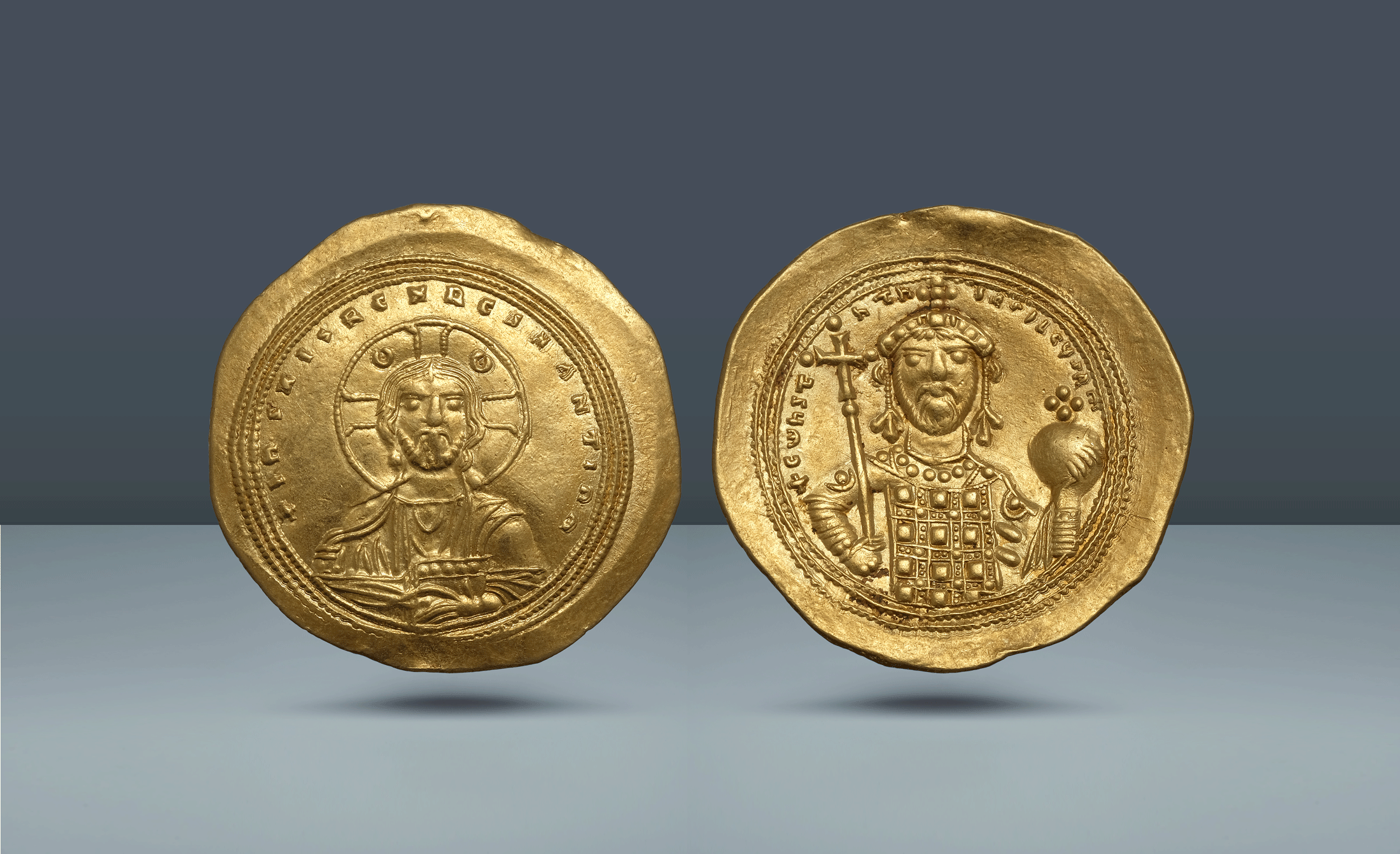
Byzantine Empire, . Constantine IX Monomachus, Constantinople, c. 1042-1055 AD
AV Histamenon, 4.45g (28mm, 6h).
+IhS XIS RЄX RЄϚNANTIhm, bust of Christ facing with nimbus cruciger, crescents in the upper quadrants, wearing pallium and colobium, raising right hand in benediction, book of Gospels in left arm; triple border / +CwhSTA-thI-hOS bAS Rm, bust of Constantine IX facing, with mustache and short beard, wearing crown surmounted by pelleted cross with pendilia and loros of square pattern, cruciform scepter in right hand, globe surmounted by pelleted cross in left; triple border.
References: Sear 1830. DO p. 741, Class III, 3.9
Grade: Previously NGC encapsulated and graded MS*, Strike 5/5, Surface 5/5. Beautiful strike and surfaces. FDC
bz1089
Scroll down for more information about this coin.
Constantine IX Monomachus ascended to the Byzantine throne in 1042 through marriage to the Empress Zoe, becoming the third husband of the elderly empress and co-ruler alongside her. His thirteen-year reign (1042-1055) marked a pivotal period in Byzantine history, characterized by both cultural flourishing and military challenges.
Despite facing significant threats-including the rise of the Seljuk Turks in the East and Norman invasions in Italy-Constantine IX is remembered as a patron of learning and the arts. He refounded the University of Constantinople and oversaw the construction and restoration of numerous churches, including extensive work on the Church of the Holy Sepulchre in Jerusalem.
The histamenon nomisma (often simply called "histamenon") was the standard Byzantine gold coin throughout much of the empire's middle period. During Constantine IX's reign, the histamenon maintained the traditional weight of approximately 4.4 grams of high-purity gold, serving as the backbone of Mediterranean commerce.
These coins were struck on distinctive concave or "scyphate" flans, a characteristic Byzantine minting technique that became standard during the 11th century. This curvature helped prevent clipping and counterfeiting while also creating a distinctive tactile and visual identity for Byzantine coinage.
The imagery on this coin reflects the dual nature of Byzantine imperial authority:
The obverse presents Christ Pantocrator (Almighty), emphasizing the divine sanction of imperial rule. The nimbus cruciger (cross-bearing halo), the blessing gesture, and the Gospel book all reinforce Christ's role as King of Kings-a title explicitly stated in the Greek inscription. This iconography became standard on Byzantine gold coinage from the late 10th century onward, representing the theocratic foundation of Byzantine governance. The reverse depicts Constantine IX in full imperial regalia. The loros-an elaborate ceremonial scarf adorned with jewels and religious imagery-was worn only by the emperor during the most solemn state occasions. The globe and scepter represent earthly dominion, granted by divine authority. His representation with the imperial regalia reinforces his role as Christ's viceregent on earth.