
Byzantine Empire, . Justinian II, 685-695 AD (First Reign) Constantinople, c. 692-695 AD,
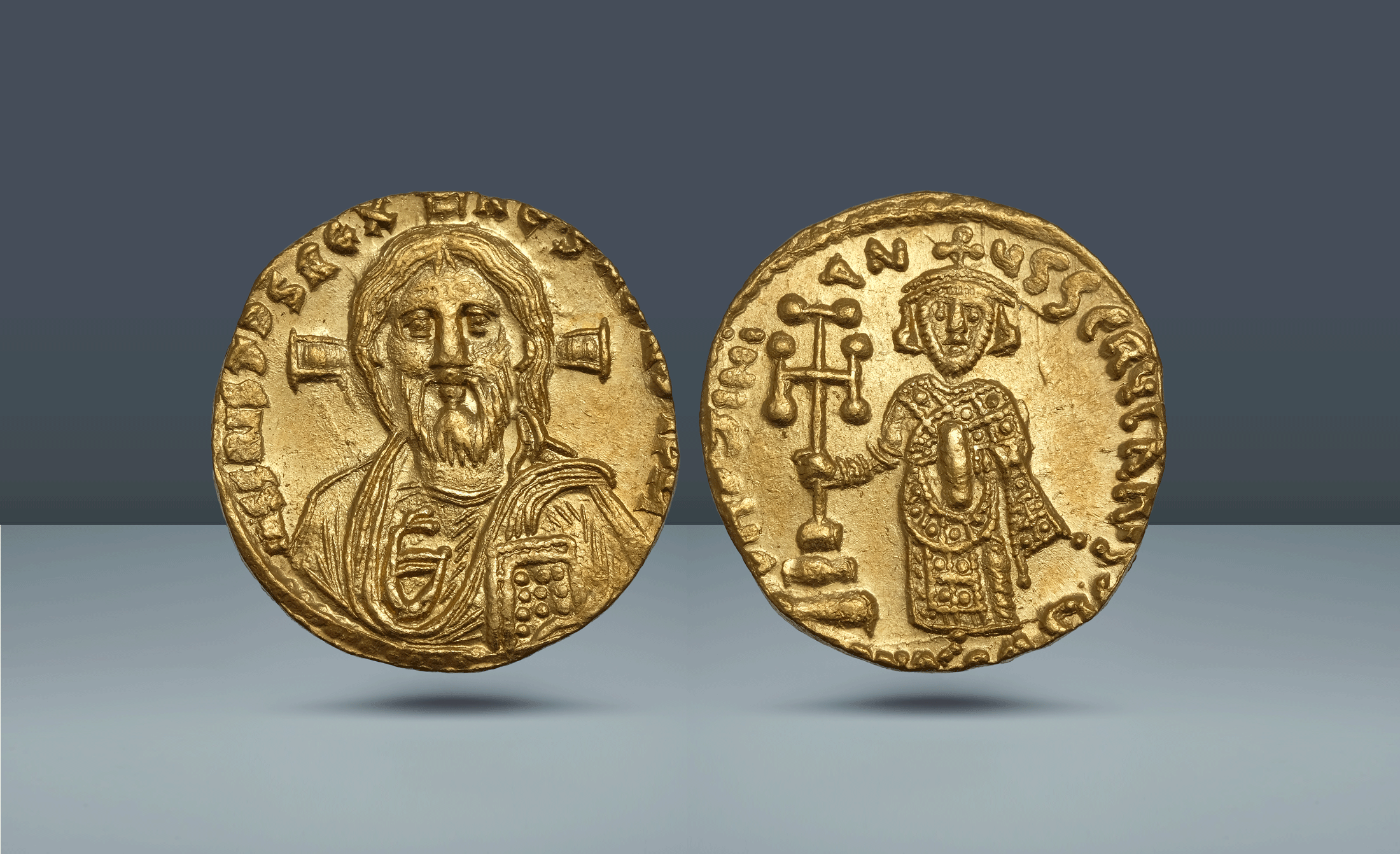
Byzantine Empire, . Justinian II, 685-695 AD (First Reign) Constantinople, c. 692-695 AD,
AV Solidus, 4.35g (19mm, 6h)
IhS CRISΤDS RЄX-R[ЄΣNANΤIЧM], facing half-length bust of Christ with long hair and full beard, wearing pallium and colobium, cross behind, raising right hand in benediction, book of Gospels cradled in left arm / [D IЧ]STINI-AN-ЧS SERЧ CHR[ISΤI B], full-length figure of Justinian II standing facing, wearing crown and loros, cross potent on two steps in right hand, akakia in left; [CONO-P] below
References: Sear 1248. DO Class III, 7a
Grade: Previously encapsulated Mint State, Strike 4/5, Surface 5/5. One of the more popular types from the Byzantine series with the first image of Christ on a coin. Coin is slightly tight so legend is partially off-flan. Mint State
Price: $11500
bz1087
Scroll down for more information about this coin.
The AV Solidus featuring a bearded Christ from Justinian II's first reign represents a revolutionary numismatic innovation. This was the first time Christ's image appeared on the obverse of an official Byzantine coin, displacing the emperor's portrait. The bearded Christ is depicted holding the Gospels with the inscription "REX REGNANTIUM" (King of Kings), while Justinian II was relegated to the reverse. This embodied the Byzantine concept of symphonia-harmony between sacred and imperial power-making explicit that imperial authority derived from divine mandate. The innovation may have been influenced by the Quinisext Council (692), which promoted direct representation of Christ rather than symbolic depiction.
This bold move had far-reaching implications beyond numismatics. It established a political theology that elevated imperial legitimacy by subordinating the emperor's image to Christ's, positioning him as Christ's earthly representative. The explicit Christian imagery likely intensified tensions with the Islamic Caliphate and may have contributed to Islamic aniconism in coinage and later Byzantine iconoclastic debates. The coins show remarkable artistry, with Christ rendered in a hieratic style that influenced Byzantine religious art for centuries, making this solidus a pivotal intersection of theology, politics, and art.