
Byzantine Empire, Sicily. Theophilus, 829-842 AD Syracuse, c. 831-842 AD
Byzantine Empire, Sicily. Theophilus, 829-842 AD Syracuse, c. 831-842 AD
AV Semissis, 3.92g (16.25mm, 5h).
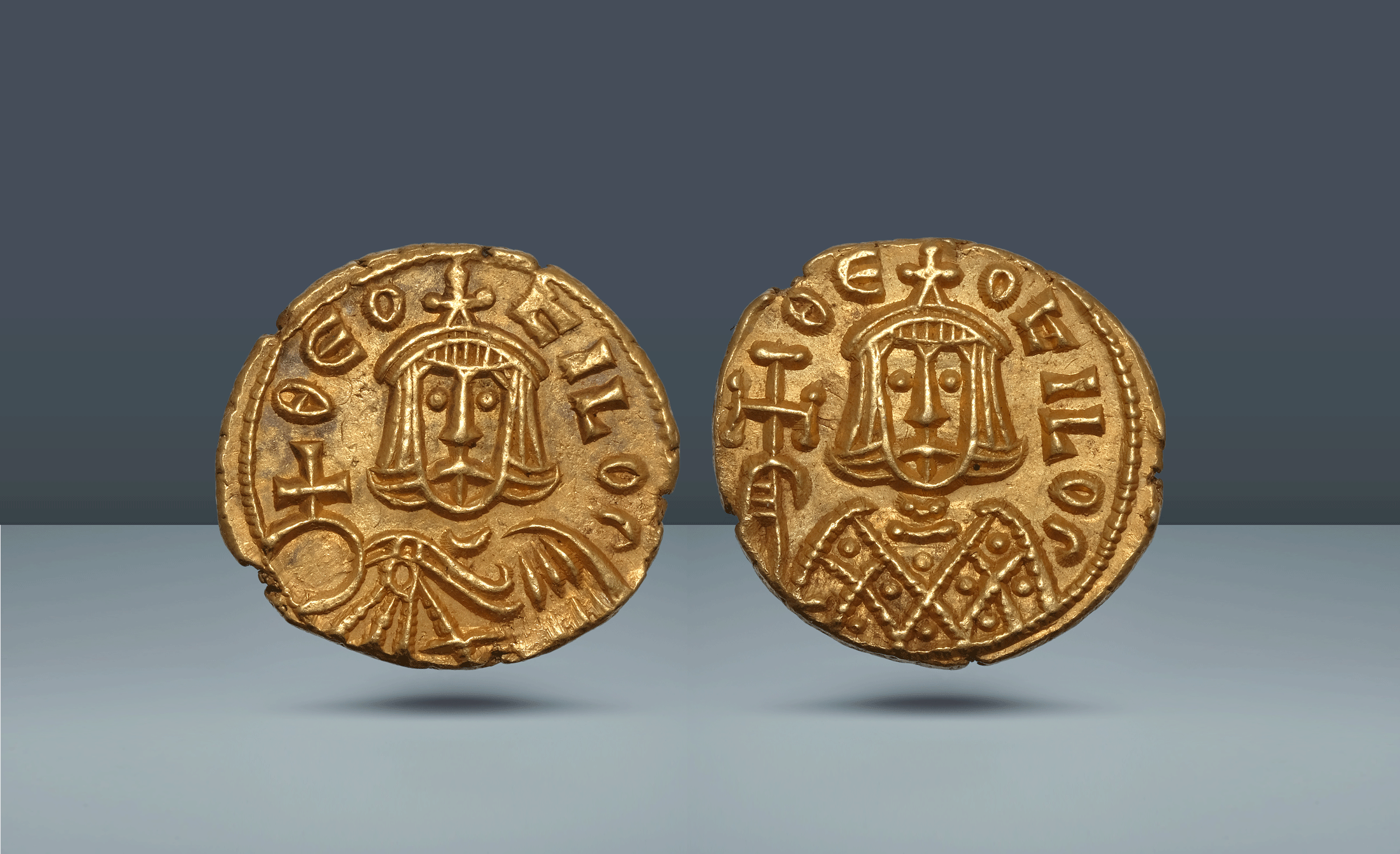
THEOFILOS, facing bust, with short beard, wearing crown and loros, holding cross potent / THEOFILOS, facing bust, with short beard, wearing crown and chlamys, holding globus crucige
Pedigree: Spink, October 1970 [with this ticket and envelope]
References: DOC III 24, SB 1670
Grade: Some minor cracking on the edges. Beautifully struck with lustrous surfaces. Mint State
bz1083
Scroll down for more information about this coin.
Facing bust of Theophilus, bearded, wearing crown and loros, holding cross potent / Facing bust of Theophilus, bearded, wearing crown and chlamys, holding globus cruciger.
A scarce Sicilian gold semissis of Theophilus struck at Syracuse during the final phase of Byzantine rule on the island. Although denominationally a half-solidus, these Sicilian semissis frequently approach the weight of a full solidus, reflecting the distinctive monetary practice of the Syracuse mint in the ninth century. The type preserves the striking dual-portrait format, presenting the emperor on both sides in complementary ceremonial and military dress, underscoring the continued assertion of imperial authority in a region increasingly contested by Arab forces.
The obverse emphasizes the emperor’s sacral role through the loros and cross potent, while the reverse, with chlamys and globus cruciger, conveys martial legitimacy and universal dominion. The style is bold and confident, with sharply engraved facial features and well-defined regalia, qualities that are far from guaranteed on Sicilian gold of this period.
The coin is beautifully struck on a broad, well-centered flan and retains bright, lustrous surfaces. Minor edge cracking is present, a common feature of struck gold issues and not uncommon on semissis of this period.