
Byzantine Empire, Syria. Maurice Tiberius, 582 - 602 AD Antioch, c. 582/3 (RY 1)
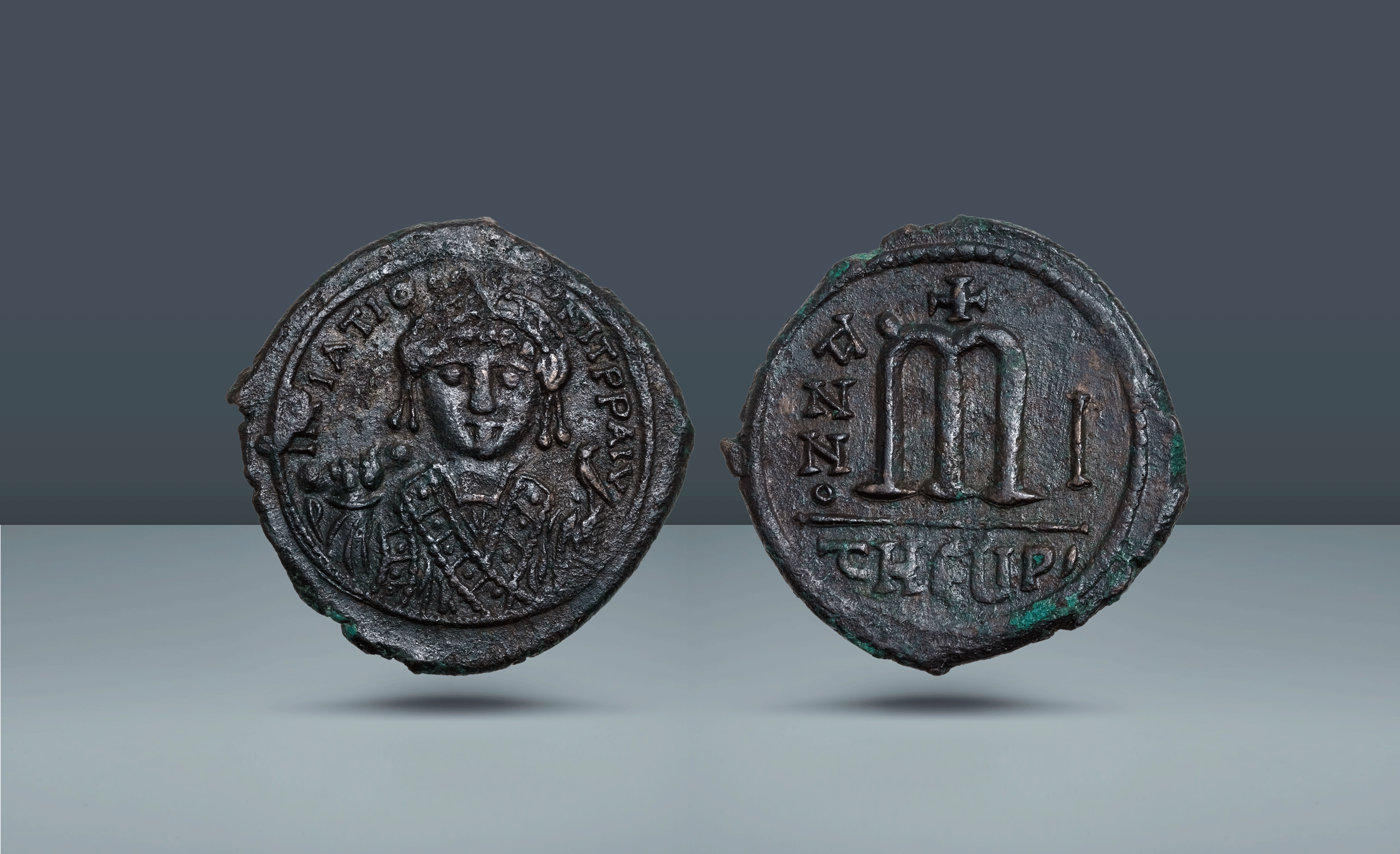
Byzantine Empire, Syria. Maurice Tiberius, 582 - 602 AD Antioch, c. 582/3 (RY 1)
AE Follis, 12.73g (32mm, 6h).
δ ΠTINO ΠTIPPIV. Crowned bust facing, wearing consular robes and holding mappa and eagle-tipped sceptre / Large M; A/N/N/O - I, cross above; THЄUP'.
References: DOC.152b; SB 532
Grade: A few speckles of green encrustation. Some minor areas of wear, otherwise very nice condition for type. EF for issue
bz1091
Scroll down for more information about this coin.
Maurice Tiberius ascended to the throne in 582 AD following the death of Tiberius II Constantine, inheriting an empire beset by war on multiple fronts - Persians in the east and Avars and Slavs pressing hard along the Danube. Despite these pressures, Maurice proved to be one of the more capable soldier-emperors of the later Byzantine period, and his reign saw important administrative and military reforms that would shape the empire for generations.
This follis was struck at the great mint of Antioch - one of the most important cities of the ancient world and a cornerstone of Byzantine commerce and culture - in the very first regnal year of Maurice's reign. As such, it represents one of the earliest coins issued in his name, making it a historically compelling piece for any collector of Byzantine or late antique coinage.
The obverse presents a crowned bust of Maurice Tiberius facing the viewer, dressed in elaborate consular robes and holding the mappa (the ceremonial cloth associated with the consular office) and an eagle-tipped sceptre - symbols of imperial dignity and authority drawn from deep Roman tradition. The legend reads δ ΠTINO ΠTIPPIV. The reverse carries the large M - the denomination mark for the follis, equal to 40 nummi - with the regnal year notation A/N/N/O - I (Year 1) flanking it, a cross above, and the mint signature THЄUP' below, identifying Antioch (Theopolis, "City of God," as it was known in the Byzantine period).