
Germany, Osnabruck. Franz Wilhelm von Wartenberg, 1625–1661 Bishopric, 1633
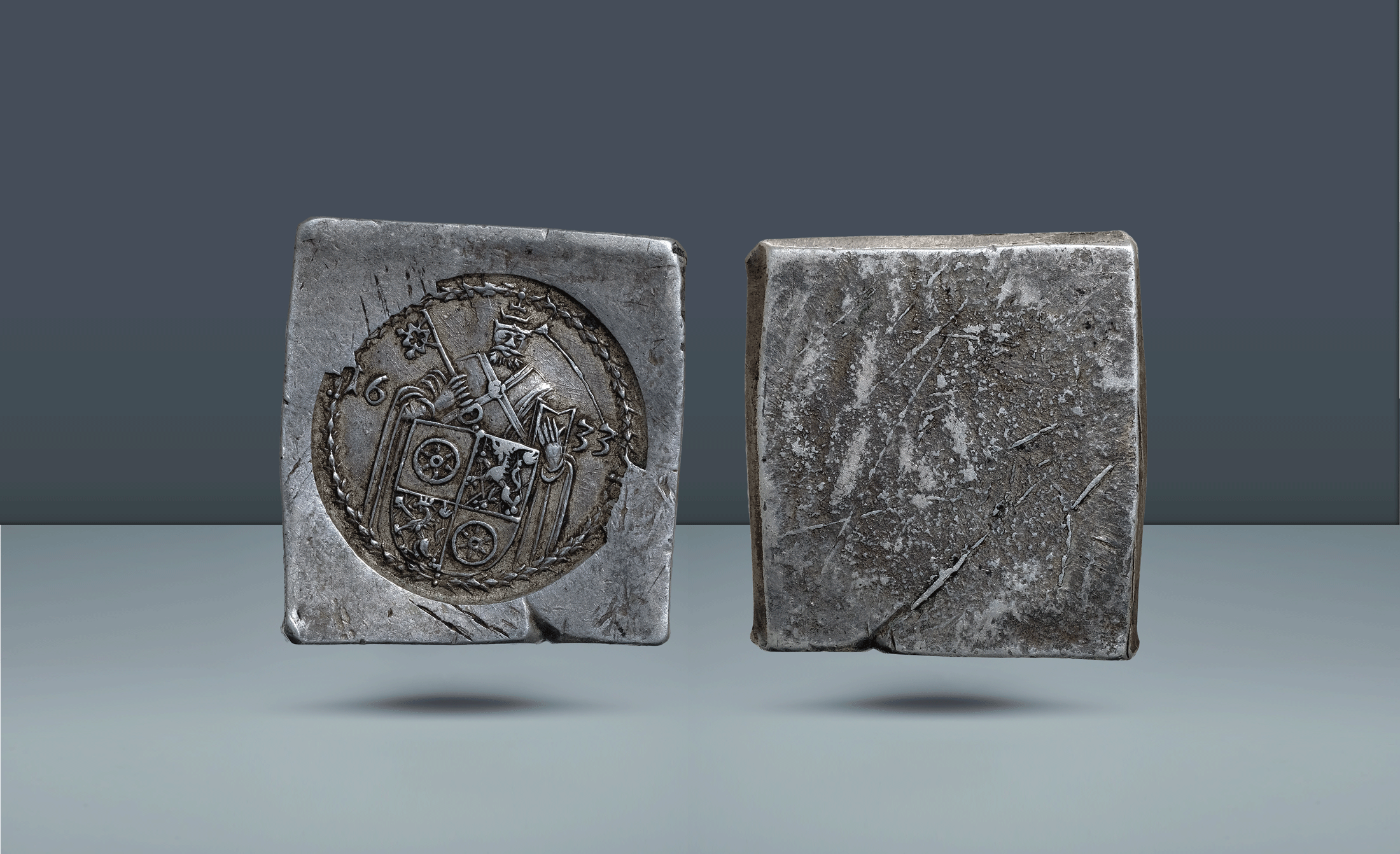
Germany, Osnabruck. Franz Wilhelm von Wartenberg, 1625–1661 Bishopric, 1633
AR Uniface Klippe of 1 Reichstaler, 29.06g (39mm, n/a).
Struck during the siege of the city of Osnabrück by Swedish troops from August 14 to September 11. A quartered coat of arms (Osnabrück, Wartenberg / Wartenberg, Osnabrück), surmounted by Saint Peter holding a key and a book; the split date 16 – 33 appears on either side, all enclosed within a wreath of leaves.5/7/2026
Pedigree: From a private aristocratic collection of coins and medals.
References: Brause-Mansfeld Pl. 21, 1 (obverse); Kennepohl 215; Engel/Fabre/Perret/Wattier 4.1.21.1.
Grade: A remarkable piece of history. Nicely struck and good metal considering the atmosphere of the time period in which it was made. Some minor flan defects on both sides. EF for issue
wc1348
Scroll down for more information about this coin.
While often overshadowed by larger engagements of the Thirty Years' War, the Swedish capture of Osnabrück in late summer 1633 was a strategically significant operation that would have lasting consequences for both the Westphalian region and the eventual peace settlement. The city, an important episcopal seat in Lower Saxony, had been occupied by Catholic League forces since 1628 following the Imperial reconquest of the area. Under this Catholic administration, the local Gymnasium Carolinum had even been upgraded to a Jesuit university in 1632.
The siege came in the wake of the decisive Swedish victory at the Battle of Oldendorf on 8 July 1633, where Field Marshal Dodo zu Innhausen und Knyphausen and George, Duke of Brunswick-Lüneburg had crushed an Imperial relief army under Bönninghausen, Gronsfeld, and Merode. With the Imperial position in Westphalia badly weakened, Swedish and allied Hessian forces moved quickly to consolidate their gains across the region. Notably, the operation against Osnabrück formed part of a broader strategic effort to secure the supply corridor running from Bremen south along the Weser river.
That being said, the siege itself lasted just under a month. Beginning on 14 August 1633, Swedish forces invaded the city and conducted a relatively brief but effective operation, with the garrison surrendering on 11 September. In addition, the Jesuit university was promptly closed, and the city was restored to Protestant control. In hindsight, this proved consequential: Swedish occupation of Osnabrück would last until 1643, when the city was selected - precisely because of its Protestant status under Swedish protection - as one of the two venues for the peace negotiations that ultimately produced the Peace of Westphalia in 1648.