
GERMANY, Saxony-Anhalt. Naumburg, n/d (c. 1700)
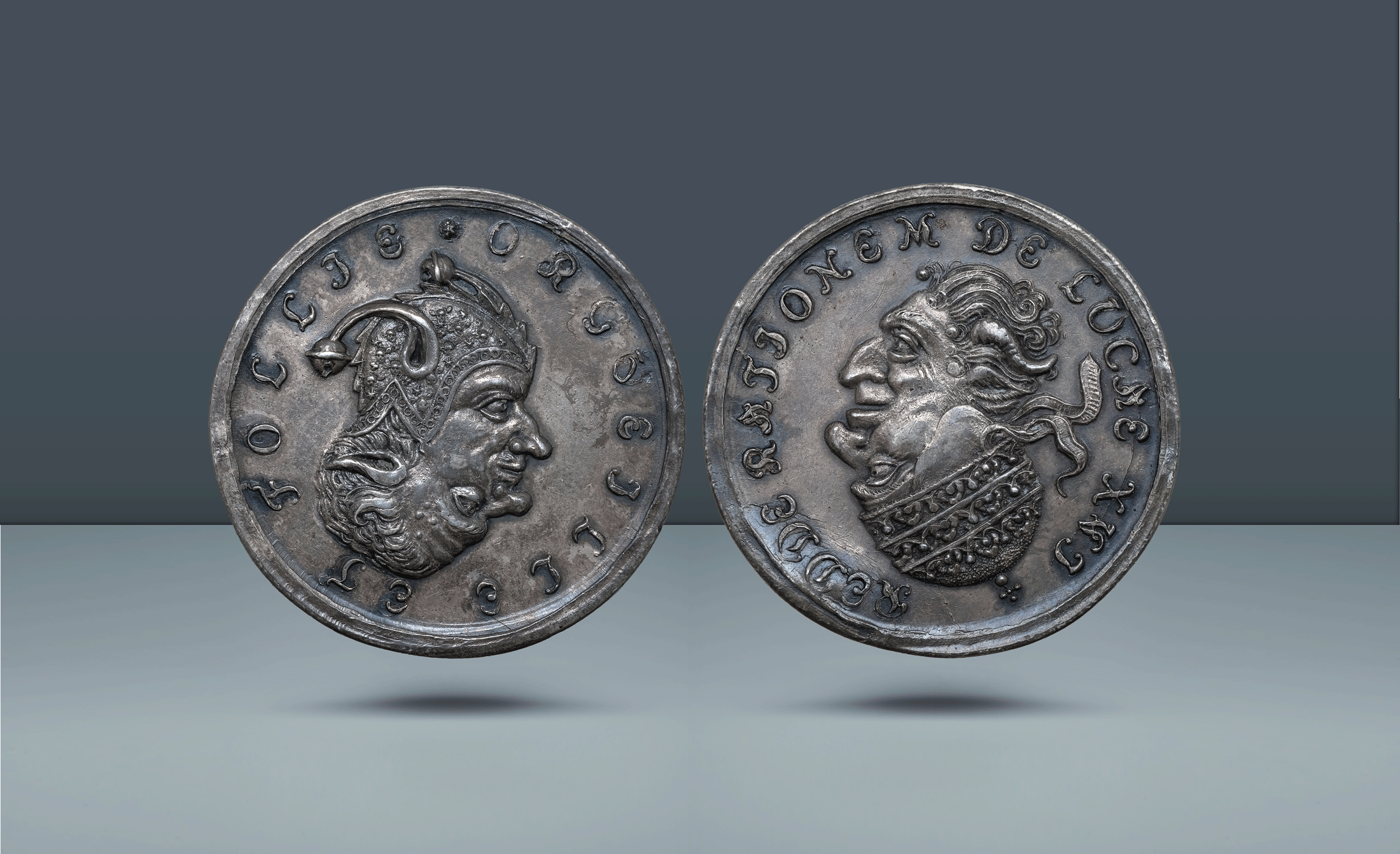
GERMANY, Saxony-Anhalt. Naumburg, n/d (c. 1700)
AR Anticatholic Satirical Medal, 14.6g (33mm, 12h)
Head of cardinal, wearing galero l., inverting to head of fool, wearing jester's cap, r. / Head of pope, wearing tiara r., inverting to head of Satan with horns to l.
Pedigree: Ex Coin Galleries, 12 November 1986, lot 1299. From the John P. Burnham Collection
References: cf. Opitz-4421 (this medal cited); cf. Barnard-127/126 (for obv./rev.); cf. Fieweger 148/149 (same)
Grade: Attractive surfaces and light toning. EF
wc1383
Scroll down for more information about this coin.
The piece belongs to the "bicephalic" type, on which each portrait becomes a different figure when the medal is turned 180 degrees. In this particular example, the obverse legend ORGVEILLE ET FOLLIE ("Pride and Folly") surrounds a cardinal who, when inverted, becomes a jester. The reverse depicts the pope, who becomes a devil when inverted. Its legend, REDDE RATIONEM DE LVCAE XVI, refers to Luke 16:2, the parable of the unjust steward, in which the steward is told to give an account of his stewardship because he can no longer serve. As such, the message is clear: the papacy has mismanaged the Church and will be called to account.
In calling the pope the Antichrist, the early Lutherans drew on a tradition that reached back to the eleventh century. By the 1530s, this rhetoric had entered formal Lutheran doctrine. The Treatise on the Power and Primacy of the Pope (1537), for example, argued that the marks of the Antichrist plainly matched the papacy and its adherents. It is important to note however that this format did not originate as Protestant propaganda. In fact, the earliest pope/cardinal medals were Catholic productions whose rotated images simply showed each figure in a different dress. Protestants in Germany, the Netherlands, and Switzerland later adapted the design into these medals.