Cappadocia, Uncertain mint. Ariarathes VII Philometor in name of Antiochus VII, c. 107-100 BC
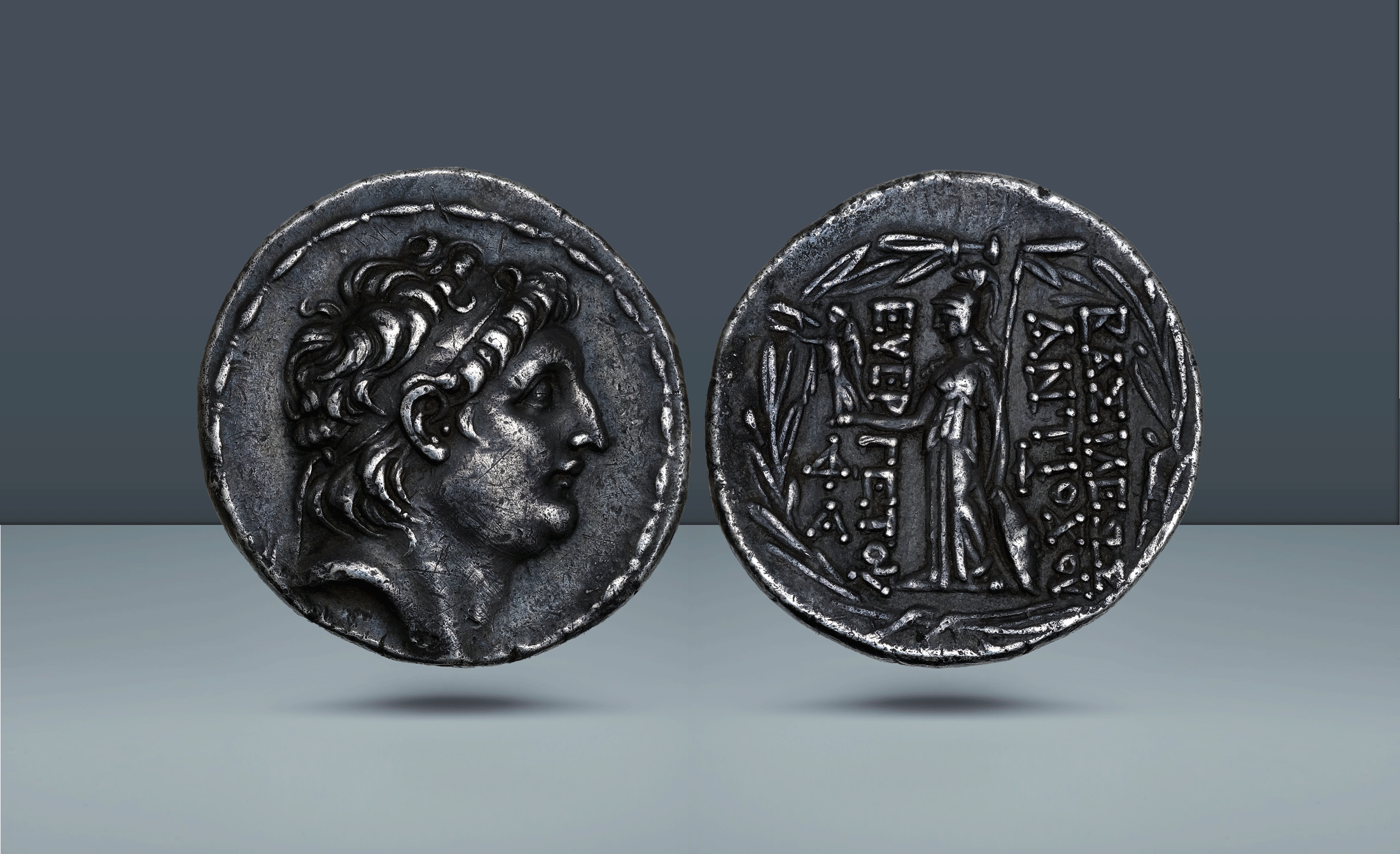
Cappadocia, Uncertain mint. Ariarathes VII Philometor in name of Antiochus VII, c. 107-100 BC
AR Tetradrachm, 16.44g (31mm, 12h).
Diademed head r.; bead-and-reel border / ΒΑΣΙΛΕΩΣ ΑΝΤΙΟΧΟΥ ΕΥΕΡ-ΓΕΤΟΥ Athena standing l., holding Nike l., spear and resting l. hand on grounded shield; within wreath
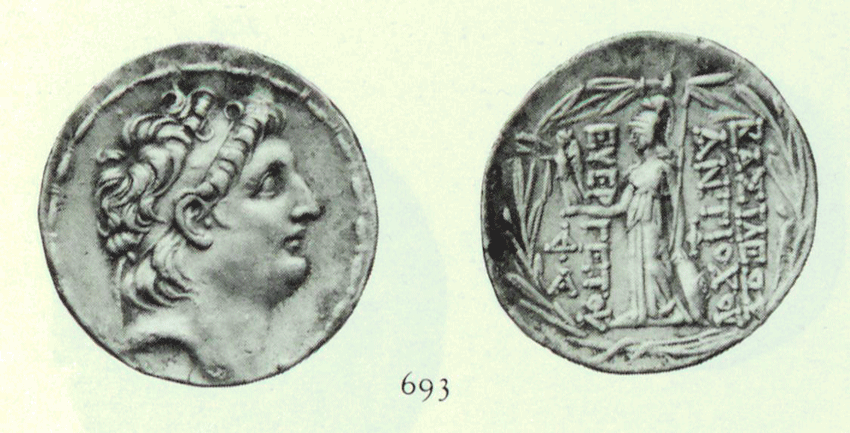
Pedigree: Ex M&M 72, 1987, Rosen, 693. M&M Deutschland 46, 2018, 291. From the Arthur A. Houghton III collection.
References: CSE 267 (this coin). SC 2143.2. SMA 292. HGC 9, 1068.
Grade: Some minor marks. Cabinet toning and well centered. Good VF
gk2094
Scroll down for more information about this coin.
This historically resonant tetradrachm belongs to the intriguing posthumous issues struck in the name of Antiochus VII Sidetes by the Cappadocian kings, a practice that reflects both political pragmatism and the enduring prestige of Seleucid royal imagery. Although Antiochus VII had fallen in 129 BC, his memory as a restorer of Seleucid authority remained potent enough that later rulers-here Ariarathes VII Philometor-continued to exploit his royal types for legitimacy and monetary continuity.
The obverse bears a diademed head of Antiochus VII to right, framed by a bead-and-reel border. The portrait is sober and authoritative, emphasizing dynastic continuity rather than individual innovation. On the reverse, Athena stands left, holding Nike and spear, her left hand resting on a grounded shield, all enclosed within a wreath. The inscription ΒΑΣΙΛΕΩΣ ΑΝΤΙΟΧΟΥ ΕΥΕΡΓΕΤΟΥ (“of King Antiochus the Benefactor”) reinforces the ideological message of kingship, victory, and benefaction-qualities Cappadocian rulers were keen to appropriate during a period of regional instability.
Struck at an uncertain Cappadocian mint, this issue is a vivid example of how Hellenistic monetary systems could transcend dynastic boundaries, using familiar royal iconography to stabilize currency and assert authority. The present coin is well centered, with attractive cabinet toning and only minor marks, making it a pleasing and historically important specimen. According to Lorber/Houghton, this is part of class VII, termed the "soulful" head on account of the serene expression on the face of the deceased emperor. This particular portrait style is in stark contrast to the earlier issues when the King was still living.