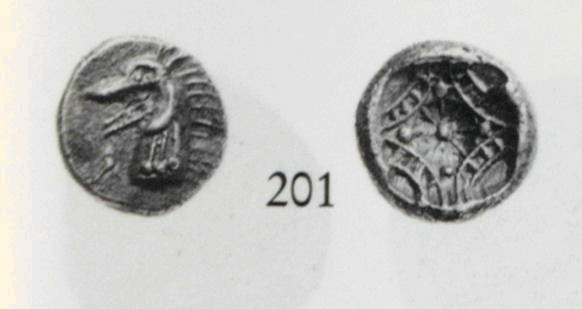
Caria, Halicarnassus. c. 500-495 BC
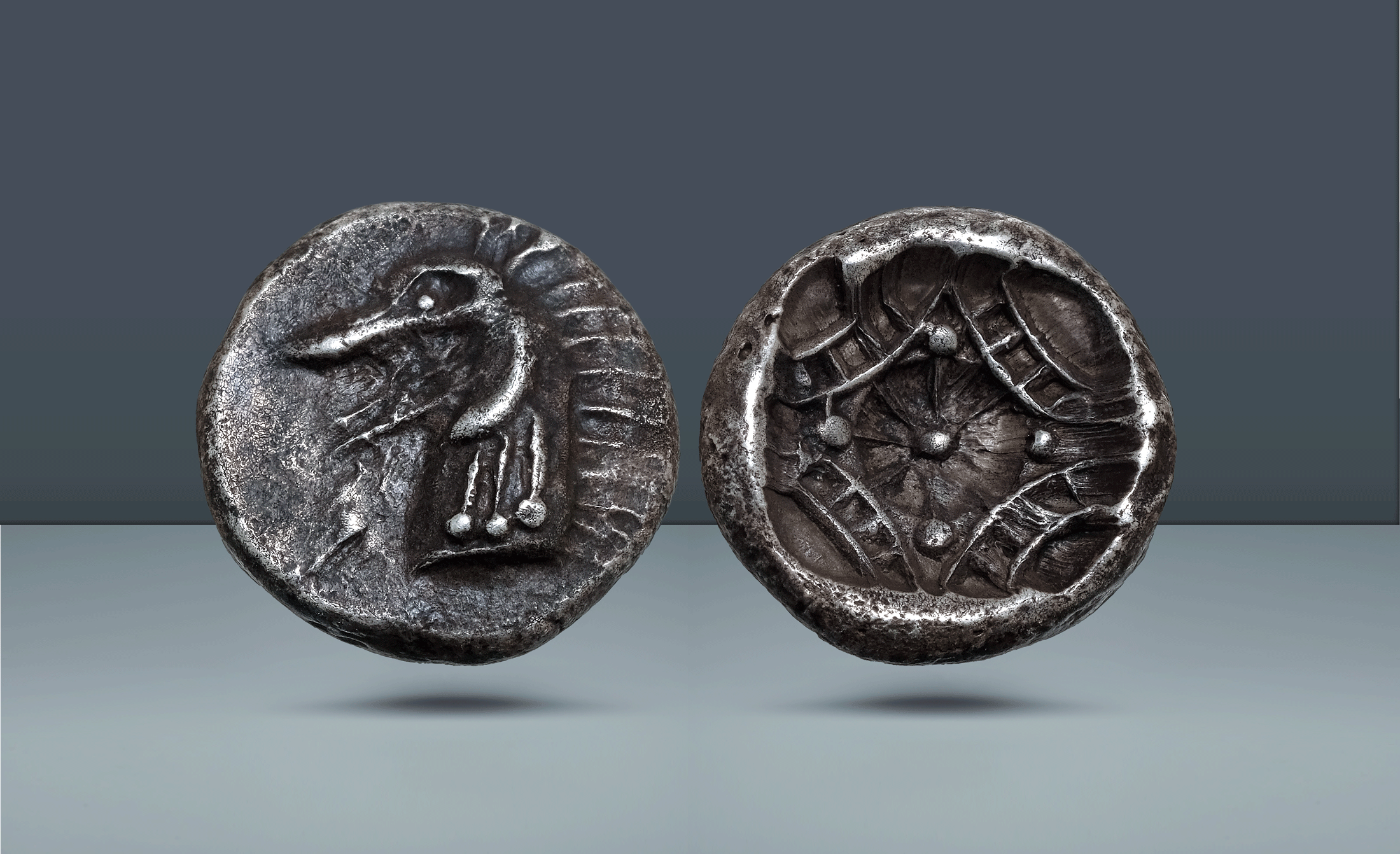
Caria, Halicarnassus. c. 500-495 BC
AR Hecte, 2g (12mm, n/a).
Head of Ketos l. / Incuse geometric pattern
Pedigree: Ex Aufhäuser 10, 1993, 201. Gorny & Mosch 269, 2020, 411 sales. From the Dr. G. W. (1942-2019) collection.
References: Ashton-Konuk, The Ketos Coins of Caria in: KARIA ARKHAIA, La Carie, des origines à la période pré-hékatomnide (2013) 257 ff., 2013, 72e (A58/P64) (this coin).
Grade: Fascinating imagery of Ketos on obverse. Cabinet toning and good strike. Minor surface porosity. EF
gk2087
Scroll down for more information about this coin.
This small but compelling silver hecte from Halicarnassus - the great coastal city of Caria, later celebrated as the birthplace of Herodotus - belongs to one of the most fascinating and rare series of early Greek coinage. The Ketos, a sea-monster of Greek mythology, was adopted as the civic type of Halicarnassus in the late Archaic period, appearing on these diminutive fractional silver coins at the very dawn of Greek monetary tradition in southwestern Anatolia. The choice of the Ketos reflects the city's deep maritime identity, situated as it was on a commanding harbor along the Aegean coast. The reverse bears the characteristic incuse punch of early Greek coinage, a hallmark of the experimental artistry of this pioneering era.
This coin is published and cited in the definitive scholarly study of the series: Ashton-Konuk, "The Ketos Coins of Caria," in KARIA ARKHAIA, La Carie, des origines à la période pré-hékatomnide (2013), pp. 257 ff., no. 72e (A58/P64).