Cilicia, Tarsos. Satrap of Lydia, c. 387/6-381 BC
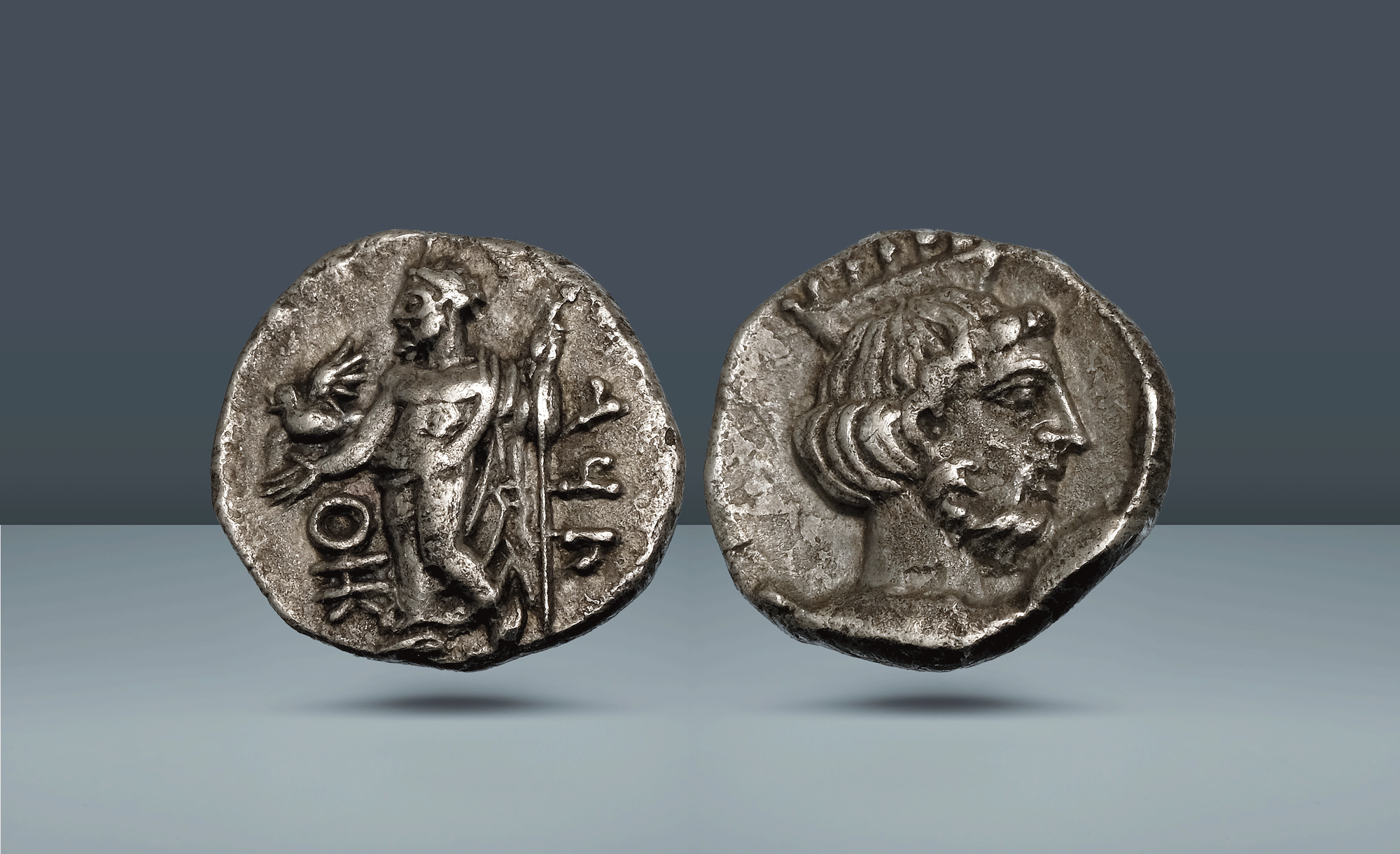
Cilicia, Tarsos. Satrap of Lydia, c. 387/6-381 BC
AR Obol, 0.66g (10mm, 5h).
Baal standing l., releasing eagle and holding scepter; monogram to l. / Crowned head (of Ahura-Mazda?) r.
References: Casabonne Series 1, p. 189, pl. 4, 2; Göktürk 16; SNG BN 234
Grade: Incredibly well-struck for such a small coin. Small dig on reverse cheek of Ahura-Mazda. Near Mint State
gk1981
Scroll down for more information about this coin.
Ahura Mazda, whose name means "Wise Lord" or "Lord of Wisdom," stands as the supreme deity in Zoroastrianism, one of the world's oldest monotheistic religions founded by the prophet Zoroaster (Zarathustra) in ancient Persia, likely sometime between 1500-1000 BCE, though the exact dating remains debated. In Zoroaster's revolutionary theological vision, Ahura Mazda was proclaimed as the one uncreated, eternal God-the source of all goodness, truth, light, and order in the universe. This represented a dramatic departure from the polytheistic Indo-Iranian religious traditions that preceded Zoroastrianism. Ahura Mazda was understood as the creator of the material and spiritual worlds, embodying attributes such as wisdom, righteousness, and beneficence. He stood in cosmic opposition to Angra Mainyu (Ahriman), the destructive spirit representing chaos, falsehood, and evil, though crucially, Ahura Mazda was understood to be ultimately supreme and destined for final victory in this dualistic struggle between good and evil.