
Lucania, Velia. c. 440-400 BC
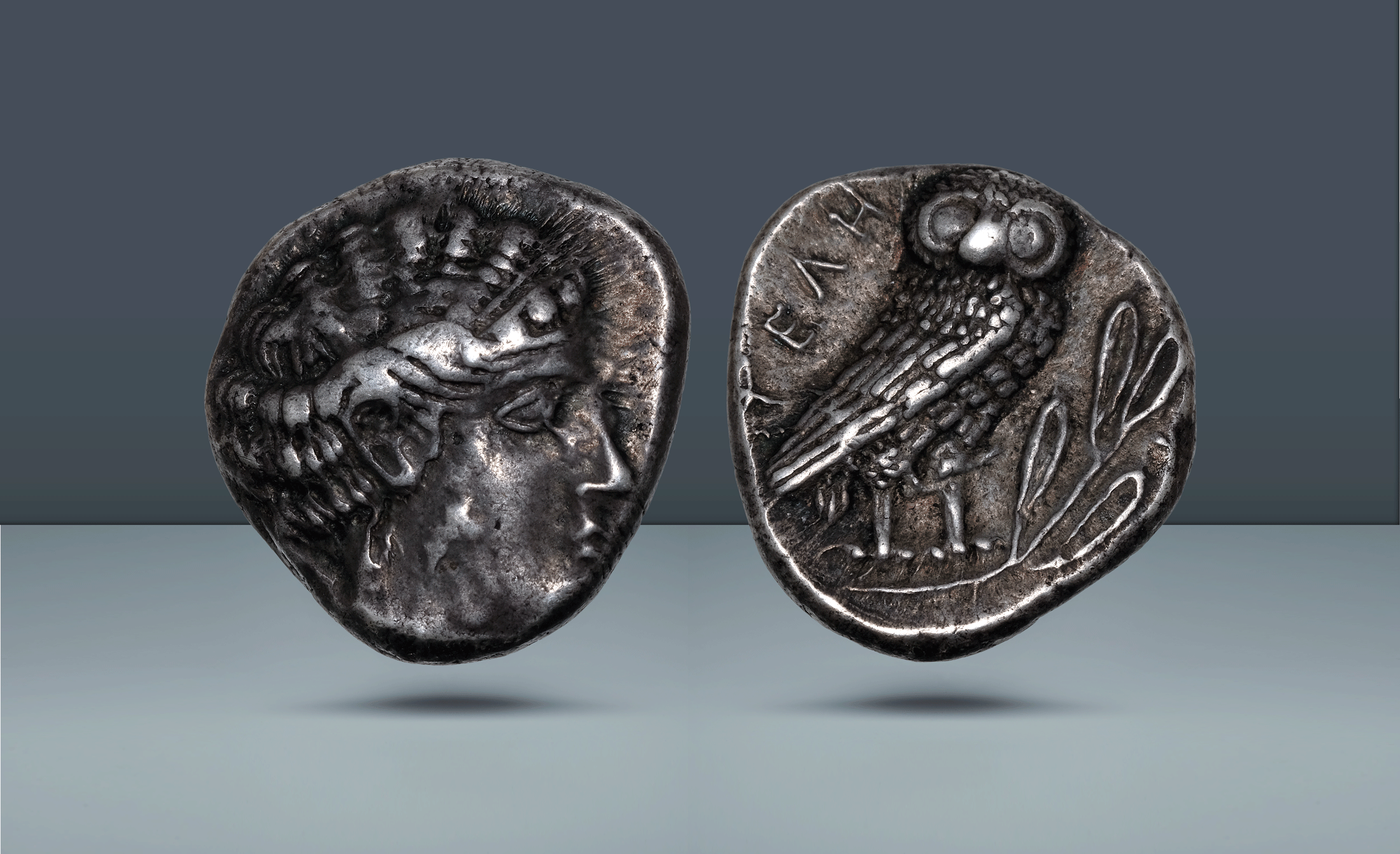
Lucania, Velia. c. 440-400 BC
AR Drachme, 4.0g (15.5mm, 11h)
Head of a nymph to r., with curly hair confined by a band. / ΥΕΛ[Η] Owl standing r. on olive twig
Pedigree: Reportedly acquired from Adolph Hess AG, Lucerne, in 1967.
References: HN III 1272. SNG ANS 1266. Williams 183
Grade: Lovely cabinet toning. Overall light wear. Good VF+
gk2187
Scroll down for more information about this coin
Few Greek cities in the West can claim so rich an intellectual pedigree as Velia, the Hyele of Herodotus and the Elea of the philosophers. The city was founded around 540 BC by Phocaeans from the coast of Asia Minor who had abandoned their homeland rather than submit to Persian rule, and who, after the costly naval battle off Alalia in Corsica, resettled on the Tyrrhenian shore of Lucania. There the colony prospered as a maritime trading community, and within a few generations it gave its name to the Eleatic school of Parmenides and Zeno, whose inquiries into being, change and paradox shaped the course of Greek philosophy. The present drachm was struck in the later fifth century, the very period in which Zeno was active.
The obverse presents a nymph, likely the personification of the local spring or of the city itself, her curly locks gathered by a simple band in the restrained manner of the Classical style. The reverse carries the owl standing on an olive twig, a motif that unmistakably recalls the coinage of Athens and reflects the pull of Athenian cultural and commercial influence across Magna Graecia in these decades. The ethnic ΥΕΛΗ preserves the city's original Greek name, with its initial aspirate rendered in the archaic spelling that would later give way to Elea and, under Roman rule, Velia. The type is catalogued by R. T. Williams in his standard corpus of the Velian silver coinage.
This example is well centered on a compact flan and shows only light wear, beneath an attractive, even cabinet tone that speaks to long residence in an old collection. Its reported acquisition from Adolph Hess AG of Lucerne in 1967 places it in circulation among collectors well before 1970, a documented history of increasing importance for coins of Magna Graecia. A handsome and historically evocative drachm from one of the most celebrated cities of the Greek West.