
Paeonia, Patraos. Uncertain mint, c. 340-315 BC
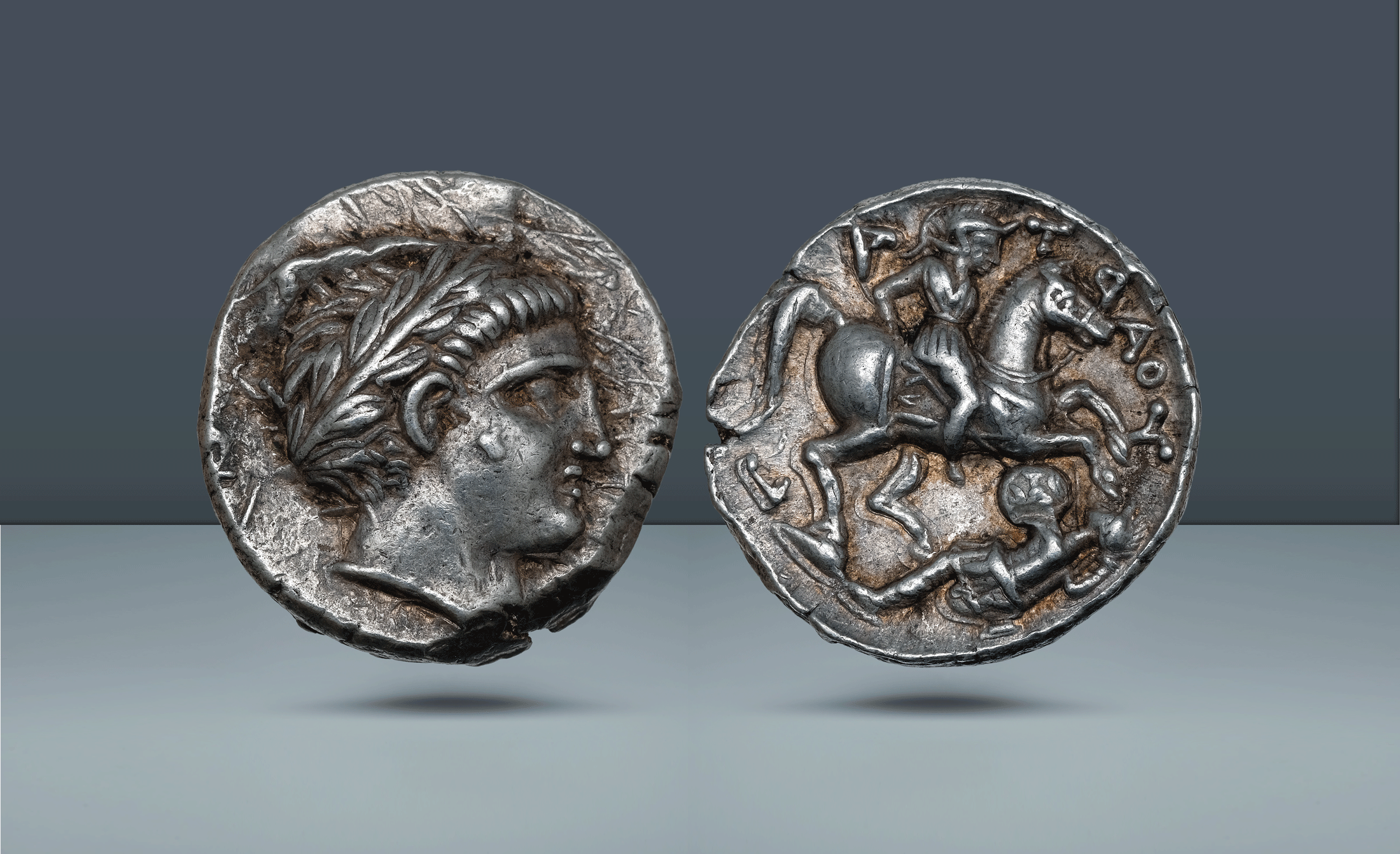
Paeonia, Patraos. Uncertain mint, c. 340-315 BC
AR Tetradrachm, 12.49g (24mm, 10h).
laureate head of Apollo r. / PATRAOY warrior on horse rearing to r., spearing enemy who defends himself with raised shield,
Pedigree: Acquired from Frank Sternberg, Zürich, 1972
References: Paeonian Hoard 490; SNG ANS 1040
Grade: Several visible die breaks, as is common on these coins. In good condition with nice metal. EF for issue
gk2190
Scroll down for more information about this coin.
Struck under Patraos, king of Paeonia, in the decades following Alexander the Great's death, this tetradrachm represents one of the most admired reverse compositions in the entire ancient series: a mounted warrior, rearing his horse in violent motion, driving his spear down into an enemy who twists beneath him, raised shield his only defense. The Paeonian kingdom, situated along the middle Axios/Vardar valley to the north of Macedon, occupied a precarious position through the later fourth century, caught between the ambitions of the Macedonian court and the persistent pressure of Illyrian and, somewhat later, Celtic incursions from the northwest. Patraos, who ruled in the years bridging Alexander's death and the consolidation of Antigonid power in the region, issued this coinage on the Attic weight standard, aligning Paeonian currency with the broader monetary world shaped by Alexander's conquests and facilitating its circulation alongside the Macedonian regal issues that dominated exchange in the northern Aegean.
The reverse combat scene, rendered with an anatomical dynamism and diagonal compositional energy unusual even by the elevated standards of the period, is often discussed alongside the great narrative battle scenes of contemporary Macedonian court art, the Alexander Sarcophagus and the painted tomb friezes of the region chief among them, and has been read, though never definitively confirmed, as a commemoration of Paeonian military success against Illyrian or Celtic adversaries pressing the kingdom's frontiers. The legend ΠΑΤΡΑΟΥ, arranged in the field around the combatants, secures the attribution to the king rather than to a civic or federal authority, in keeping with the increasingly personal character of royal coinage in the age of the Successors.