
Attica, Athens. c. 133-132 BC
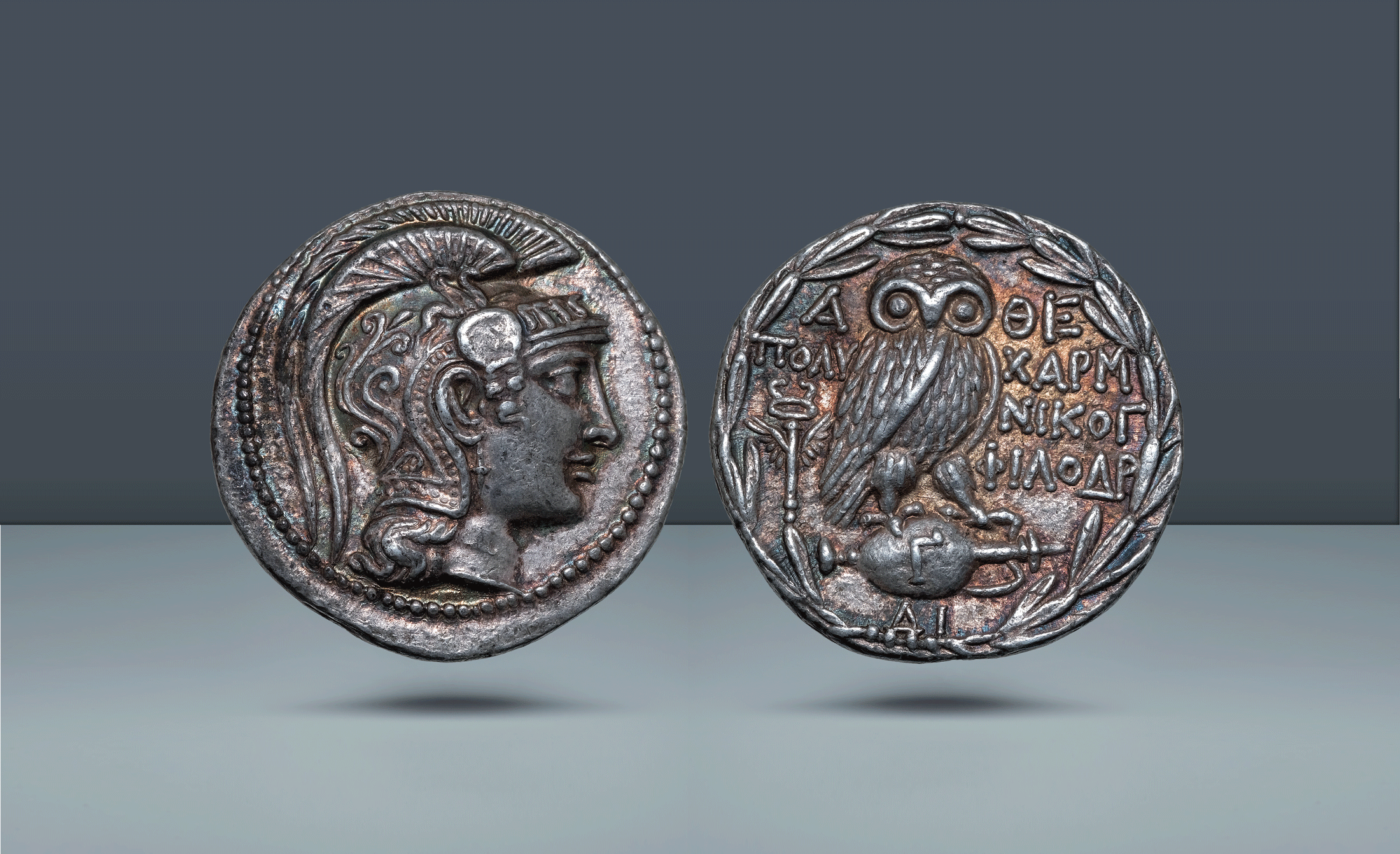
Attica, Athens. c. 133-132 BC
AR New Style Tetradrachm , 16.9g (30mm, 11h).
Head of Athena, wearing Attic helmet decorated with griffin and palmettes / Α-ΘΕ - ΠΟΛΥ-ΚΑΡΜ - ΝΙΚΟΓ -ΦΙΛΟΔΡ Owl standing r. on amphora, head facing; in l. field, winged caduceus, below, ΔΙ and on amphora, Γ
Pedigree: Ex Künker 43, 1998, 96. Künker 318, 2019, 656 sales.
References: HGC 4, 1602. Thompson, ANSNS 10, 378.
Grade: Beautifully struck with iridescent toning throughout. Great strike and centering. Mint State
gk2078
Scroll down for more information about this coin.
This New Style tetradrachm belongs to the mature phase of Athenian silver coinage in the second century BC, a period in which the city consciously balanced tradition with administrative innovation. Far from replacing the civic ethnic, the abbreviation Α–ΘΕ (“of the Athenians”) remains prominently displayed at the top of the reverse, preserving an unbroken link to Athens’ Classical monetary identity. Its elevated position reinforces the primacy of the polis itself, even as the surrounding design accommodates a more complex bureaucratic structure.
The obverse head of Athena deliberately recalls her Classical prototype, reaffirming her role as the eternal protectress of the city. The helmet’s decorative program adds nuance rather than novelty: the griffin, a creature associated with vigilance, divine guardianship, and wisdom, underscores Athena’s watchful authority, while the palmettes evoke continuity with long-standing Greek ornamental traditions. Together, these elements emphasize Athena not only as a warrior goddess but as the embodiment of civic intelligence and cultural refinement.
On the reverse, the owl - Athens’ most enduring emblem - stands upon an amphora, a potent symbol of civic ritual and institutional memory. The amphora is widely understood as an allusion to the Panathenaic prize amphorae, filled with sacred olive oil from Athena’s groves and awarded during the city’s most important festival. This imagery firmly anchors the coinage within Athens’ religious life and festival economy, projecting continuity with the city’s Classical past despite changing political circumstances.
The winged caduceus in the left field is a subsidiary symbol commonly associated with exchange, communication, and orderly administration. Its presence likely reflects the commercial and diplomatic realities of Hellenistic Athens, whose influence was increasingly exercised through intellectual, economic, and cultural networks rather than military dominance.
The magistrates’ names are arranged around the reverse but are not exhaustive personal lists in the modern sense. Instead, they represent the responsible officials for the issue, abbreviated and distributed across the flan in accordance with New Style conventions. Their placement complements rather than competes with the civic ethnic, reinforcing that authority ultimately derived from the Athenian polis itself.
Struck on a broad, thin flan, this example is exceptionally well centered and sharply engraved. The surfaces display rich, iridescent toning that enhances the sculptural quality of Athena’s portrait and the clarity of the reverse iconography.