Attica, Athens. c. 430 - 420 BC
Attica, Athens. c. 430 - 420 BC
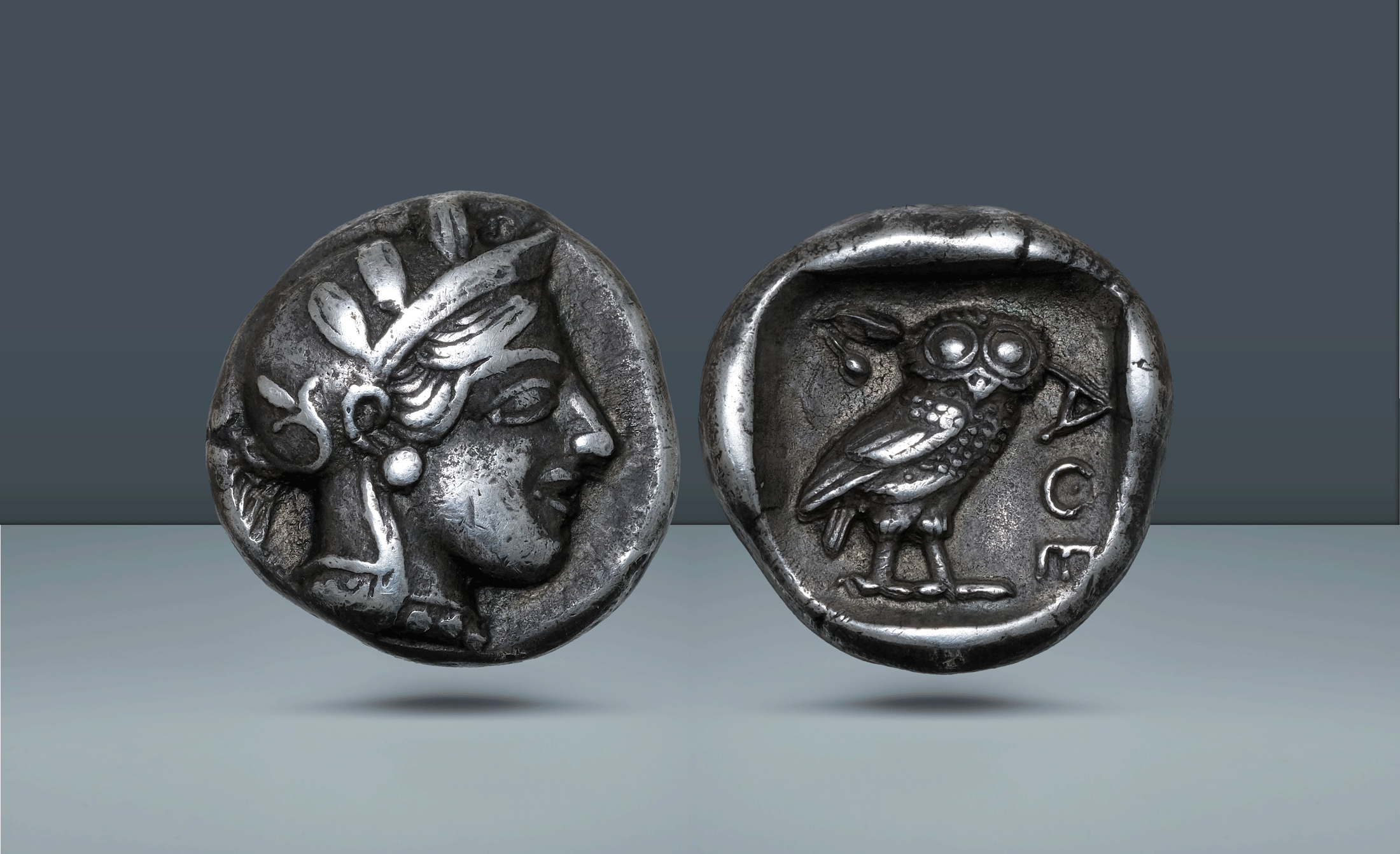
AR Drachm, 4.16g (14mm, 1h).
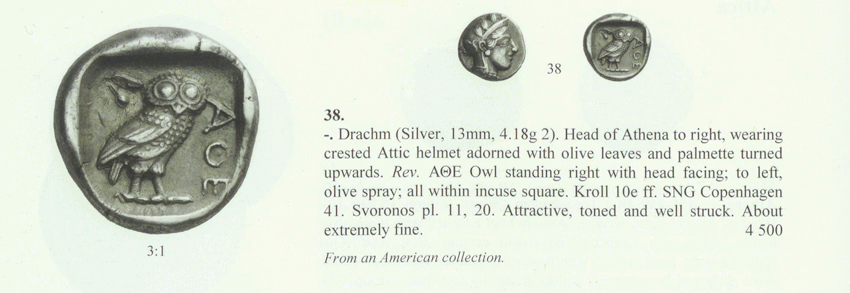
Head of Athena with Attic helmet facing r. / ΑΘΕ, owl with frontal head facing r., behind it an olive branch, all in incues square
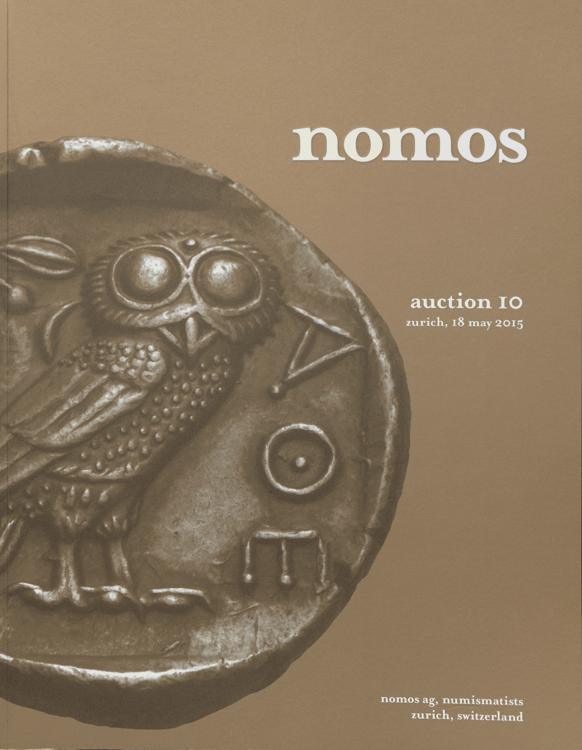
Pedigree: Ex Kunker Auction 376, 18 Oct 2022, lot 4573 From the "Alexander the Great" collection. Nomos Auction 15, 22 October 2017, lot 108. Ex Nomos Auction 10, 18 May 2015, lot 38.
References: Svoronos pl. 11, 20, SNG Munich 62
Grade: Minor marks. Rare denomination in good state of preservation. Cabinet toning and EF
gk2057
Scroll down for more information about this coin.
The silver coinage of Athens is among the most recognizable and influential in the ancient world. Struck from the metal of the Laurion mines, the "owls" became a standard trade currency across the Mediterranean and beyond, and they were so familiar that the Athenians themselves reportedly called them by the name of the bird. Nearly all of that fame rests on the tetradrachm, the workhorse denomination that carried Athenian silver into every major market. The drachm, a quarter of its weight, is a far scarcer survivor, and it offers a rare chance to see the same iconography on a more intimate scale.
The types are the ones the city had adopted generations earlier, and they change very little over two centuries. Athena, patron of the city, appears in an Attic helmet, and the owl, her sacred bird, stands on the reverse beside an olive branch, a reference to the tree she gave Athens in the contest with Poseidon. The abbreviated legend ΑΘΕ names the issuing authority, the Athenians. The reverse is set within an incuse square, a feature inherited from the archaic coinage that the mint retained long after other cities abandoned it. The date range of c. 430-420 BC falls in the early years of the Peloponnesian War, a period that saw the great plague and the death of Pericles. Athens' dominance of the Aegean made this a moment of extraordinary cultural achievement and equally extraordinary strain, and the conservative, unchanging design of the coinage stands as a deliberate assertion of continuity. This drachm is a compact and well-preserved example.
Pedigree: Nomos Auction 15, 22 October 2017, lot 108. Ex Nomos Auction 10, 18 May 2015, lot 38.