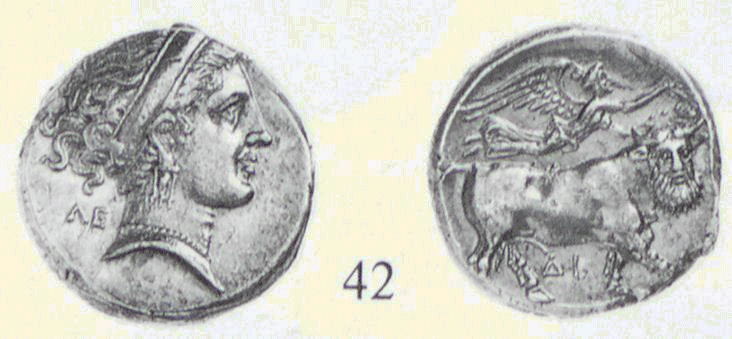
Campania, Neapolis. c. 320-300 BC
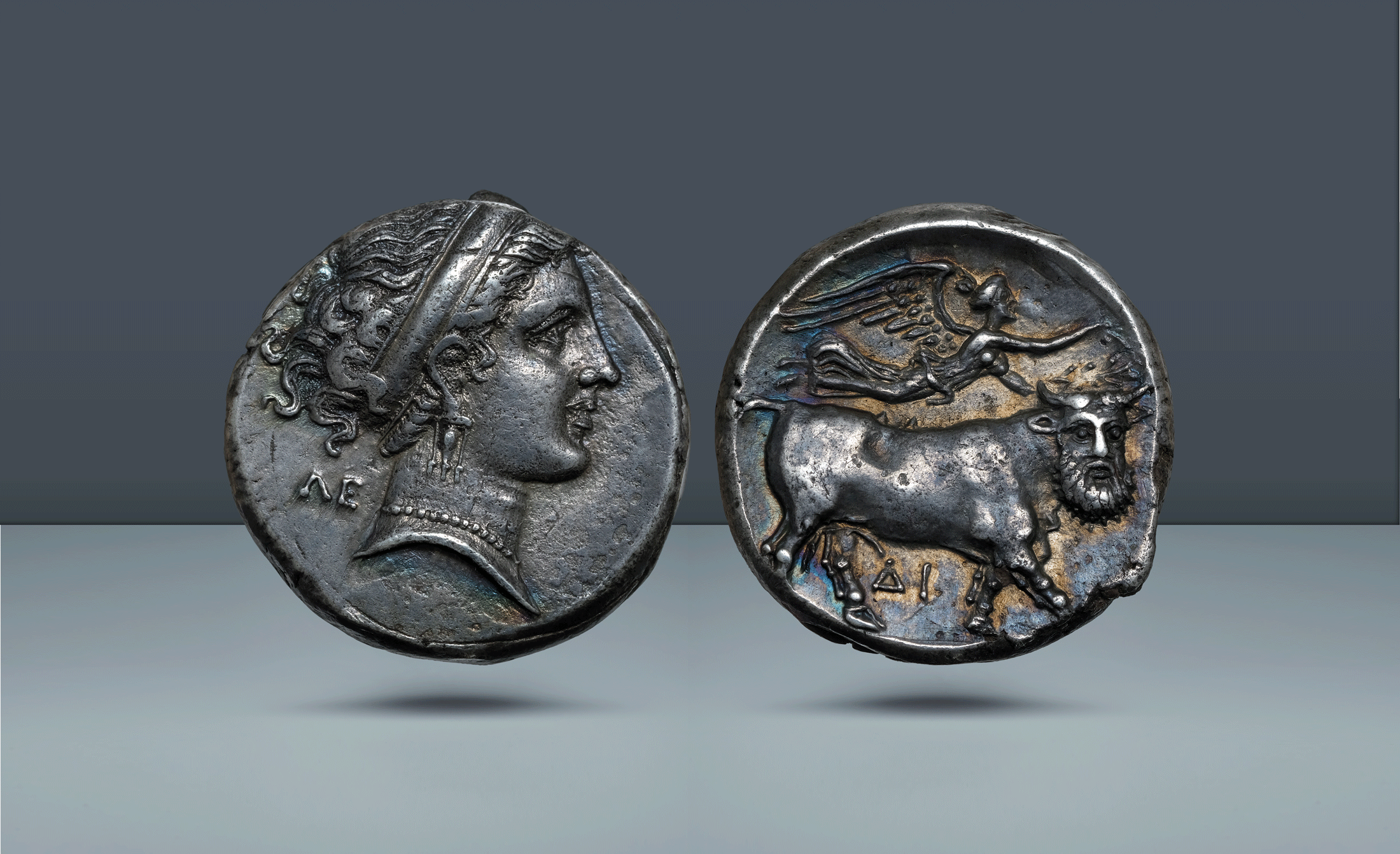
Campania, Neapolis. c. 320-300 BC
AR Nomos, 7.33g (19mm, 7h).
Head of nymph right, wearing thick band in hair, triple-pendant earring, and pearl necklace; ΛE behind neck / Man-headed bull standing right, head facing; above, Nike, wearing long chiton, flying right, crowning bull with laurel wreath held in both hands; ΔI below, NEOΠOΛITHΣ in exergue].
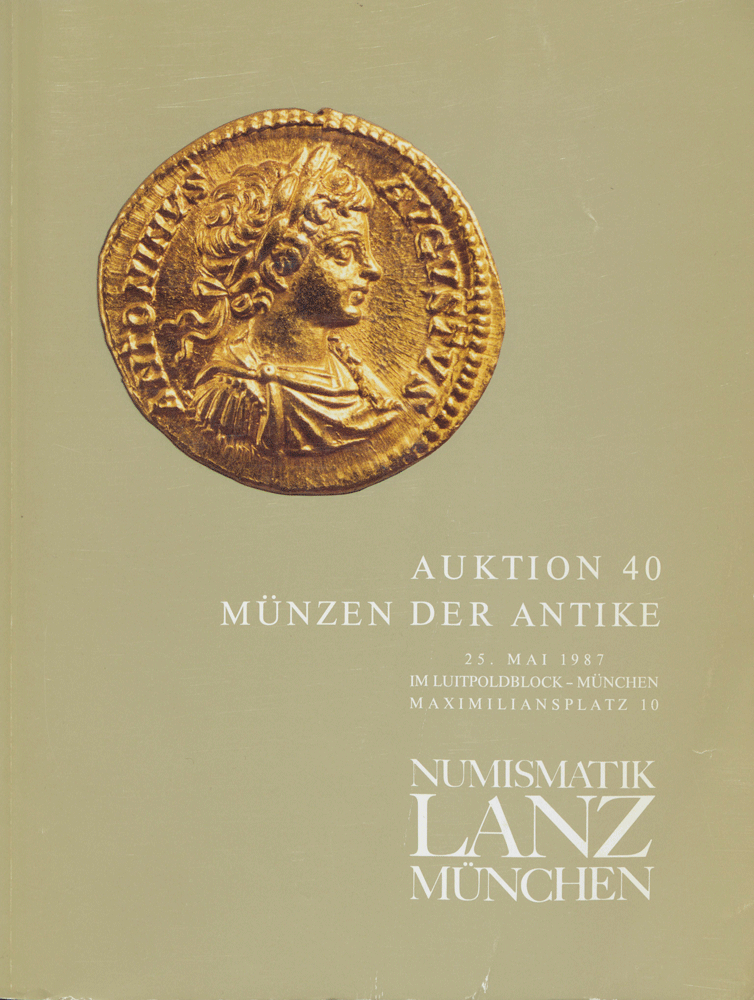
Pedigree: From the JTB Collection. Ex G. Hirsch 275 (22 September 2011), lot 3029; Lanz 40 (25 May 1987), lot 42.
References: Sambon 452; HN Italy 571
Grade: Attractive iridescent toning. Obverse slightly o/c and with some minor die rust. Reverse is incredibly well struck for issue with uncommonly nice strike. EF/EF+
gk2105
Scroll down for more information about this coin.
The silver nomoi of Neapolis rank among the most elegant and distinctive coinages of Magna Graecia, combining refined classical artistry with imagery deeply rooted in local myth and geography. Struck in the late 4th century BC, this issue belongs to the final flourishing of Neapolitan silver coinage before the city came increasingly under Roman influence.
The obverse portrays the head of a local nymph, traditionally identified with Parthenope, the mythic siren whose body was said to have washed ashore at the site where the city was founded. According to ancient legend, the original Greek settlement in the area was called Parthenope in her honor. The nymph’s serene expression, elaborate earring, and pearl necklace reflect the refined artistic style characteristic of southern Italian engravers of this period.
On the reverse appears the man-headed bull, a powerful and widely used symbol in the coinages of Campania and southern Italy. This hybrid creature represents a river god, most often interpreted as the personification of the river Achelous or a local river deity associated with fertility and abundance. The addition of Nike flying above to crown the bull introduces a note of divine favor and victory, suggesting prosperity, civic success, or perhaps a specific military or political achievement commemorated by the issue.
The ethnic NEOΠOΛITHΣ (“of the Neapolitans”) firmly identifies the issuing authority, while the letters below the bull likely refer to the magistrate or control marks associated with the issue.
Coins of this period reflect Neapolis at a crossroads of cultures. Though founded as a Greek colony, the city was increasingly interacting with Italic peoples and, eventually, the expanding power of Rome. Despite these pressures, Neapolis maintained a strong Greek identity, evident in both its coinage and civic institutions well into the Roman period.
This example is particularly attractive, with pleasing iridescent toning and a reverse strike of uncommon strength for the issue. Its long pedigree, reaching back to the 1980s, further enhances its appeal as a fine representative of the classical coinage of Neapolis.