Cyprus, Amathus. Wroikos, c. 350 BC
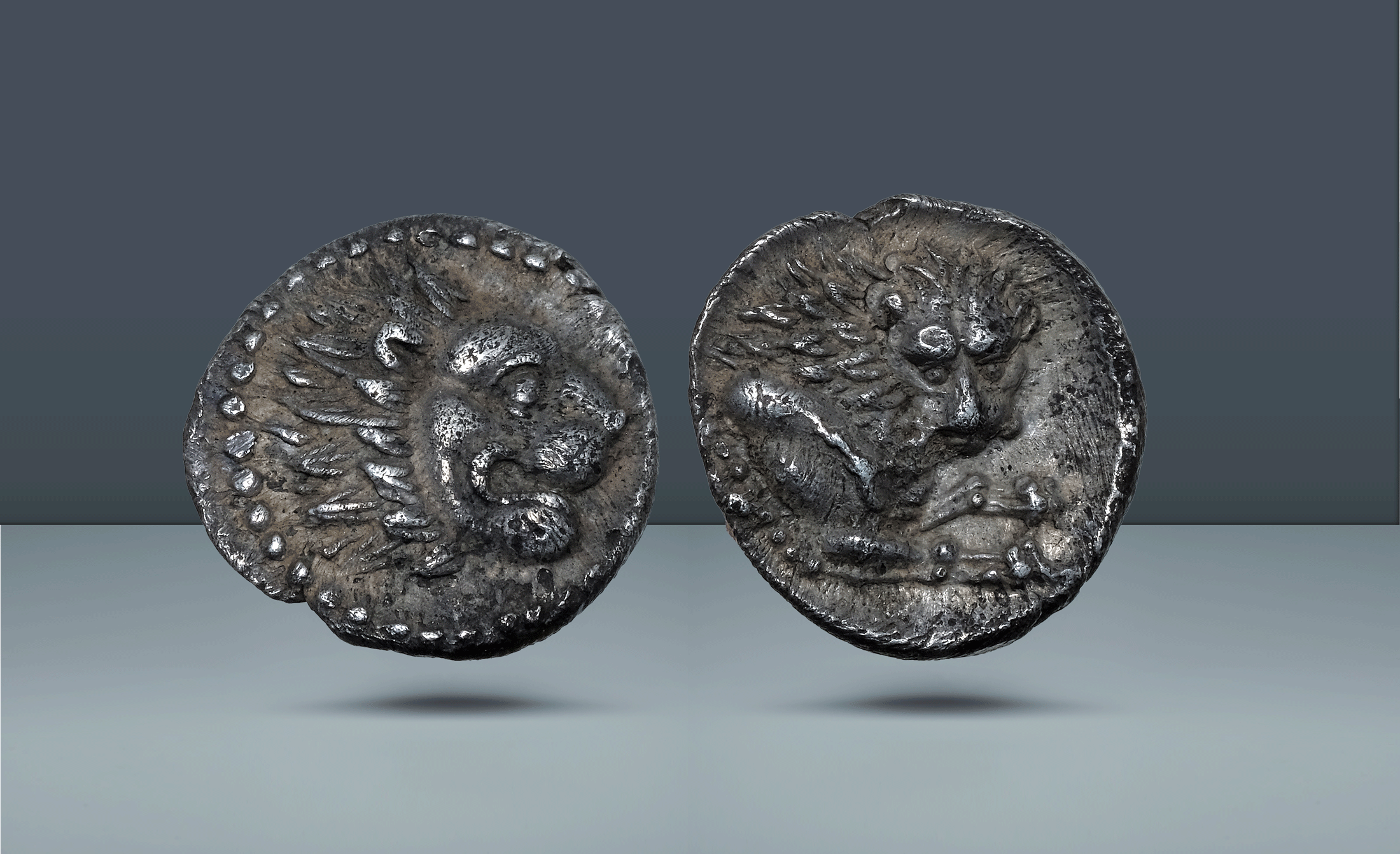
Cyprus, Amathus. Wroikos, c. 350 BC
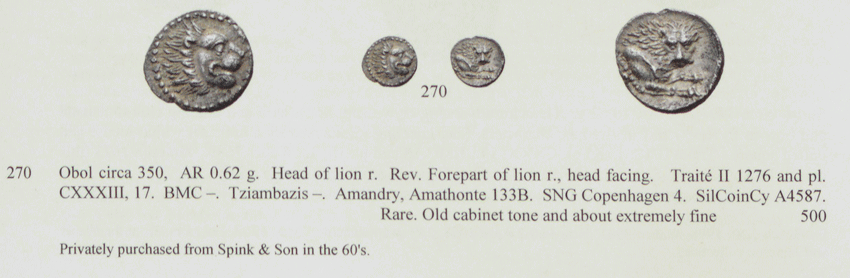
AR Obol, 0.62g (10mm, 6h).
Head of lion r. / Forepart of lion r., head facing
Pedigree: Ex NAC sale 114, 2019, 270. Privately purchased from Spink & Son in the 60s. From the collection of a Discerning collector.
References: Traité II 1276 and pl. CXXXIII, 17. BMC –. Tziambazis –. Amandry, Amathonte 133B. SNG Copenhagen 4. SilCoinCy A4587.
Grade: Wonderfully struck and perfectly centered. Minor roughness. EF
gk2093
Scroll down for more information about this coin.
This attractive silver obol was struck at the important Cypriot kingdom of Amathus during the reign of Wroikos, one of the last known local dynasts prior to the full consolidation of Macedonian authority on the island following the campaigns of Alexander the Great. Amathus occupied a distinctive cultural position within Cyprus, maintaining strong indigenous traditions alongside Greek artistic influence, a dual identity clearly reflected in its coinage.
The powerful lion depicted on both obverse and reverse is emblematic of royal authority and protection, a motif deeply rooted in Near Eastern and Cypriot visual language rather than purely Hellenic tradition. Unlike the naturalistic lions seen in mainland Greek coinage, the Amathusian rendering retains an archaic strength and stylization, emphasizing symbolic potency over anatomical realism. The facing head of the lion’s forepart on the reverse creates an unusually dynamic composition for so small a denomination, demonstrating remarkable die engraving skill on a miniature scale.
Silver fractions from Amathus are scarce, particularly in such well-centered condition. These small denominations circulated locally within the kingdom’s economic sphere and were heavily used, making sharply preserved examples increasingly difficult to obtain today. The present specimen is further distinguished by an early provenance traceable to the London trade of the 1960s, adding an additional layer of collecting history.
Coins of Wroikos represent the final flourishing of independent Cypriot civic identity before the island’s integration into the wider Hellenistic monetary system-making them historically significant witnesses to the transition from local kingship to imperial administration.