Eastern Celtic, Middle and Lower Danube. Imitations of Philip II of Macedon, Central Serbia, c. 2nd century BC
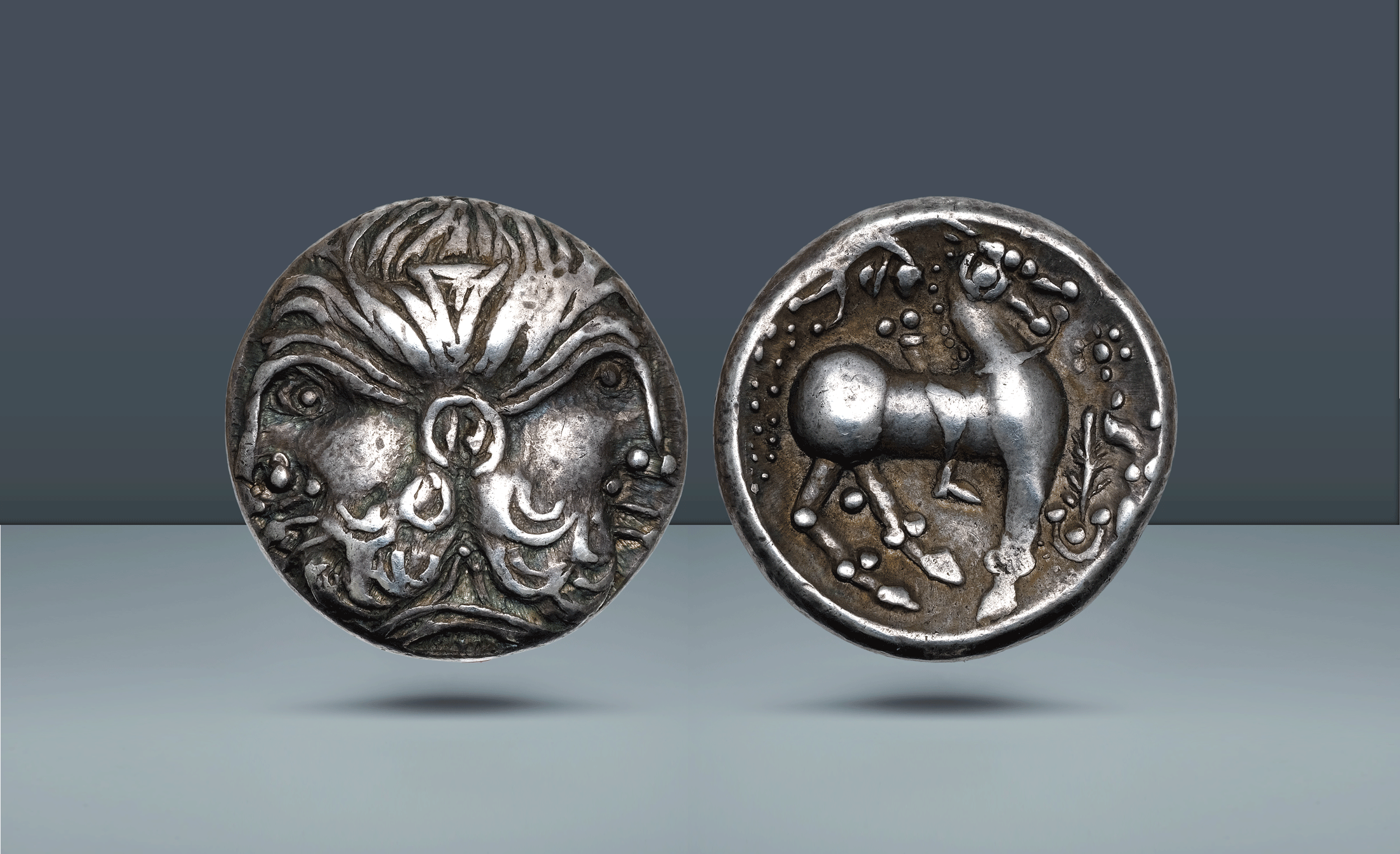
Eastern Celtic, Middle and Lower Danube. Imitations of Philip II of Macedon, Central Serbia, c. 2nd century BC
AR Tetradrchm, 12.60g (22.3mm, 6h).
"Doppelkopf" type. Bearded double-head / Stylized horse with rider; in front, a branch emerging from a dotted torc.
References: Göbl, OTA, 233/5; Slg. Lanz 546-547
Grade: Wonderful old cabinet toning. Nicely struck. EF
gk2147
Scroll down for more information about this coin.
For anyone serious about eastern Celtic coinage, Robert Göbl's Ostkeltischer Typenatlas (OTA) is the indispensable reference. Published in 1973 in Braunschweig, it's physically slim - 43 pages of text and 52 photographic plates - but its subtitle, Mit methodischem Kommentar, points to the heart of the work. Göbl extended the typology Karl Pink had established in 1939, but broke new ground by recognizing that die analysis - tracing which coins shared the same dies - was the real key to understanding eastern Celtic production. With virtually no written sources surviving for these tribes, the coins testify on their own behalf, and the dies provide the only chronological skeleton the series has.
The Doppelkopf ("double head") name comes from the inventive janiform obverse, where Celtic engravers doubled Philip II's bearded head of Zeus into a single face looking both directions at once - the reverse keeping the Macedonian horseman, crested and helmeted, often with a rosette in the field. Later catalogues, like Kostial's Lanz volume, hang their attributions on Göbl's numbering, which is the surest sign of how thoroughly the OTA reshaped the fiel