
Ionia, . Alexander the Great, Posthumous Issue, 336-323 BC Colophon, c. 215 BC
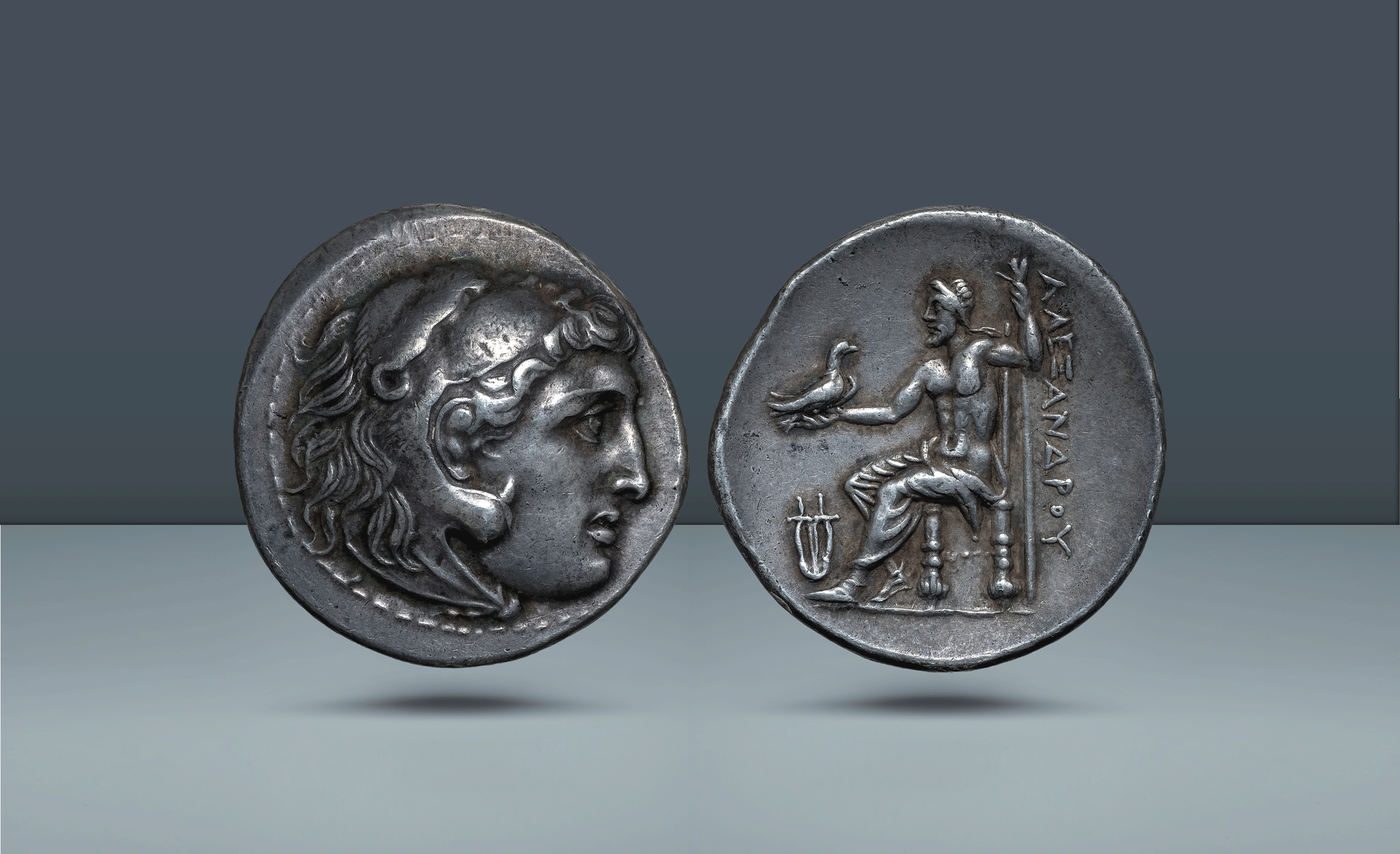
Ionia, . Alexander the Great, Posthumous Issue, 336-323 BC Colophon, c. 215 BC
AR Tetradrachm, 17.02g (29.3mm, 1h).
Kopf des Herakles mit Löwenhaube / Zeus mit Adler und Zepter auf Thron, Beizeichen Lyra
Pedigree: Privately purchased in 1972 from Coin Galleries
References: Price 1844
Grade: Lovely cabinet toning. Overall light wear with no serious issues. Toned aEF
gk2058
Scroll down for more information about this coin.
Alexander III of Macedon died at Babylon in 323 BC having conquered more of the known world than any commander before him, and within months his generals were tearing his empire apart. Yet the coinage he had standardized - the silver tetradrachm bearing Herakles on the obverse and enthroned Zeus on the reverse - proved more durable than the empire itself. Mints from Greece to Bactria continued striking it for well over a century after his death, a monetary achievement without parallel in the ancient world.
This piece comes from Colophon, one of the great Ionian cities on the Aegean coast of Asia Minor, and was struck around 215 BC - roughly a hundred years after Alexander's death. By that point the type had become a kind of universal currency, trusted across the Hellenistic world precisely because its weight standard and imagery were instantly recognized. The lyre control mark identifies the specific emission within Colophon's output and helps modern scholars date and sequence the city's posthumous series.
The obverse carries the head of Herakles in his lion skin, the hero with whom Alexander deliberately identified himself - the conqueror as living demigod, continuing the labors of mythology on an imperial scale. The reverse Zeus is equally charged: king of the Olympian gods, enthroned in authority, the eagle of divine sovereignty perched on his outstretched hand. Together the two figures constitute the most powerful iconographic statement Hellenistic coinage ever produced.
The coin itself is a handsome example. The cabinet toning is the warm, even patina of long undisturbed storage - the kind that develops over generations in a stable collection and is considered by serious collectors to be an asset rather than a detraction. The strike is well-centered with good detail in the portrait, and the wear is the honest, even surfacing of light circulation rather than anything more troubling. The 1972 Coin Galleries provenance places it in American collecting hands more than fifty years ago, predating virtually all modern import documentation requirements and providing a clean collection history.