Ionia, Ephesus. Eoelthon (magistrate), 390-325 BC, c. 360-350 BC
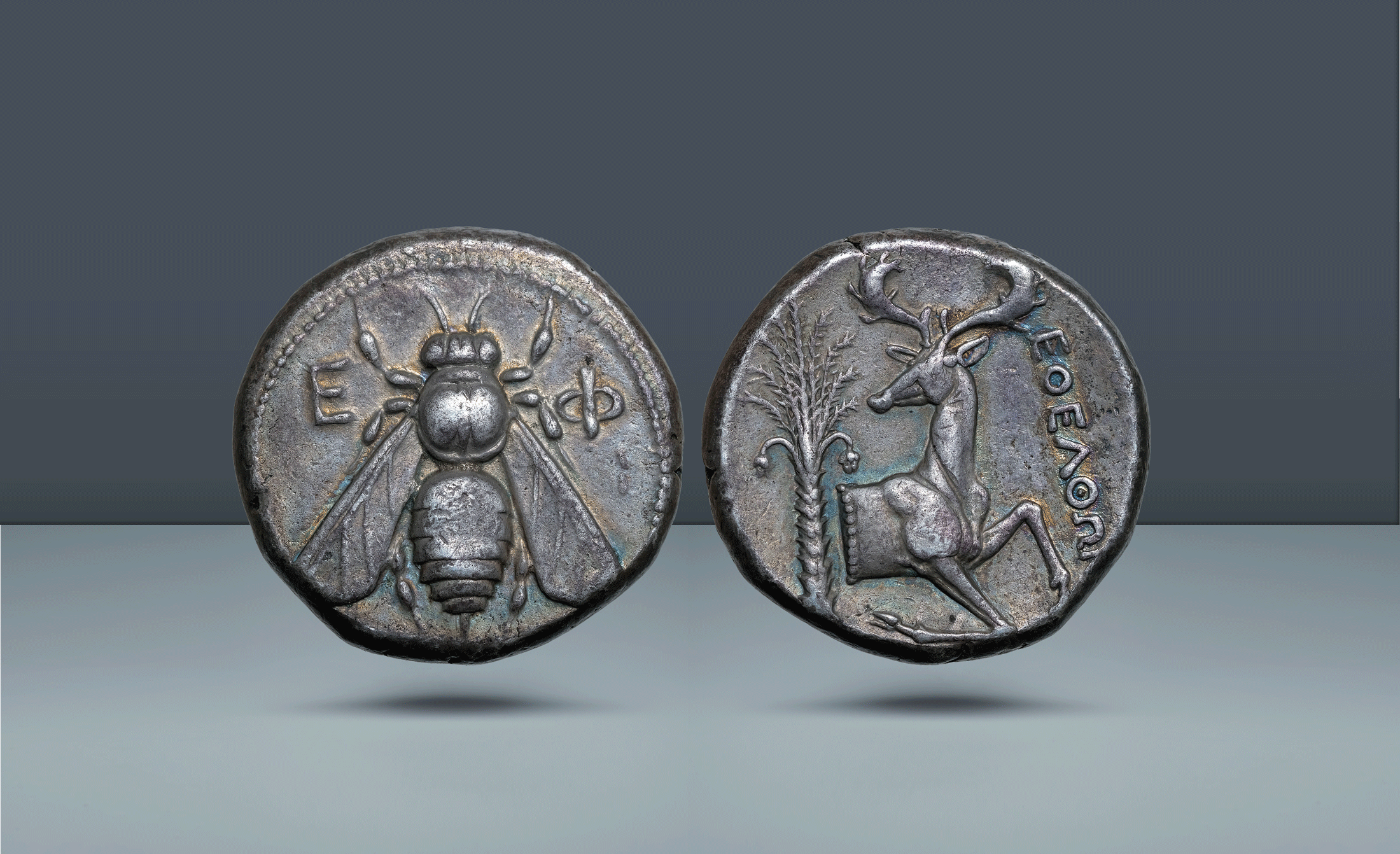
Ionia, Ephesus. Eoelthon (magistrate), 390-325 BC, c. 360-350 BC
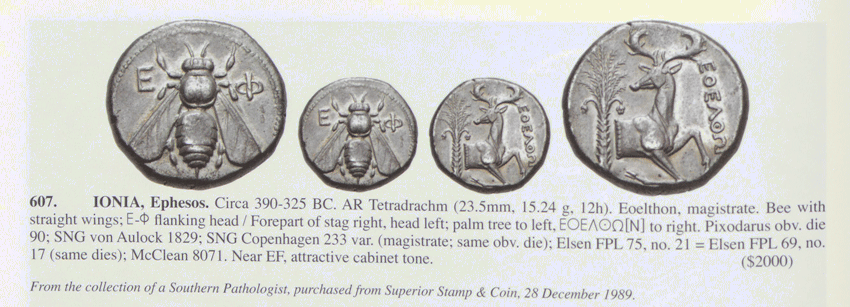
AR Tetradrachm, 15.24g (23.5mm, 12h).
Class F - Bee with straight wings; E-Φ flanking head / Forepart of stag right, head left; palm tree to left, EOEΛΘΩ[N] to right.
Pedigree: Ex North River Collection (Classical Numismatic Group 121, 6 October 2022), lot 335; Southern Pathologist Collection (Triton XVIII, 6 January 2015), lot 607, purchased from Superior Stamp & Coin, 28 December 1989.
References: Karwiese II, Series 11.1, 318, dies O90/R– (unlisted rev. die); SNG von Aulock 1829; SNG Copenhagen 233 var. (magistrate; same obv. die); Elsen FPL 75, no. 21 = Elsen FPL 69, no. 17 (same dies); McClean 8071.
Grade: Nicely struck with some slight overall wear. Obverse is very nicely struck with good details and surfaces. Well centered and Good VF
gk2107
Scroll down for more information about this coin.
The coinage of Ephesus is among the most recognizable and symbolically rich of the ancient Greek world, with the bee and stag forming the core iconography of the city’s monetary identity for centuries. This tetradrachm, struck in the mid-4th century BC under the magistrate Eoelthon, represents a mature phase of Ephesian civic coinage just before the Macedonian conquest of Asia Minor.
The obverse features the bee, a sacred symbol intimately connected to the cult of Artemis at Ephesus. The priestesses of the goddess were known as melissai-“bees”-and the insect became the enduring civic emblem of the city. Its placement at the center of the coin reflects both the religious importance of Artemis Ephesia and the centrality of her sanctuary to the city’s economy and identity.
On the reverse, the forepart of a stag appears beside a palm tree, both symbols closely associated with Artemis. According to myth, Artemis was born beneath a palm tree on the island of Delos, and the stag was one of her sacred animals, frequently appearing in her iconography across the Greek world. At Ephesus, these symbols were given particular prominence, reinforcing the city’s identity as one of the principal centers of her worship.
The magistrate’s name, Eoelthon, appears on the reverse, reflecting the civic administrative structure behind the coinage. Named magistrates are typical for Ephesian issues of this period and provide important chronological anchors for the series. The coin belongs to Karwiese’s Class F, characterized by the bee with straight wings, a stylistic development within the long-running Ephesian tetradrachm tradition.
Struck during a period of relative independence before the arrival of Alexander the Great, this issue represents the final flourishing of the classical Ephesian silver coinage. Shortly thereafter, local coinages across Asia Minor would be transformed under Macedonian rule, and the long tradition of civic tetradrachms in many cities would give way to Alexandrine types.
An attractive and well-centered example with strong obverse detail, this coin also boasts a distinguished pedigree, tracing back to a 1989 purchase and later appearing in the Southern Pathologist and North River collections. It is a fine representative of one of the most iconic and symbolically charged coin types of the classical Greek world.