Ionia, Phokia. c. 387-326 BC
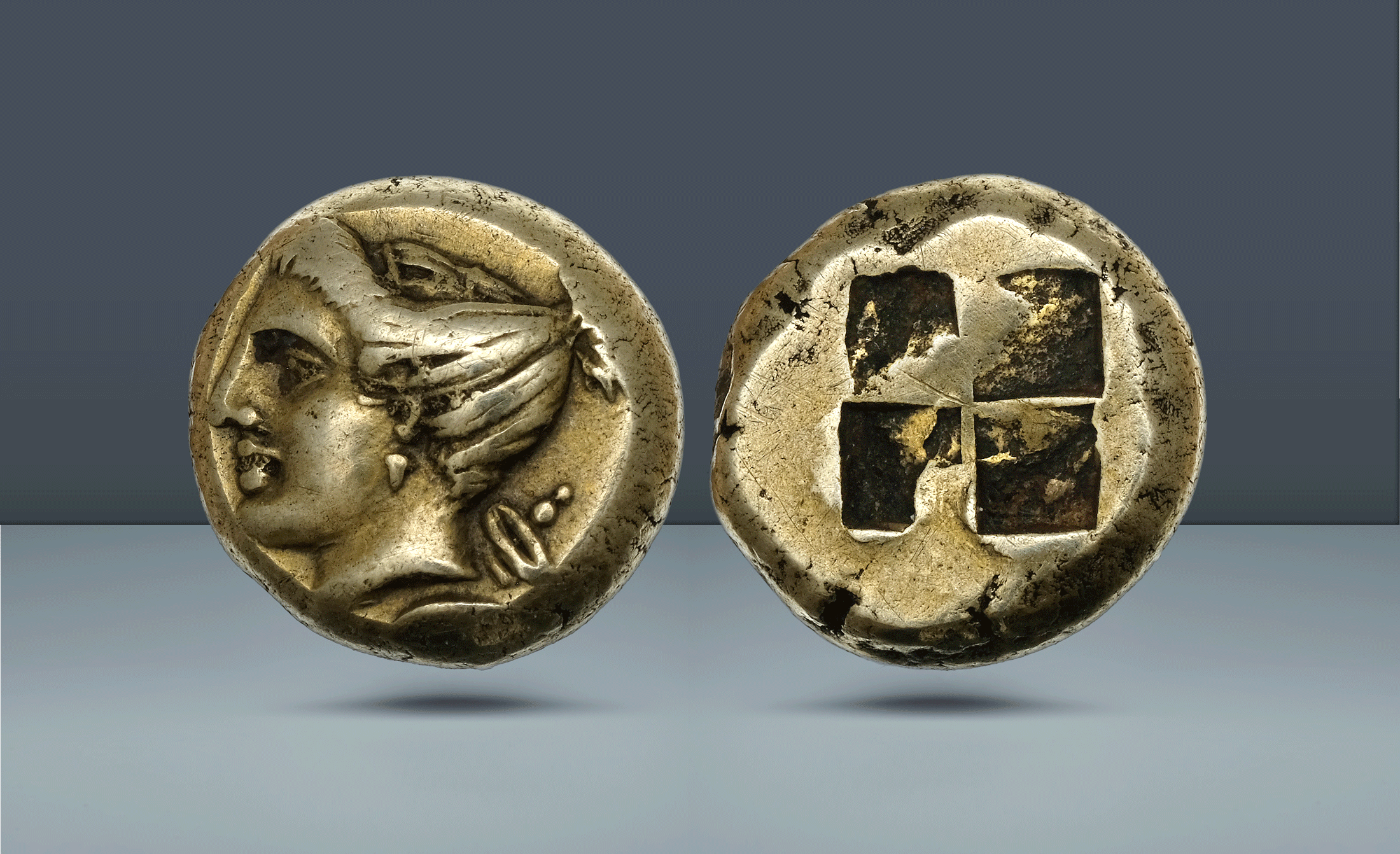
Ionia, Phokia. c. 387-326 BC
EL Hekte or Sixth Stater, 2.55g (9.5mm, n/a)
Head of Artemis left, with quiver over shoulder; [below, seal small seal left] / Quadripartite incuse square
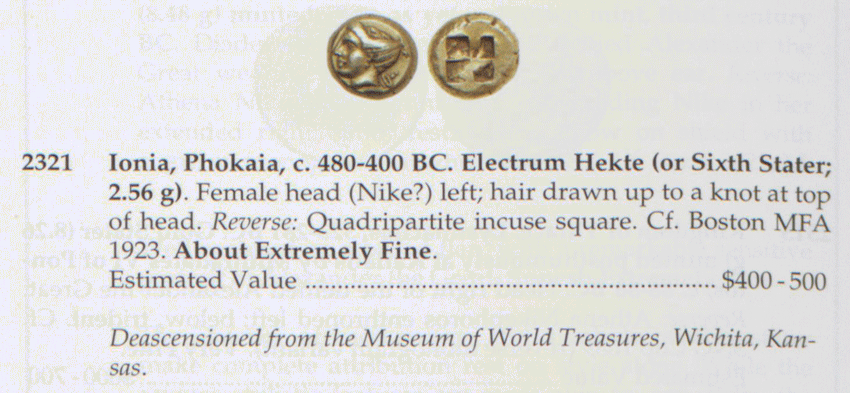
Pedigree: Ex Heritage 3032, 10 April 2014, lot 23243; Goldberg 60, 12 Oct 2009, lot 2321. From the Museum of World Treasures, Wichita, Kansas Collection and the Santa Monica Collection, #190. Purchased from Classical Ancient Coins.
References: Bodenstedt Em. 99
Grade: Lightly toned, a few light marks on reverse. Nicely struck head of Artemis on a tight flan. aEF
gk2211
Scroll down for more information about this coin.
This electrum hekte depicts the head of Artemis with a quiver over her shoulder. Artemis was one of the principal goddesses associated with hunting, the wilderness, wild animals, chastity, and the protection of young women. Her worship was particularly prominent in Ionia, where the great sanctuary of Artemis at Ephesos became one of the most celebrated religious sites in the ancient world. Although Artemis was represented in different forms throughout the Greek world, the quiver on this coin identifies her in her traditional role as a huntress.
Beneath the portrait is a small seal which is the identifying emblem of Phokaia. The Greek word for seal, phoke, provides a visual play on the city's name. Located on the western coast of Asia Minor, Phokaia was particularly well known for its maritime activity. According to Herodotus, the Phokaians were among the earliest Greeks to undertake long distance voyages, establishing contacts with the western Mediterranean, including Iberia in Spain.
Phokaian sailors also played an important role in Greek colonization. Around 600 BC, they established Massalia, modern Marseille, on the southern coast of France. Following the Persian conquest of Phokaia around 540 BC, a group of its inhabitants migrated westward, eventually establishing themselves at Elea in southern Italy.