Islands off Thrace, Thasos. c. 435-411 BC
Islands off Thrace, Thasos. c. 435-411 BC
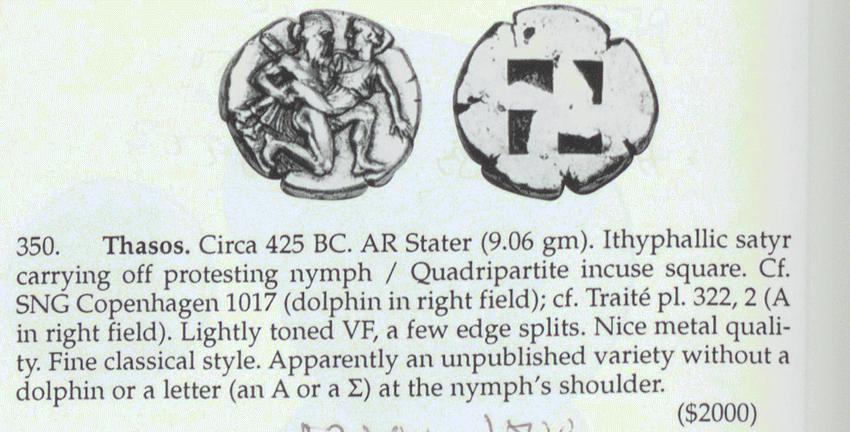
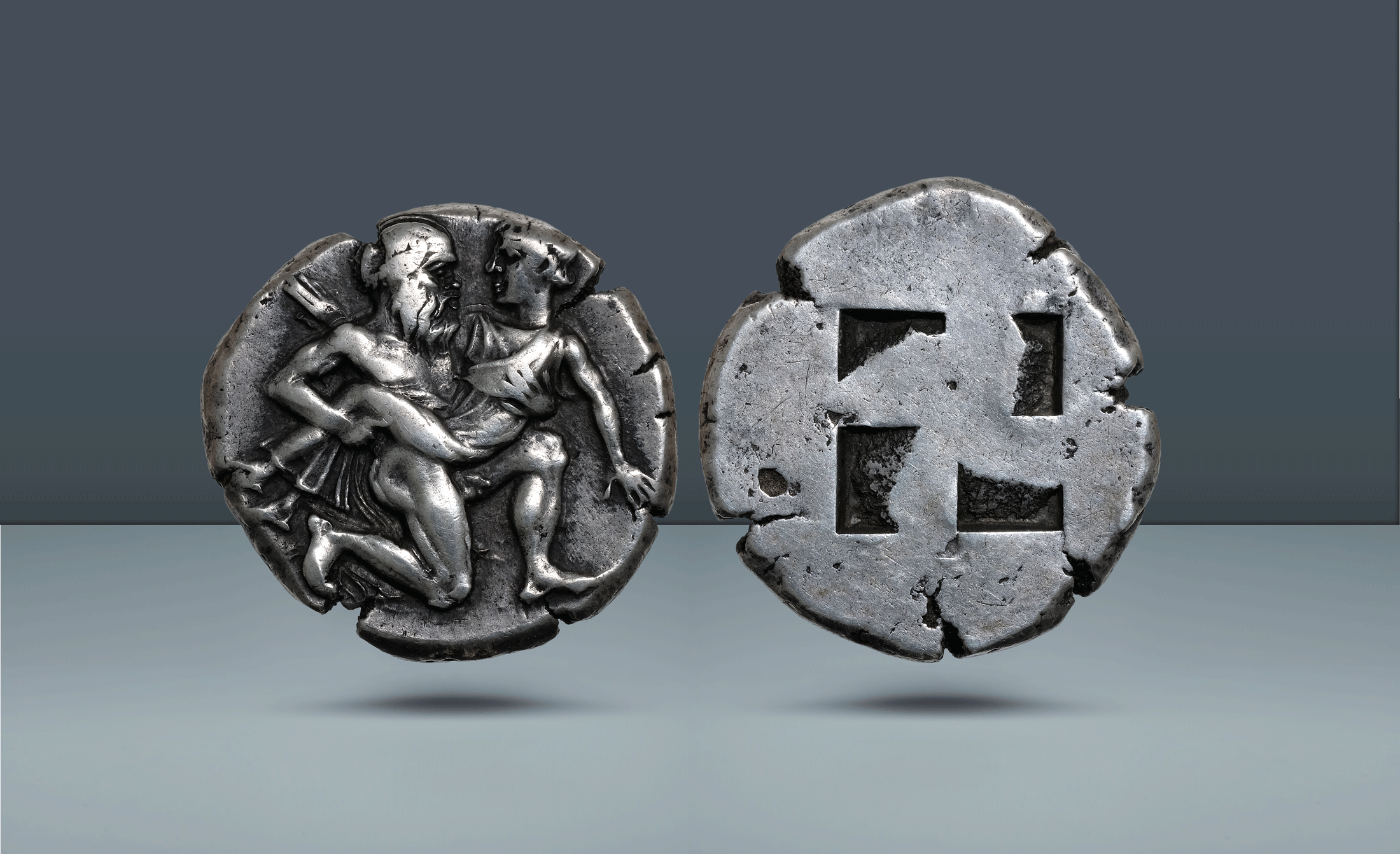
AR stater, 9.06g (21mm, n/a).
Nude, ithyphallic satyr advancing right, carrying off protesting nymph / Quadripartite incuse square
Pedigree: Ex Triton II (CNG, NAC, Freeman & Sear, 1 December 1998) lot 350 ($1500)
References: CN Online type 20936 (same dies). Cf. Le Rider, Thasiennes 6 (letter or symbol on obverse). Cf. HGC 6, 334 (same).
Grade: Lovely strike with some minor wear. Minor edge splits. EF
gk2132
Scroll down for more information about this coin.
This Thasian stater captures one of the most audacious and deliberately provocative images in all of Greek coinage: a nude, ithyphallic satyr in the act of abducting a nymph, her body twisted in protest as he carries her away. The coin dates to the middle decades of the fifth century BC, a period when Thasos-the wealthy island off the coast of Thrace-was at the height of its commercial and artistic confidence, and this image announces that confidence with uncompromising directness.
The satyr imagery on Thasian coinage is not incidental decoration. Thasos maintained a particular cultural association with Dionysus and the wild, untamed forces of nature that satyrs embodied. The wine trade that enriched the island connected it intimately to Dionysiac cult and imagery. But this particular type goes further than mere religious reference. The explicit depiction of sexual aggression-the satyr's unmistakable arousal, the nymph's futile resistance-was a statement of power and dominion. In the language of classical Greek art, such scenes asserted control over the wild, the foreign, the feminine, the uncivilized. On a coin, circulating through the commercial networks of the Aegean, this image declared Thasian authority with almost aggressive clarity.
The quadripartite incuse reverse represents the final generation of this archaic reverse type before Greek coinage moved decisively toward fully realized imagery on both sides. By the 430s BC, most major mints had abandoned the simple incuse square in favor of secondary types. That Thasos maintained this conservative reverse format speaks to the island's deliberate archaism, a choice that may reflect either artistic conservatism or an intentional connection to older numismatic traditions-a claim to historical weight and legitimacy.
Metrologically, the piece is solid at 9.06 grams for a Thasian stater, and the strike is notably lovely, the satyr and nymph rendered with anatomical precision and compositional drama. The minor wear visible on this example speaks to genuine circulation in antiquity, evidence that these coins passed through real hands in real transactions, their provocative imagery constantly present in the daily economic life of the classical Mediterranean.
For collectors of classical Greek coinage, this stater represents a moment when mints felt confident enough in their authority to express not merely power but personality-to use the coin as a vehicle for something approaching artistic statement and cultural assertion. The Thasian satyr abducting his nymph is a coin that refuses anonymity.