Kingdom of Macedon, Amphipolis. Perseus, 178 – 168 BC, c. 171-168 BC
Kingdom of Macedon, Amphipolis. Perseus, 178 – 168 BC, c. 171-168 BC
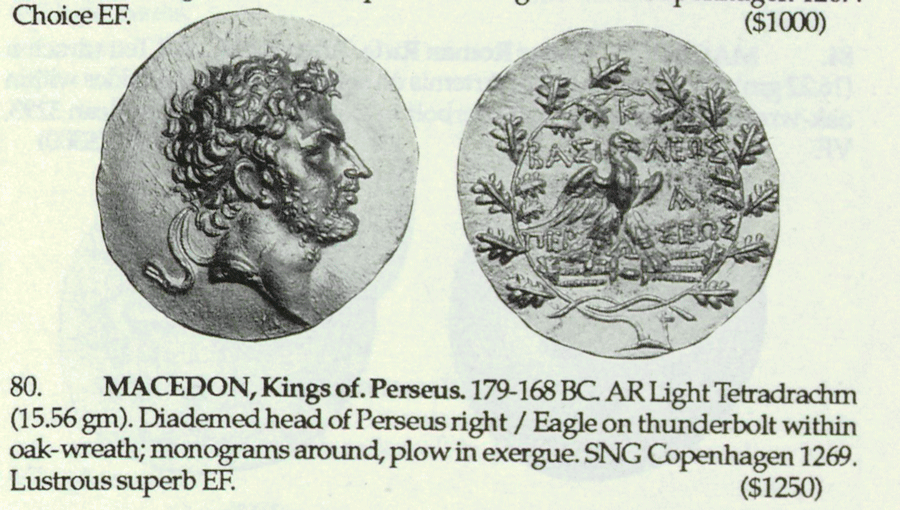
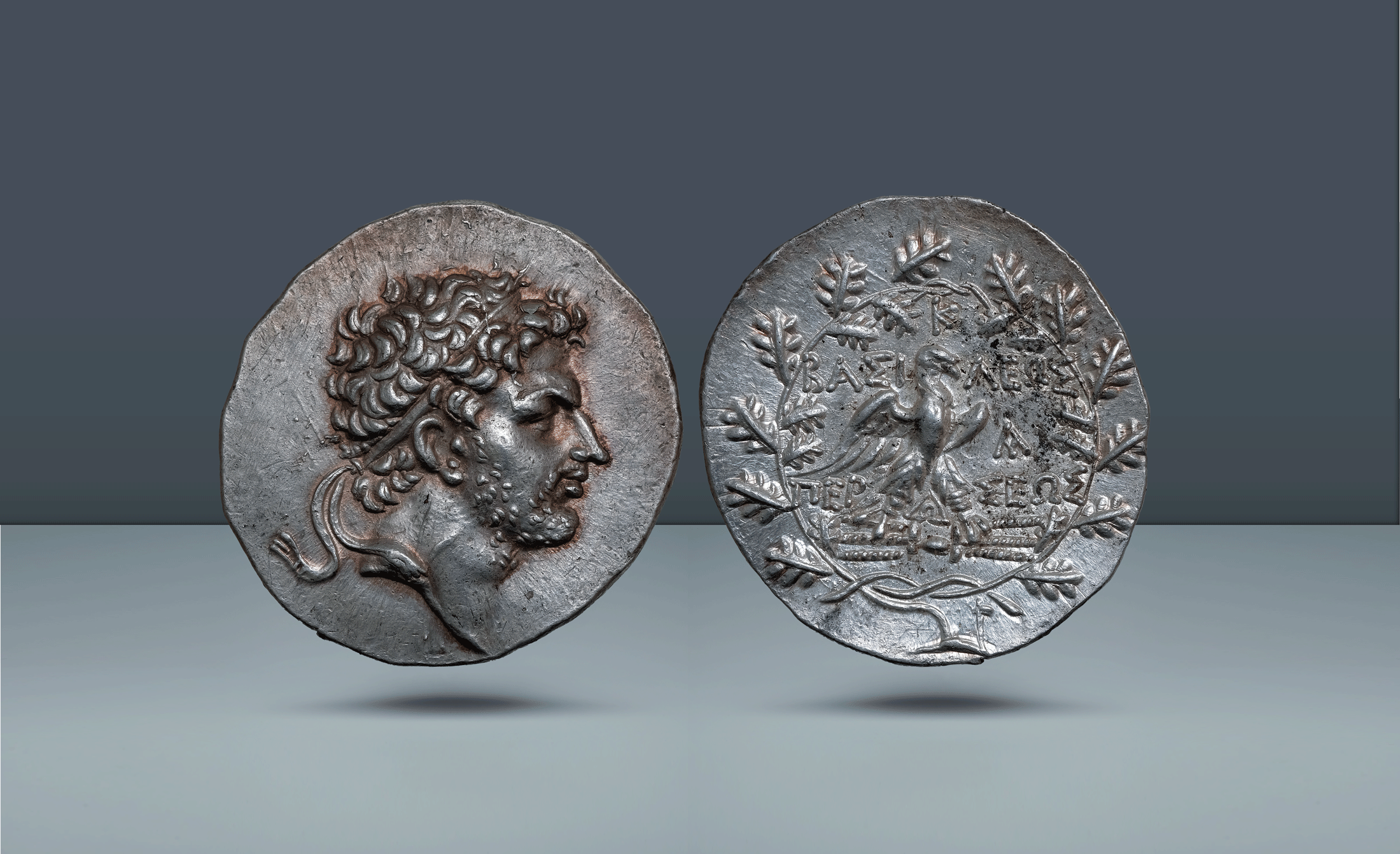
AR Tetradrachm, 15.60g (34mm, 11h).
Diademed head of Perseus r., slightly bearded / ΒΑΣΙ - ΛΕΩΣ - ΠΕΡ - ΣΕΩΣ Eagle standing r. on thunderbolt, with open wings; above, K, in r. field, monogram and below legs, monogram
Pedigree: Ex CNG 30, 1994, 80. Giessener Münzhandlung Dieter Gorny 71, 1995, 207 sales. Privately purchased from CNG.
References: Mamroth 22. De Luca 251b (this coin listed). Zhuyuetang 118 (this coin).
Grade: Lovely toning, particularly on obverse and nicely struck. EF
gk2059
Scroll down for more information about this coin.
This imposing silver tetradrachm of Perseus, the last king of Macedon, is a coin of both historical gravity and exceptional numismatic quality. Struck at Amphipolis - the principal mint of the Macedonian kingdom in its final years - it belongs to the closing chapter of one of antiquity's most consequential dynasties. Perseus, son of Philip V and heir to the legacy of Alexander the Great, fought desperately to preserve Macedonian independence against the relentless expansion of Rome, until his defeat at the Battle of Pydna in 168 BC brought the kingdom to an end and Perseus himself into Roman captivity. These tetradrachms, struck in the years immediately preceding that catastrophe, are among the last great royal coinages of the Hellenistic world.
The obverse portrait is a compelling image of royal authority - Perseus slightly bearded, diademed, his features rendered with the confident realism of mature Hellenistic die-engraving. The reverse eagle, wings spread upon the thunderbolt of Zeus, is a potent symbol of divine sanction and regal power, the control marks and monograms reflecting the careful administrative organization of the Amphipolis mint in its final productive years.