
Kingdom of Macedon. Philip II (Posthumous), 359 – 336 BC Pella, c. 323/2-315 BC
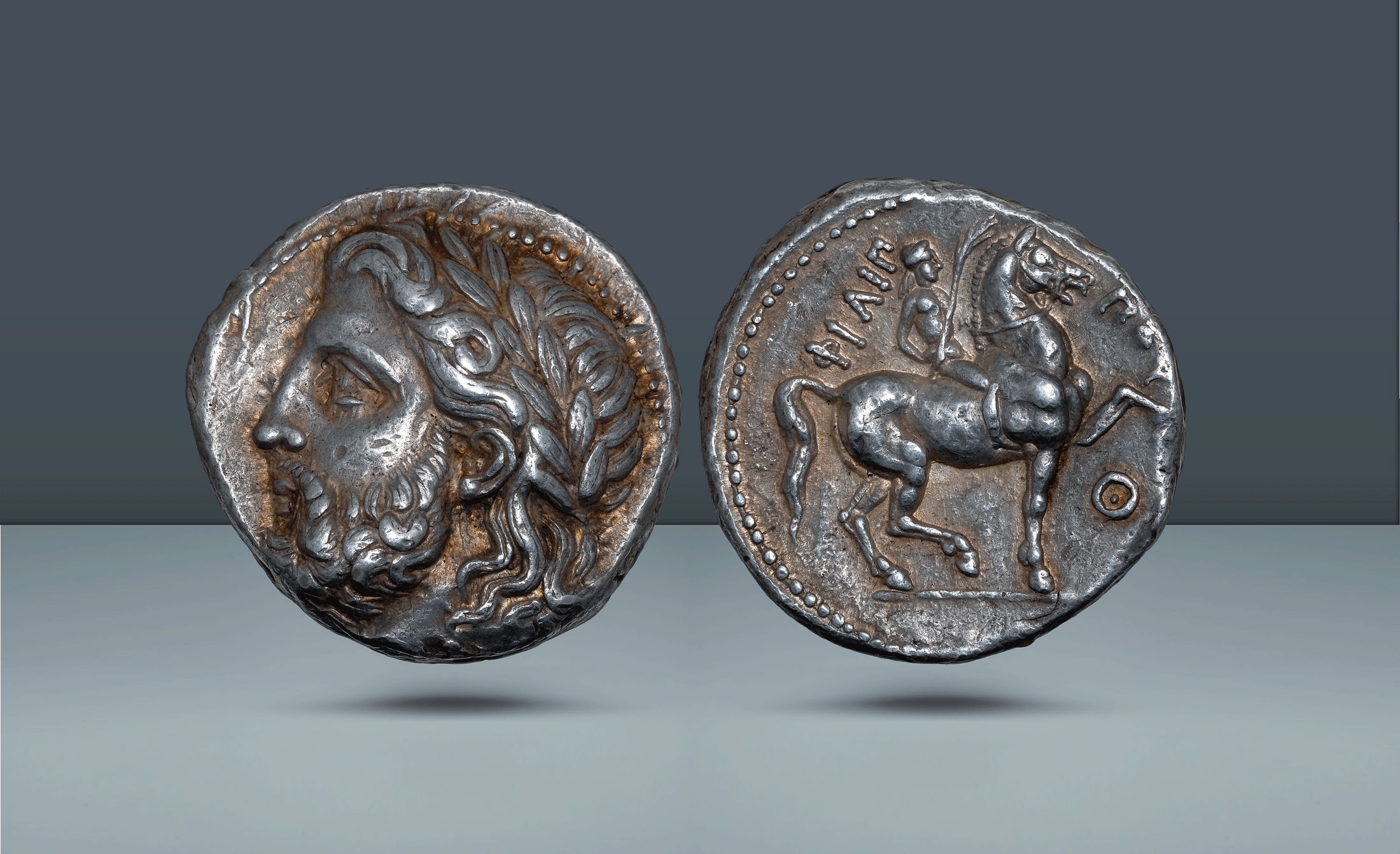
Kingdom of Macedon. Philip II (Posthumous), 359 – 336 BC Pella, c. 323/2-315 BC
AR Tetradrachm, 14.36g (24mm, 3h).
Laureate head of Zeus l. / ΦΙΛΙΠ-ΠΟΥ Youth riding horse prancing r., holding palm branch; in r. field; θ
Pedigree: Ex Roma Numismatics VIII, 2014, 384. Roma Numismatics X, 2015, 300. Savoca Numismatik Premium Auction 2, 2017, 16. Heritage 3071, 2019, 33042. Heritage 3073, 2019, 30027 sales.
References: Le Rider 438. HGC 3.1, 864.
Grade: Nicely struck with some highlights of iridescence. A few minor marks on the face, otherwise Toned EF
gk2073
Scroll down for more information about this coin.
This tetradrachm belongs to the celebrated posthumous coinage of Philip II, struck at Pella in the years following Alexander the Great’s death, and preserves one of the most ideologically charged reverse types in all of Greek numismatics. The equestrian reverse is traditionally understood as a direct allusion to Philip’s victories in the Olympic Games-most notably his triumphs in the horse race (kélēs) in 356 BC and the chariot race in 352 BC-events that firmly established his pan-Hellenic prestige.
The youthful rider, shown calmly mastering a spirited, prancing horse and holding a palm branch, evokes the iconography of Olympic victory rather than warfare. The palm was a universal symbol of athletic triumph, and its inclusion here transforms the reverse into a visual proclamation of Philip’s legitimacy and divine favor. By associating himself with Zeus on the obverse-the presiding deity of Olympia-Philip crafted a powerful ideological program linking Macedonian kingship with pan-Hellenic religious and athletic traditions.
Although struck posthumously, the continued production of this type underscores the enduring political utility of Philip’s Olympic imagery. For Alexander’s successors, these coins reaffirmed dynastic continuity and reminded the Greek world that Macedonian rule was grounded not merely in conquest, but in recognized excellence within the most prestigious institution of the Greek cultural sphere. The type thus functions as a numismatic bridge between Philip’s athletic diplomacy and Alexander’s imperial legacy.