Kings of Lydia, Sardes. Kroisos. c. 560-546 BC
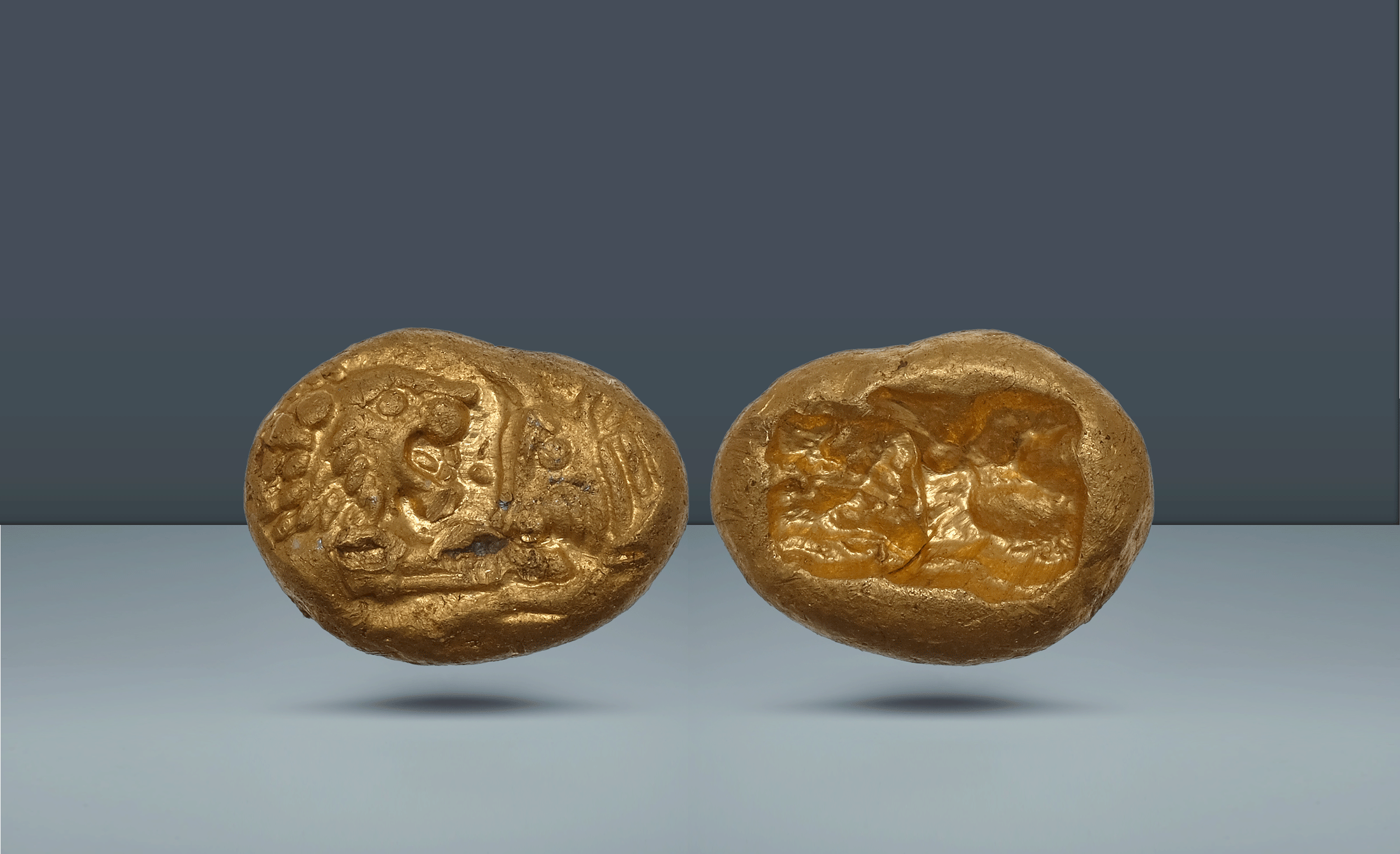
Kings of Lydia, Sardes. Kroisos. c. 560-546 BC
1/6 Stater (Heavy Standard), 1.08g (9mm, n/a)
Confronted foreparts of a lion and a bull. / Two incuse squares, one larger than the other
References: Berk 8. SNG Kayhan -. SNG von Aulock -
Grade: Wonderfully struck and good surfaces for type. Mint State for issue
gk2203
Scroll down for more information about this coin.
No ancient king has been more closely identified with wealth than Kroisos of Lydia, whose name still survives in the expression "rich as Croesus." Ruling from Sardes, a city enriched by the gold-bearing sands of the river Paktolos, he brought the Greek cities of the Ionian coast under his control and lavished spectacular gifts on the sanctuary of Apollo at Delphi. Herodotus preserves the famous stories of his reign: his conversation with the Athenian lawgiver Solon, who refused to call any man happy until he had seen how his life ended, and the oracle he received before marching against Cyrus of Persia, which told him that if he crossed the river Halys he would destroy a great empire. He did cross it, and the empire he destroyed was his own. Sardes fell to Cyrus around 546 BC, and Kroisos passed into legend.
His reign also marks a turning point in the history of money. Earlier Lydian kings had struck coins of electrum, the naturally occurring alloy of gold and silver, whose variable composition made its true value difficult to judge. Kroisos is traditionally credited with replacing it with separate coinages of refined gold and pure silver, an innovation that laid the foundation for bimetallic currency systems for centuries to come. The coins of this reform, known today as croeseids, carry the confronted foreparts of a lion and a bull. The lion had long served as the emblem of the Lydian royal house, while the meaning of the bull, and of the pairing itself, remains a matter of discussion among scholars. Small fractions such as this one are far scarcer than the staters and served the needs of everyday commerce in one of the richest cities of the archaic world.