
Kings of Macedon, Macedon. Alexander III, 'the Great' , 336-323 BC Amphipolis, c. 320-317 BC
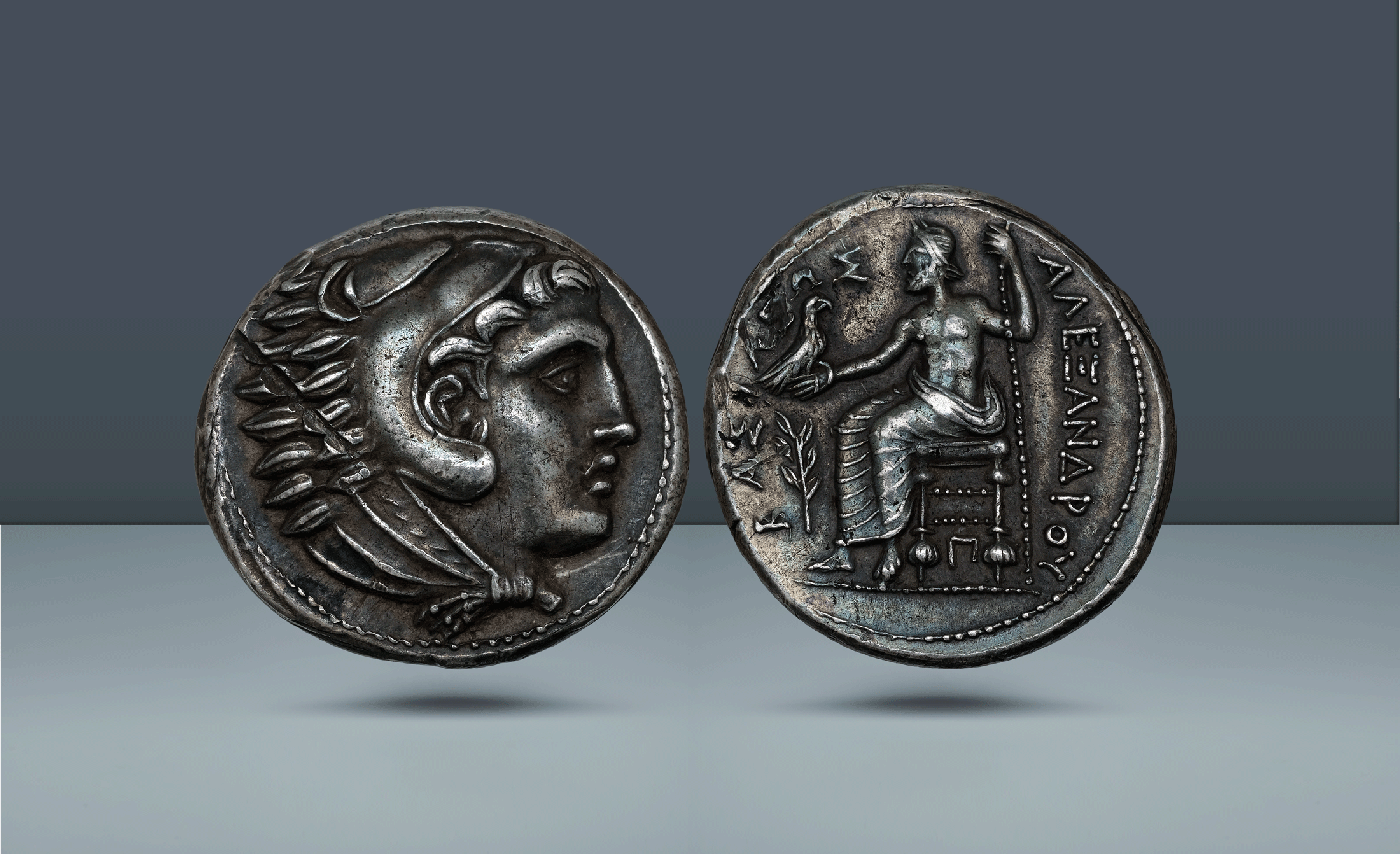
Kings of Macedon, Macedon. Alexander III, 'the Great' , 336-323 BC Amphipolis, c. 320-317 BC
AR Tetradrachm, 17.07g (16mm, ).
Head of unbearded Heracles r., wearing lion skin. / BAΣIΛEΩΣ - AΛEΞANΔPOY on diphros, holding sceptre with his l. hand, eagle on his outstretched r. hand; in field l., laurel branch, below seat, Π
Pedigree: From an old Swiss collection started in the 19th century
References: Price 102, 124; Meydancikkale 36, 93-95.
Grade: Beautiful Macedonian lifetime example with cabinet toning. Mint State
gk2181
Scroll down for more information about this coin.
Amphipolis was, by the time of Alexander's death in 323 BC, the most productive mint in the Macedonian heartland, and it continued to strike his coinage without interruption under the regents who followed him - first Antipater, then Polyperchon - precisely because the Alexander tetradrachm had already become the era's dominant trade currency, too useful an instrument to retire merely because its namesake had died in Babylon. The present issue, datable on the basis of its control marks to circa 320-317 BC, belongs to this transitional moment: the coin continues to speak with Alexander's authority even as the political structure that had produced it during his lifetime was already fragmenting into the contest among the Diadochoi. The pairing of the laurel branch with the Π monogram places this piece within Price's careful sequencing of the mint's later fifth-century officinae, a period when Amphipolis output remained prodigious even as control changed hands in Pella and Babylon alike.
This example presents with attractive cabinet toning consistent with long-term placement in an old European collection, its surfaces retaining the kind of even, undisturbed patina that speaks to decades - likely a century or more - of careful stewardship. It comes from an old Swiss collection formed in the nineteenth century, a pedigree that places its removal from circulation well before the modern era of scientific cataloguing and export documentation, and that lends it the particular resonance of a coin that has been quietly admired, rather than merely held, since well before living memory.