Kings of Macedon, Macedon. Philip II, struck under Alexander III 'the Great', 359-336 BC Pella, c. 336/5-329/8 BC
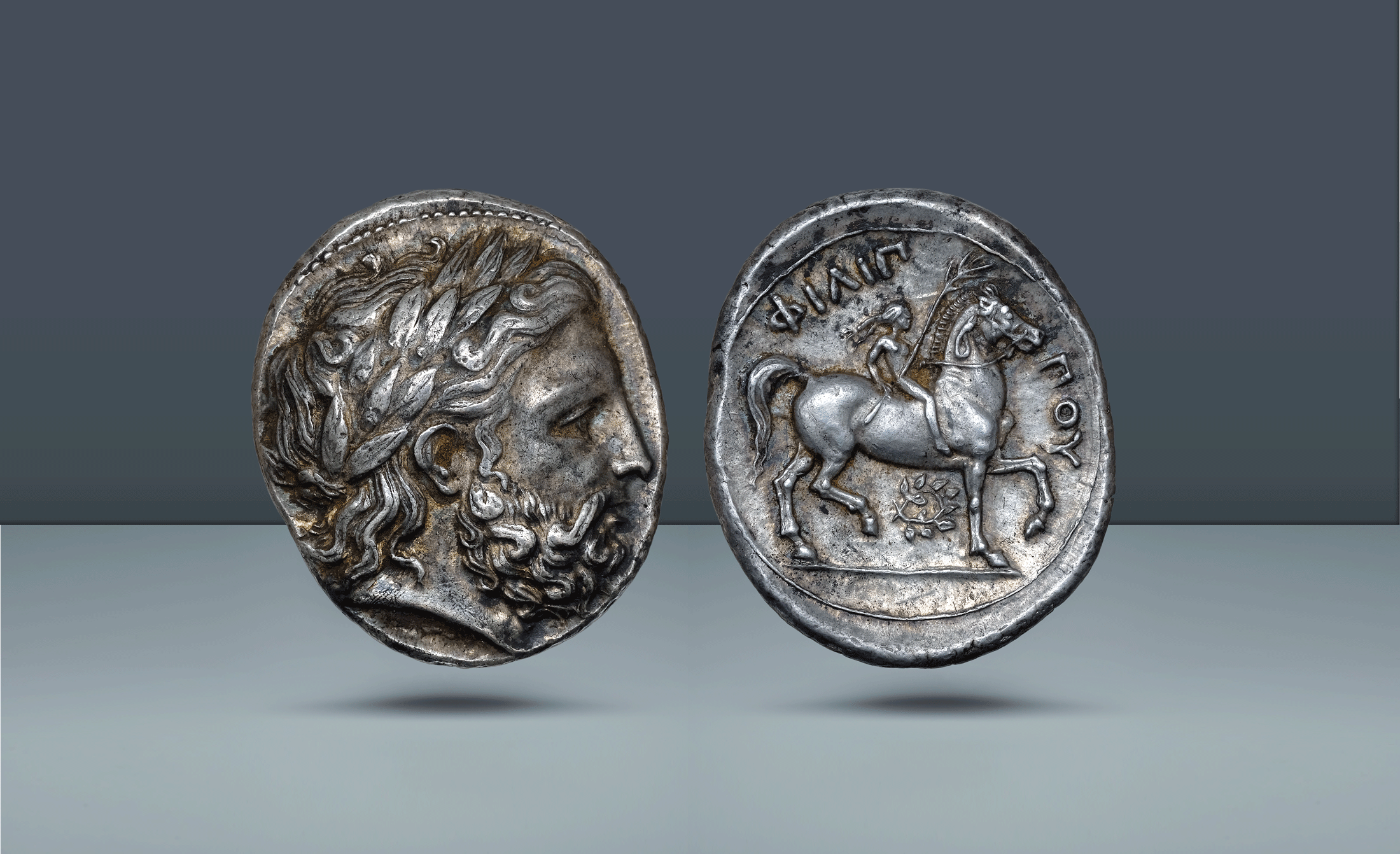
Kings of Macedon, Macedon. Philip II, struck under Alexander III 'the Great', 359-336 BC Pella, c. 336/5-329/8 BC
AR Tetradrachm, 14.48g (22.1mm, 6h).
Laureate head of Zeus to right. Rev. ΦΙΛΙΠ-ΠΟΥ Young jockey, holding palm frond in his right hand and reins in his left, riding horse to right; below horse, wreath
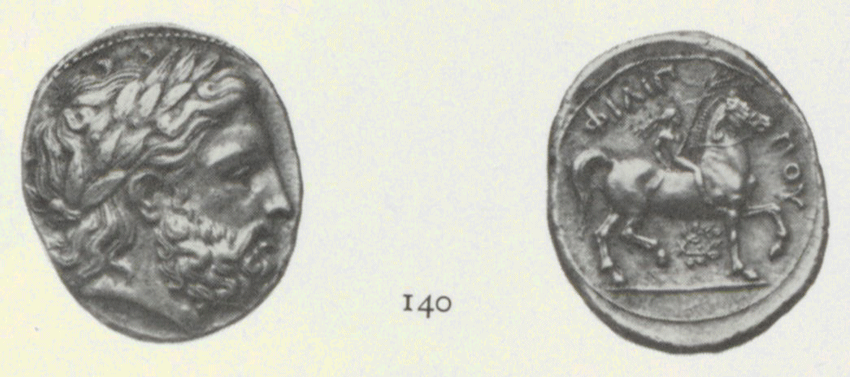
Pedigree: From the collection of Dr. August Rohdewald (1929-2026), ex Leu 7, 9 May 1973, 140 (with original auction flip).
References: Le Rider pl. 16, 385a (this coin, D201/R309). SNG ANS 415-6.
Grade: High relief and well struck. Some speckles on the surfaces. Mint State
gk2162
Scroll down for more information about this coin.
The standard reference for this series is Georges Le Rider's monumental 1977 die study, Le monnayage d'argent et d'or de Philippe II frappé en Macédoine de 359 à 294. One of the twentieth century's great numismatists, and longtime keeper of the Cabinet des Médailles in Paris, Le Rider photographed and sequenced virtually every specimen he could locate. The scale of the project is staggering: his corpus is organized around individual die combinations rather than broad types, with roughly 2,200 die combinations underlying 382 distinct types.
Why does this matter for collectors? Because Philip's coinage did not die with Philip. Le Rider argued that the silver began at the king's accession in 359 BC and the gold around 345, struck at Amphipolis and Pella, and that production continued under Alexander the Great until roughly 329-328. It then resumed after 323 and ran until about 315 for the gold and 295-294 for the silver. In other words, a large share of surviving "Philips" were actually struck under Alexander, Philip III Arrhidaeus, and Kassander, all fed by the legendary 1,000-talent annual output of the Pangaion mining district. Le Rider's control-symbol and die-link sequences are precisely how numismatists separate a tetradrachm struck for the living king from a posthumous issue, which is why his plate numbers are so important.
Interestingly, collectors can consult the whole system for free! The American Numismatic Society's PELLA project organizes Philip's coinage by Le Rider's corpus under a consistent numbering scheme, linking over 20,000 examples held in 19 collections worldwide.