LUCANIA, Thourioi. c. 443-400 BC

LUCANIA, Thourioi. c. 443-400 BC
AR Didrachm/Nomos, c. 443-400 BC, 7.89g (20mm, 6h).
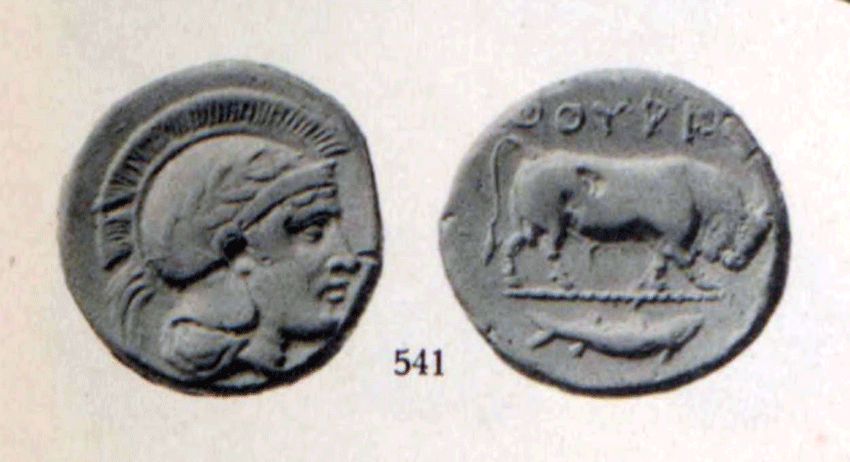
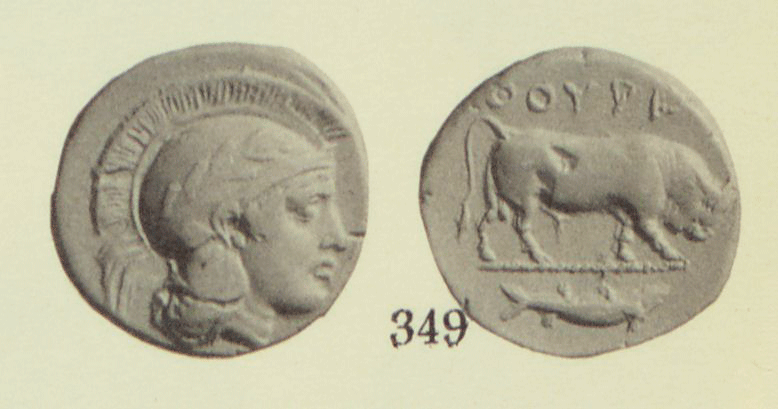
Head of Athena with a wreathed Attic helmet. / ΘΟΥΡΙ[ΩN]. bull with bowed head r. on line, tunny fish below r.
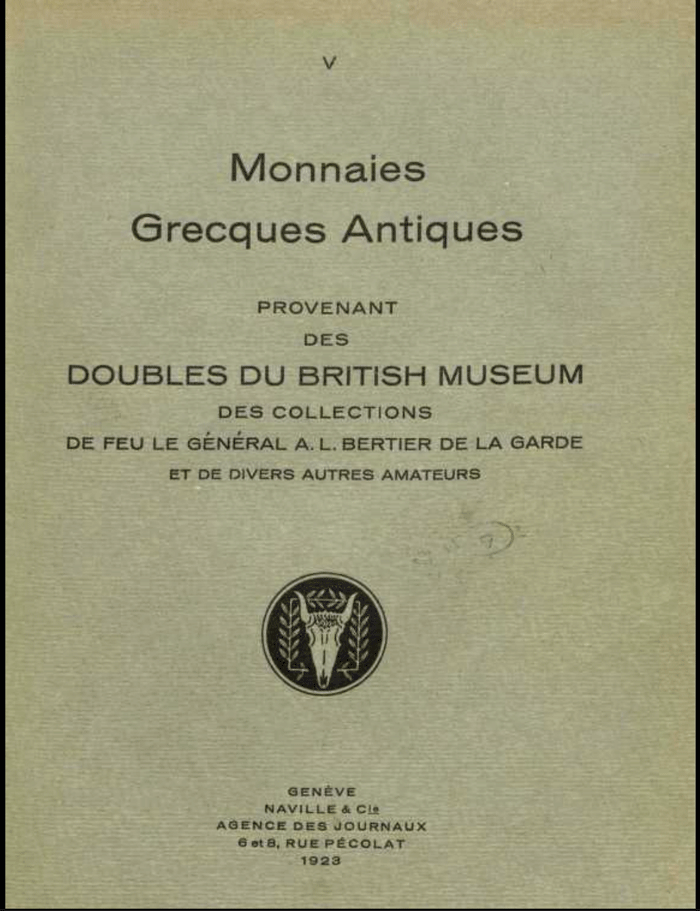
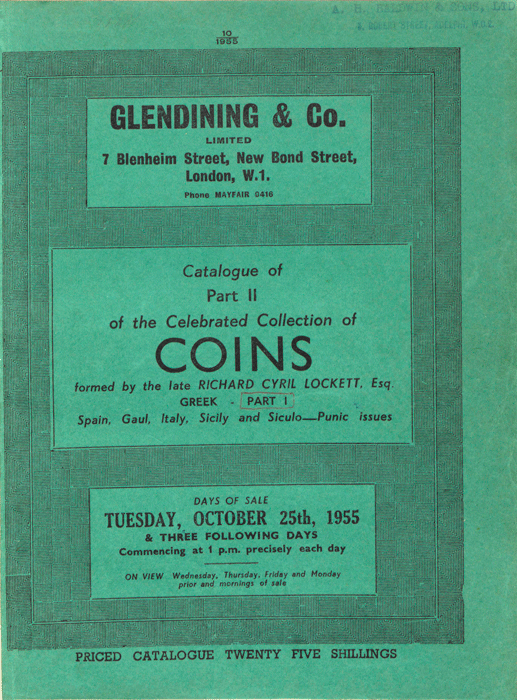
Pedigree: Ex Naville V, 18 June 1923, lot 541. From the Duplicates of the British Museum; ex R.C. Lockett, Esq. – Auction Glendining & Co, London, October 25, 1955, lot 349.
References: SNG ANS 900-14; HN Italy 1775
Grade: Obverse has some wear on highpoints , but well struck and in fine style. Reverse well struck with some wear, legend partially off flan. Attractive toning. EF. (gk1695)
Scroll down for more information about this coin.
Thourioi's coinage represents one of the great artistic achievements of South Italian Greek minting, and this didrachm, struck in the decades following the city's foundation in 443 BC, exemplifies the sophisticated die-engraving that the mint attracted almost from its inception. The city itself was born of a remarkable pan-Hellenic experiment, settled on the site of the destroyed Sybaris under Athenian sponsorship with colonists drawn from across the Greek world, including intellectual luminaries like the historian Herodotus and the town-planner Hippodamus. That cosmopolitan origin is legible in the coinage, which fuses an unmistakably Athenian obverse type with a reverse drawn from the older Sybarite numismatic tradition.
The obverse presents Athena in a wreathed Attic helmet, a direct nod to the Athenian character of the colony and to the goddess's role as patron of the new city, rendered here in fine style with real delicacy in the modeling of the features despite wear across the high points. The reverse carries the city's ethnic, ΘΟΥΡΙΩΝ, arranged above a bull walking right with lowered, butting head, a type inherited in spirit from the bull of Sybaris but reworked as Thourioi's own civic emblem, with a tunny fish in the exergue beneath referencing the rich fishing grounds of the Gulf of Taranto on which the city's prosperity partly depended. The legend is partially off flan, as often encountered on this issue, but the bull itself is well struck and full of vigor.
What makes this particular coin worth pausing over is its pedigree, which was recently traced back to its full extent. The piece descended through R.C. Lockett's celebrated collection, sold at Glendining & Co. in London on October 25, 1955, but in going back through the earlier Naville V sale of June 18, 1923, we were able to confirm that this coin had, in fact, come from the duplicates of the British Museum itself, deaccessioned and sold as lot 541 in that sale. It is always a particular pleasure to uncover this kind of institutional pedigree, tracing a coin's path out of a national collection and into the hands of one of the twentieth century's most discerning private collectors, and it adds a meaningful layer of documented history to an already handsome example of Thourian art.