Macedon, Under the Romans. c. 148-147 AD
Macedon, Under the Romans. c. 148-147 AD
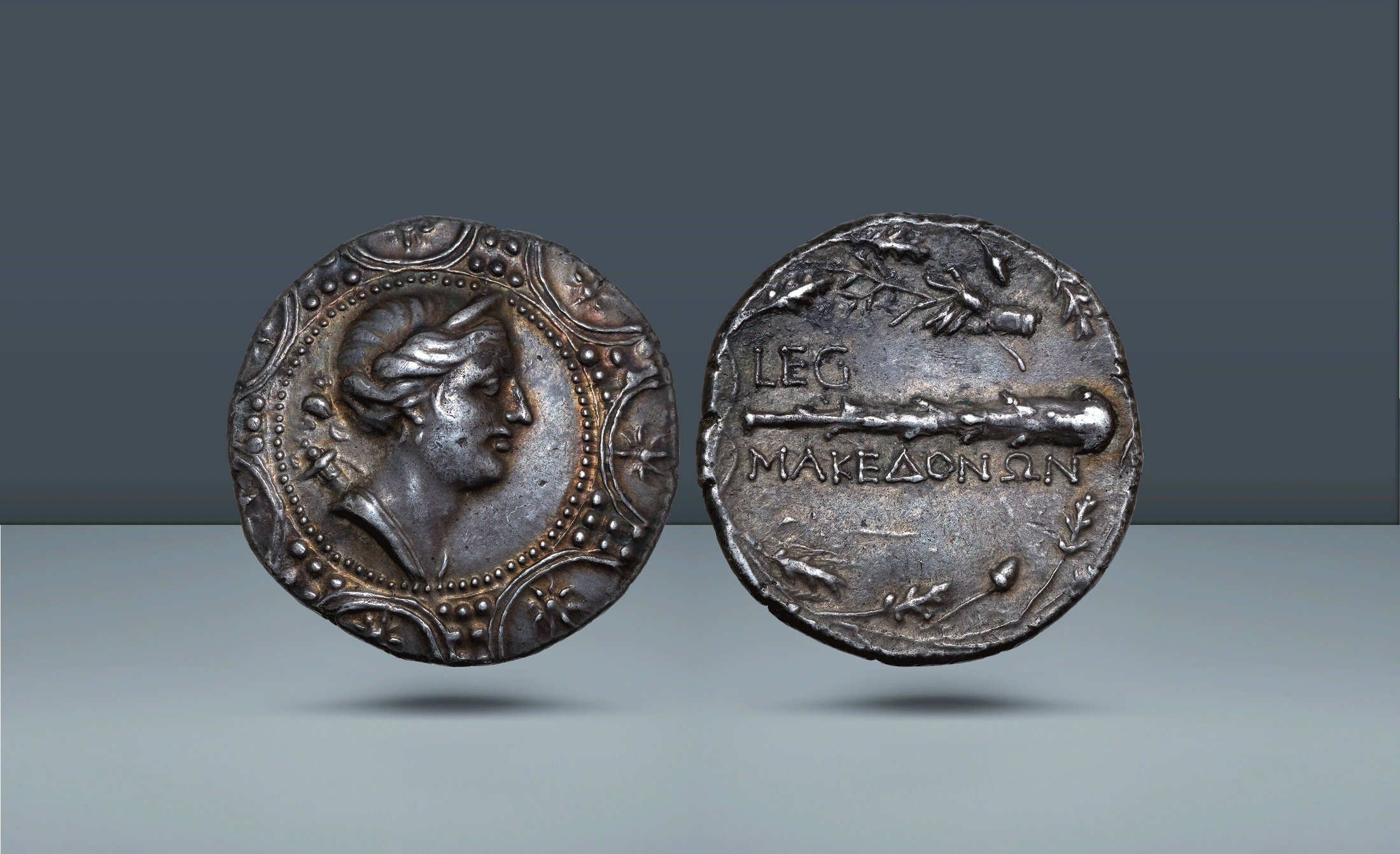
AR Tetradrachm, 16.9g (29mm, 2h).
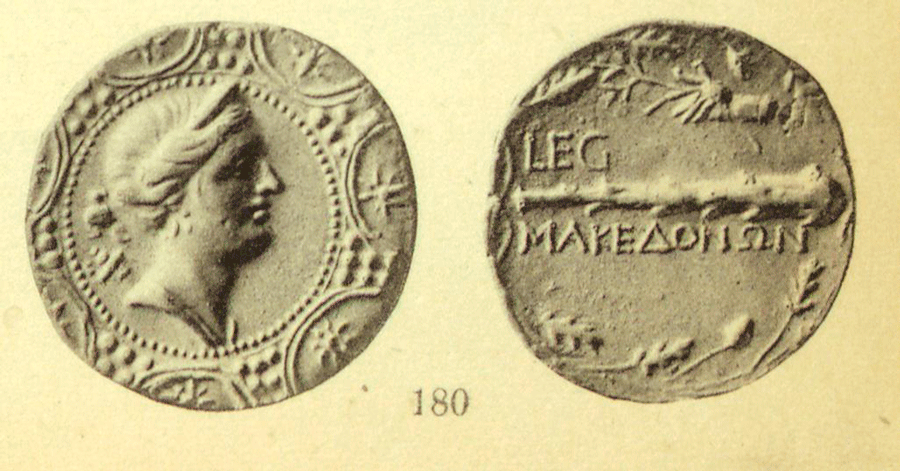
Diademed and draped bust of Artemis Tauropolos r., bow and quiver over shoulder; all in center of a Macedonian shield / LEG / ΜΑΚΕΔΟΝΩΝ Club; above, hand holding olive branch, within oak wreath
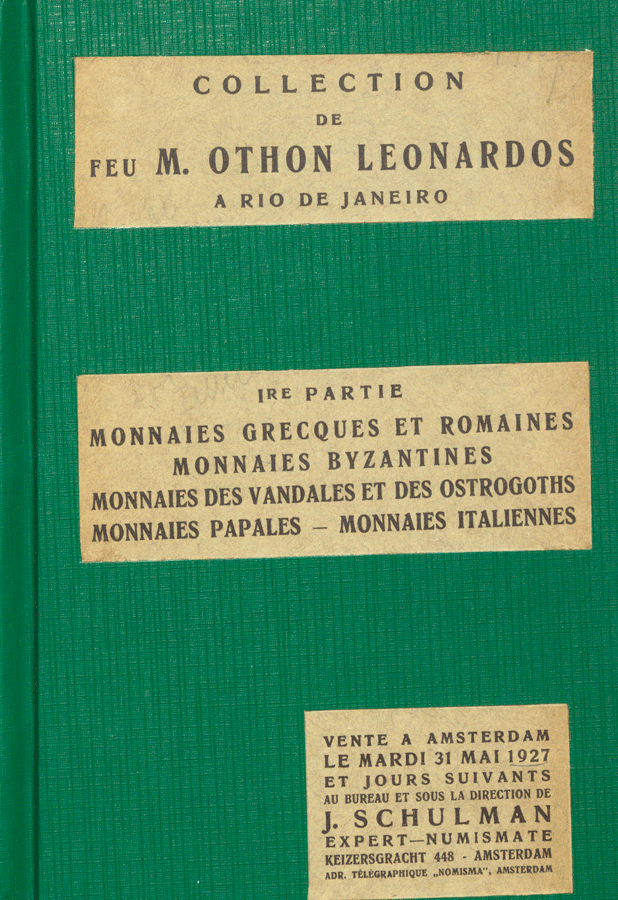
Pedigree: Ex Schulman 31 May 1927, 180. M&M FPL 269, 1966, 7. M&M FPL 289, 1968, 22. Triton V, 2002, 1316. From the Robert Schonwalter collection.
References: MacKay, Macedonian Tetradrachms of 148-147 B.C., in ANSMN 14 (1968), pg. 18, 1g (this coin). SNG Copenhagen 1317 (these dies). SNG Lockett 1540 (this obv die). SNG Ashmolean 3310 (this obv die). Zhuyuetang 118 (this coin).
gk2063
Scroll down for more information about this coin.
This tetradrachm was struck during one of the most volatile moments in Macedonian history – the brief revolt of Andriskos (149-148 BC), who claimed to be the son of Perseus, the last legitimate king of Macedonia. The coinage from this period represents the final expression of Macedonian independence before the permanent establishment of the Roman province in 148 BC.
The olive branch held by the hand on the reverse carries profound symbolism. Whether representing Macedonian hopes for peace under their brief independence or the Roman restoration of order, this iconographic element marks the coin as a transitional issue from a critical historical juncture. The change in legend format during this period reflects the shifting political landscape as military governance gave way to nominal autonomy before ultimate provincial administration.
The portrait of Artemis Tauropolos is rendered with exceptional skill, maintaining the refined Hellenistic artistic tradition even during this period of political upheaval. The cult of Artemis Tauropolos held particular importance at the Amphipolis mint, making her selection as the obverse type especially meaningful. The Macedonian shield format itself represents a continuation of the proud numismatic tradition that had distinguished Macedonian coinage for generations.
This tetradrachm is numismatically significant as a survivor from the last gasp of Macedonian sovereignty. Coins from this brief transitional period are considerably rarer than issues from the stable periods that preceded and followed. The extensive die linkages documented in scholarship demonstrate the limited production during this tumultuous year.