
Paphlagonia, Sinope. c. 425-410 BC
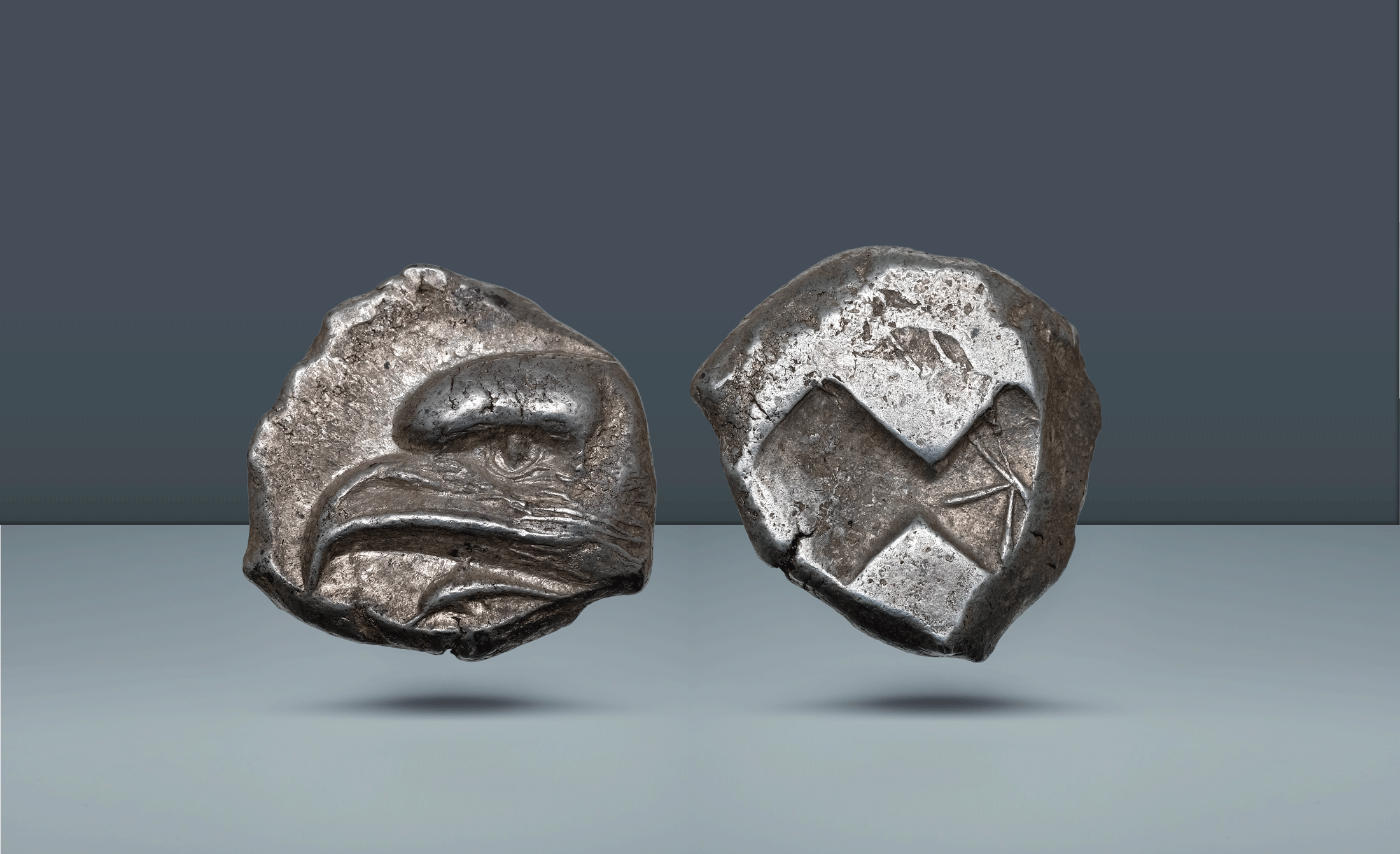
Paphlagonia, Sinope. c. 425-410 BC
AR Drachm, 6.20g (16mm, na).
Head of a sea eagle to left; below, dolphin swimming to left. Rev. Quadripartite incuse square composed of two raised and two sunken squares; within one of the sunken squares, K.
References: HGC 7, 388 var. (pellet in quarters). SNG Ashmolean 265. SNG BM Black Sea -. SNG von Aulock 6837.
Grade: With a very dramatic eagle's head, struck in high relief. EF
gk2159
Scroll down for more information about this coin.
Located on the Black Sea coast of north-central Anatolia, Sinope itself possessed no significant silver deposits. The promontory's immediate resources were agricultural and maritime.
Its monetary metal is instead best explained by the city's function as the principal commercial outlet for the region extending eastward along the Pontic coast. The local territory most associated in ancient sources was the Chalybes. The Pontic Alps behind this coast are demonstrably rich in silver, lead, and copper ores and were worked continuously into the Ottoman period, when the region's principal mining settlement bore the name Gümüşhane or silver house. Silver extracted from these ores would have moved along the coast via maritime traffic to Sinope, whose harbor on an otherwise inhospitable shore was particularly important. Indeed, access to these mining regions is generally reckoned among the principal motives for Milesian colonization.
Secondary sources of monetary metal must also be acknowledged. As an entrepôt exporting tunny, timber, grain, and miltos (Sinopic ochre), the city accumulated foreign silver through favorable exchange, which could be reissued as civic coinage. This was a normal practice among mints lacking domestic ores.