
Ptolemaic Empire, Egypt. Ptolemy IV Philopator, 221 to 204 BC Alexandria, c. 225-205 BC
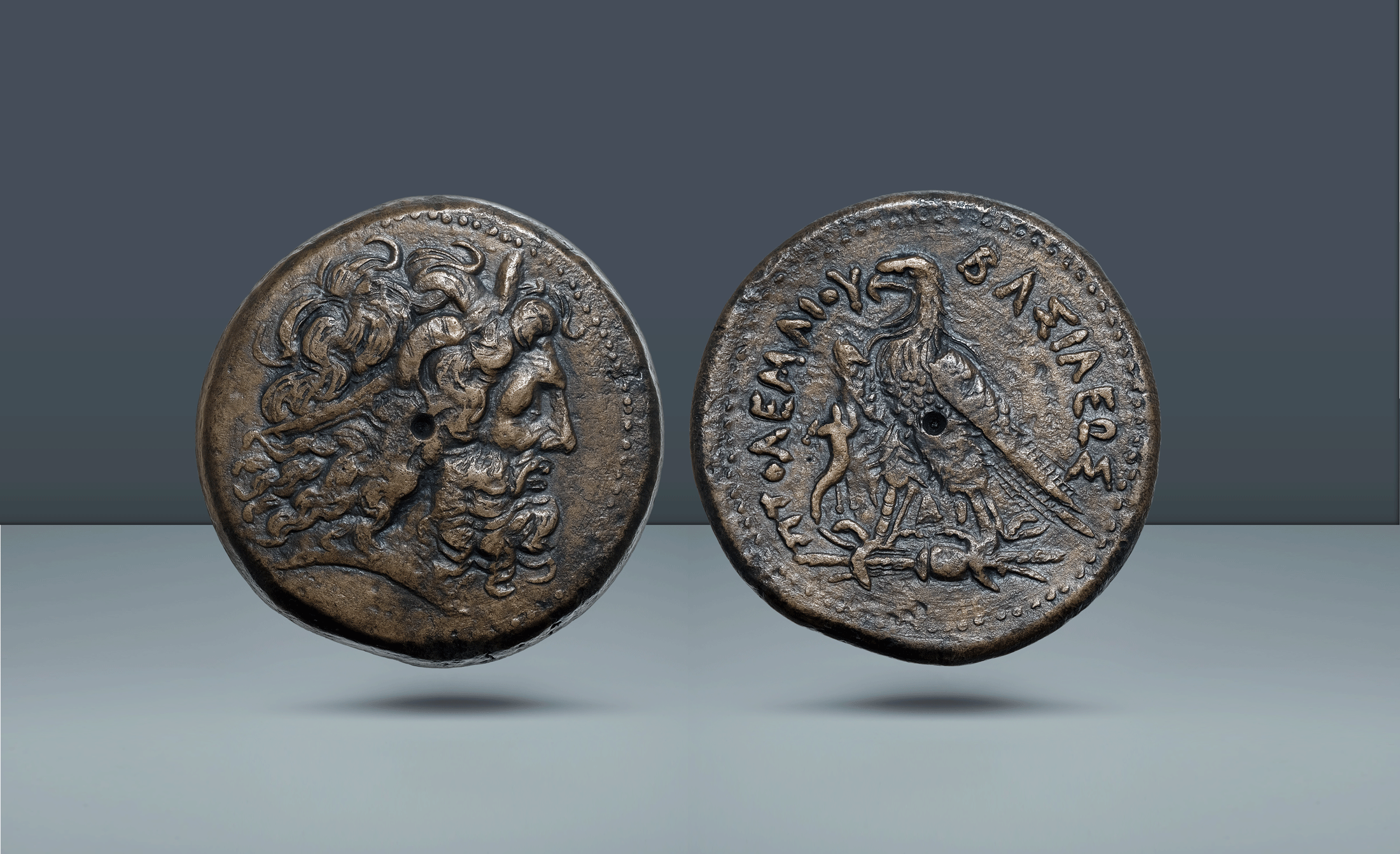
Ptolemaic Empire, Egypt. Ptolemy IV Philopator, 221 to 204 BC Alexandria, c. 225-205 BC
AE 42.6, 72.42g (42.6mm, 11h).
Diademed head of Zeus-Ammon right / Eagle with closed wings standing left on thunderbolt; filleted cornucopia to left, ΔI between legs
References: CPE B495. SNG Cop -. Svoronos 1125
Grade: Nicely struck with even patina. Evidence of very light cleaning, otherwise, aEF
gk2113
Scroll down for more information about this coin.
A monumental bronze struck at Alexandria during the reign of Ptolemy IV Philopator. Coins of this extraordinary size were integral to the internal monetary system of Ptolemaic Egypt. Unlike much of the Hellenistic world, Egypt maintained a largely closed monetary economy, resulting in the production of very large bronze denominations for local circulation. These impressive pieces-often weighing over 70 grams-represent some of the largest regularly circulating bronze coins of antiquity.
The obverse depicts Zeus-Ammon, the syncretic fusion of the Greek Zeus with the Egyptian god Amun, reflecting the Ptolemies’ deliberate blending of Greek and Egyptian religious imagery to reinforce their legitimacy as rulers of Egypt. The reverse features the dynastic eagle standing on a thunderbolt, the principal emblem of Ptolemaic royal authority, accompanied by a cornucopia symbolizing prosperity and abundance.
The small circular depression visible on the reverse is characteristic of the production technique used for these massive bronzes. In preparing such large flans, the metal was cast and then often adjusted or stabilized before striking, sometimes leaving a central void or casting cavity that appears as a “hole” after striking. This feature is occasionally encountered on large Ptolemaic bronzes and is a result of the manufacturing process rather than post-mint damage or later modification.