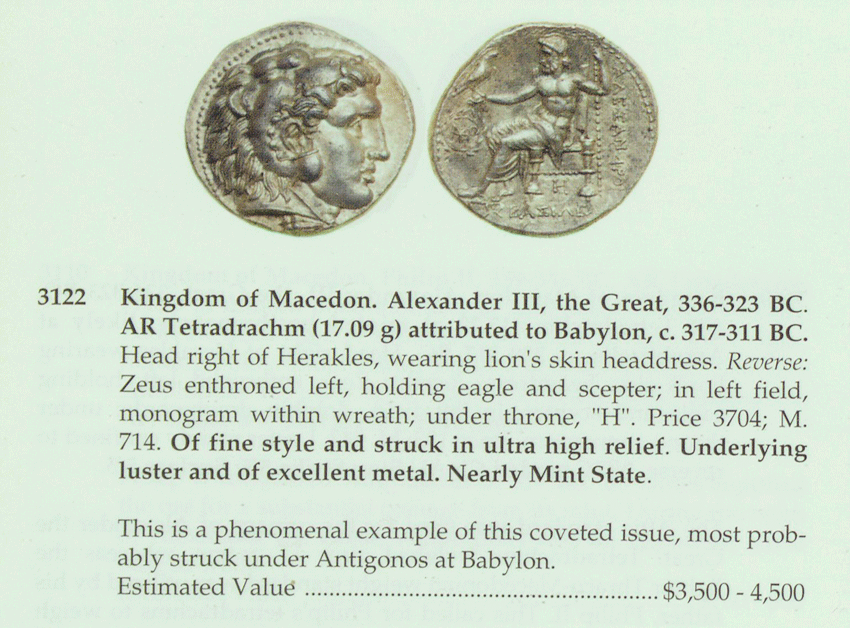
Seleucid Empire, Babylon. Seleucus I , 312-281 BC, c. 311-300 BC
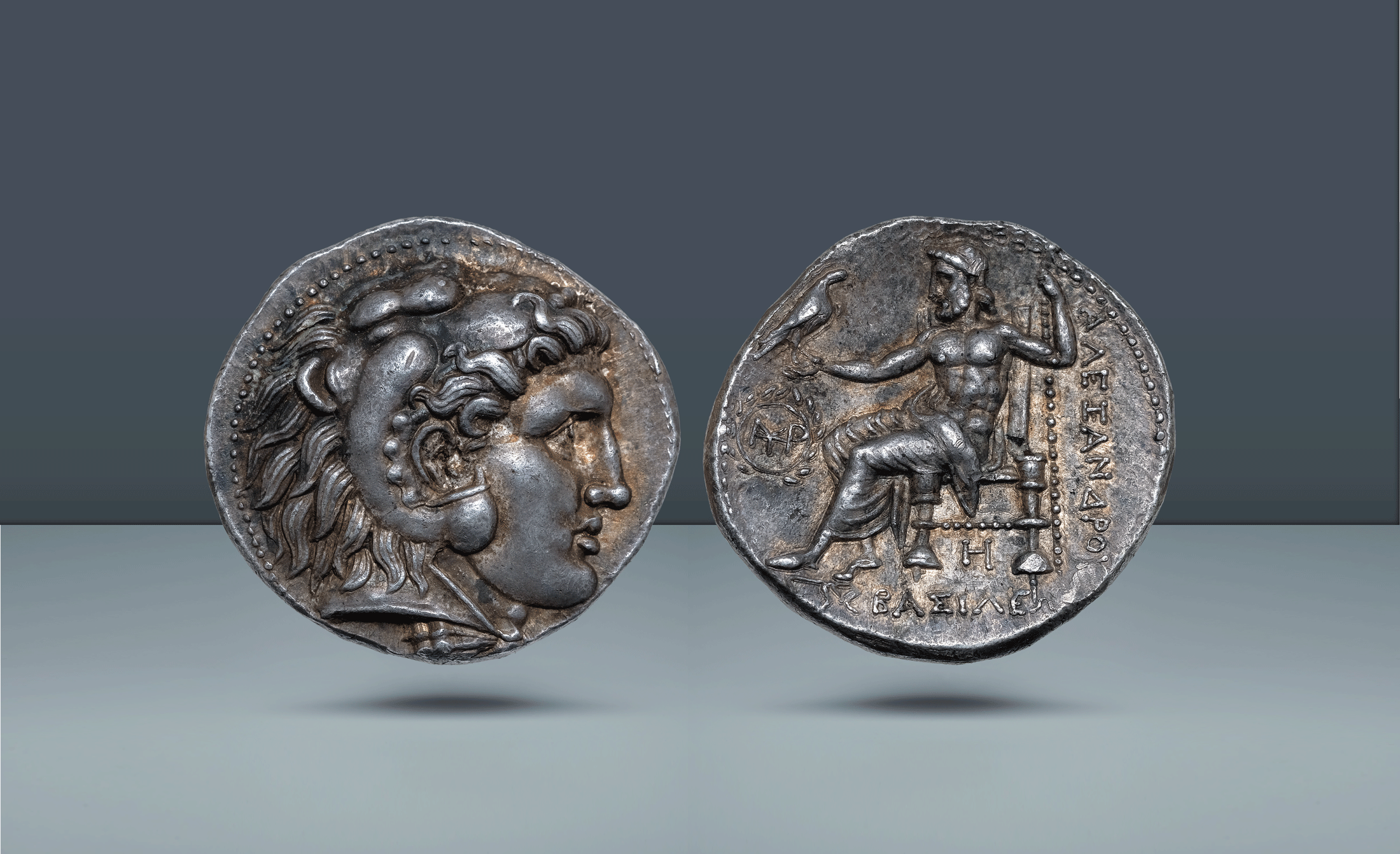
Seleucid Empire, Babylon. Seleucus I , 312-281 BC, c. 311-300 BC
AR Tetradrachm, 17.11g (27mm, 1h).
Head of Herakles right, wearing lion skin / BAΣIΛEΩ[Σ] AΛEΞANΔPOY, Zeus Aëtophoros seated left; monogram in wreath in left field, H below throne
Pedigree: Ex Goldberg 67, 2012, lot 3122. Triton XXII, 2019, lot 283
References: SC Ad57E; Price 3704 var. (monogram); HGC 9, 10f
Grade: An incredibly beautiful sharp example with high relief and cabinet toning. Mint State
gk2111
Scroll down for more information about this coin.
After the death of Alexander the Great in 323 BC, his generals, known as the Diadochi, fought for control of the empire. Seleucus, son of Antiochus (a general under Philip II) and later known as Seleucus I Nikator (“the Victor”), emerged as one of the most successful among them. Initially appointed satrap of Babylon, he was forced into exile during the wars among the successors, but returned triumphantly in 312 BC, an event that later marked the beginning of the Seleucid Era.
This tetradrachm was struck at Babylon shortly after Seleucus regained control of the city. Like many early issues of the Diadochi, it was produced in the name and types of Alexander III. The familiar imagery of Herakles on the obverse and Zeus enthroned on the reverse had already become the dominant silver coinage of the eastern Mediterranean and Near East. By maintaining these established types, Seleucus ensured the continued trust and acceptance of his coinage across the former Alexandrian territories.
Babylon was one of the most important mints of the early Seleucid state. Its output during this period reflects the consolidation of Seleucus’ power in Mesopotamia and the gradual transformation of his authority from satrapal administrator to independent monarch. Although he would later issue coins in his own name and introduce new iconography, these early Alexandrine tetradrachms represent the crucial transitional phase of his rule.
Exceptionally well preserved, this piece is struck in high relief with attractive cabinet toning.