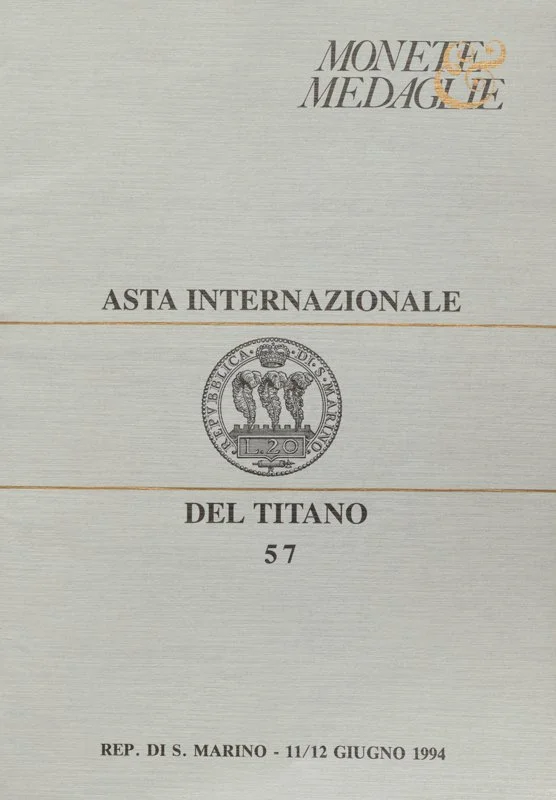
Sicily, Messana. c. 478-476 BC
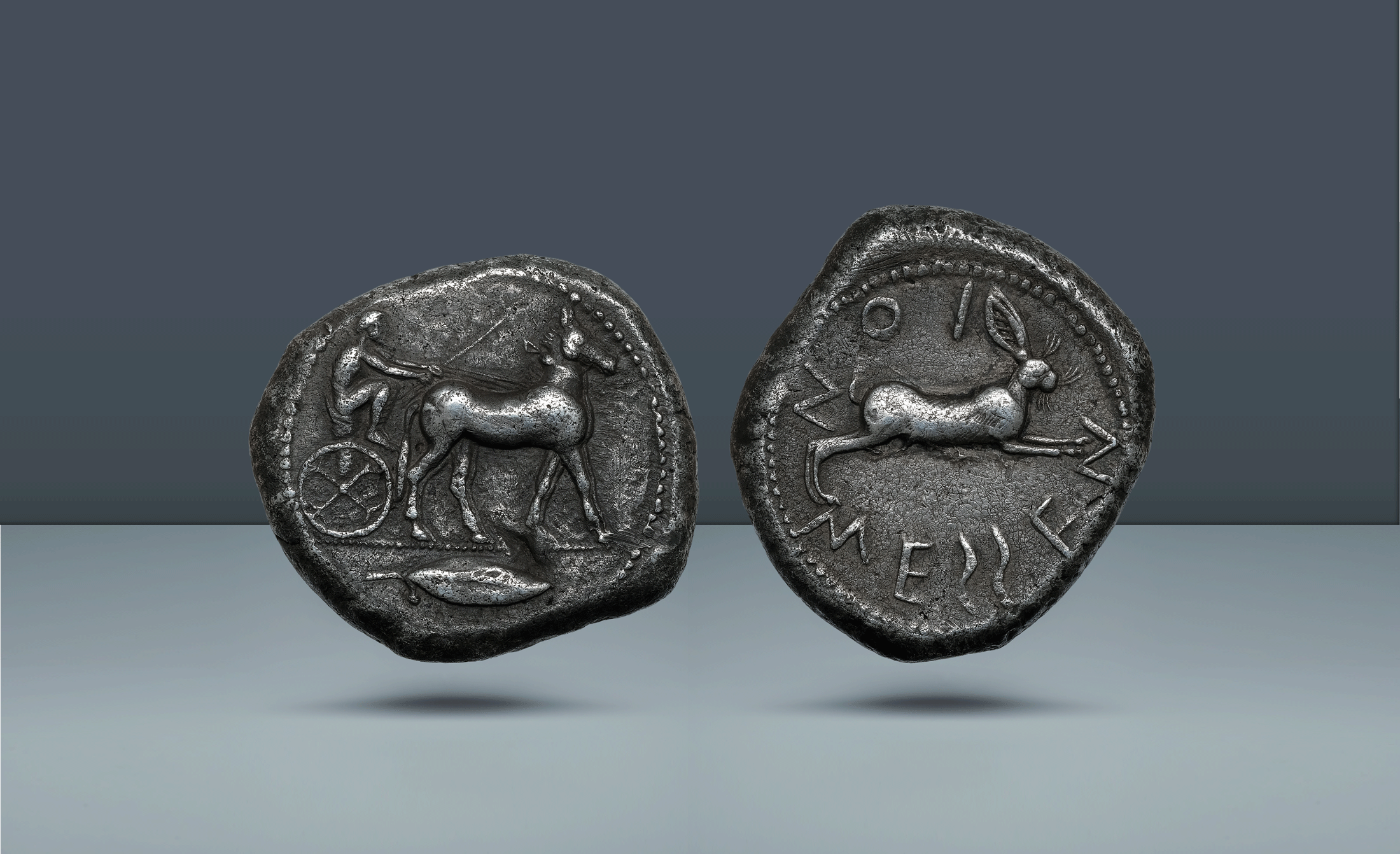
Sicily, Messana. c. 478-476 BC
AR Tetradrachm, 17.20g (26.87mm, 8h).
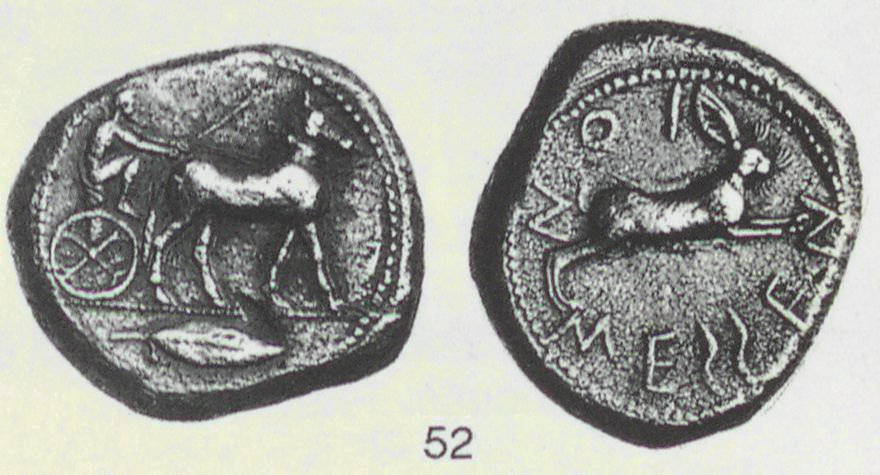
Charioteer holding kentrum and reins, driving biga of mules right on dotted exergue line; in exergue, laurel leaf with berry; border of dots. / MESSE – N – IO – N (retrograde), Hare to r.
Pedigree: Ex Asta Internazionale del Titano/Aes Rude 57, 11 June 1994, lot 52.
References: Caltabiano Serie II B, 61 (D33/R32, same dies). Randazzo 101 (same). Cf. SNG ANS 315. Cf. Rizzo pl. XXV, 8. Cf. Buceti 24b = HGC 2, 779.
Grade: Granulated surfaces and minor marks but well struck. Very attractive example. Toned aEF
gk2143
Scroll down for more information about this coin.
Introduced early in the fifth century, the apene was one of the odder Olympic entries and was never as prestigious as the horse-chariot races. Since the mule-cart was viewed as an unworthy spectacle, and dropped after only a few decades. That short life is largely why the seated mule-driver is so rare in Greek art. Which makes Messana's coinage unusual. Aristotle records that Anaxilas, tyrant of Rhegion and Messana, won the mule-biga race at the Olympic Games of 484 or 480 BCE, and rather than borrow the standard imagery of a horse quadriga, he advertised the exact race he'd won. To that end, Messana adopted the mule-biga and seated charioteer wholesale, and it became the template for the city's Classical coinage.