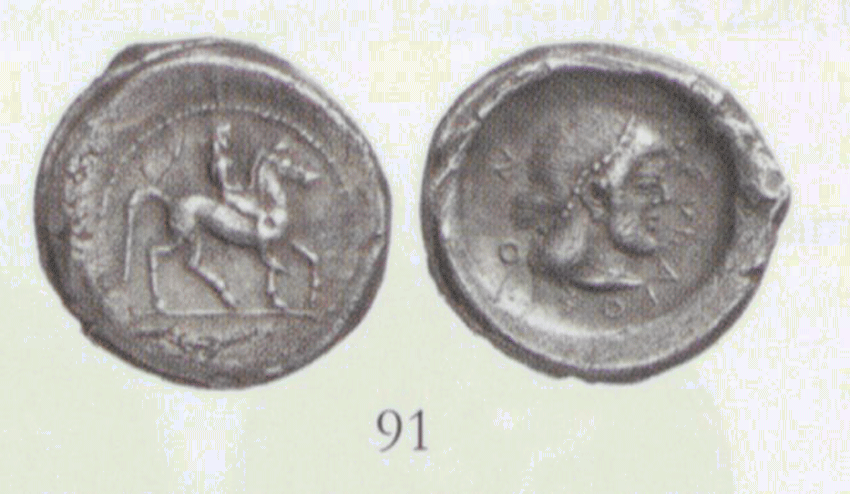
Sicily, Syracuse. Hieron. 478-467. c. 477-470 BC
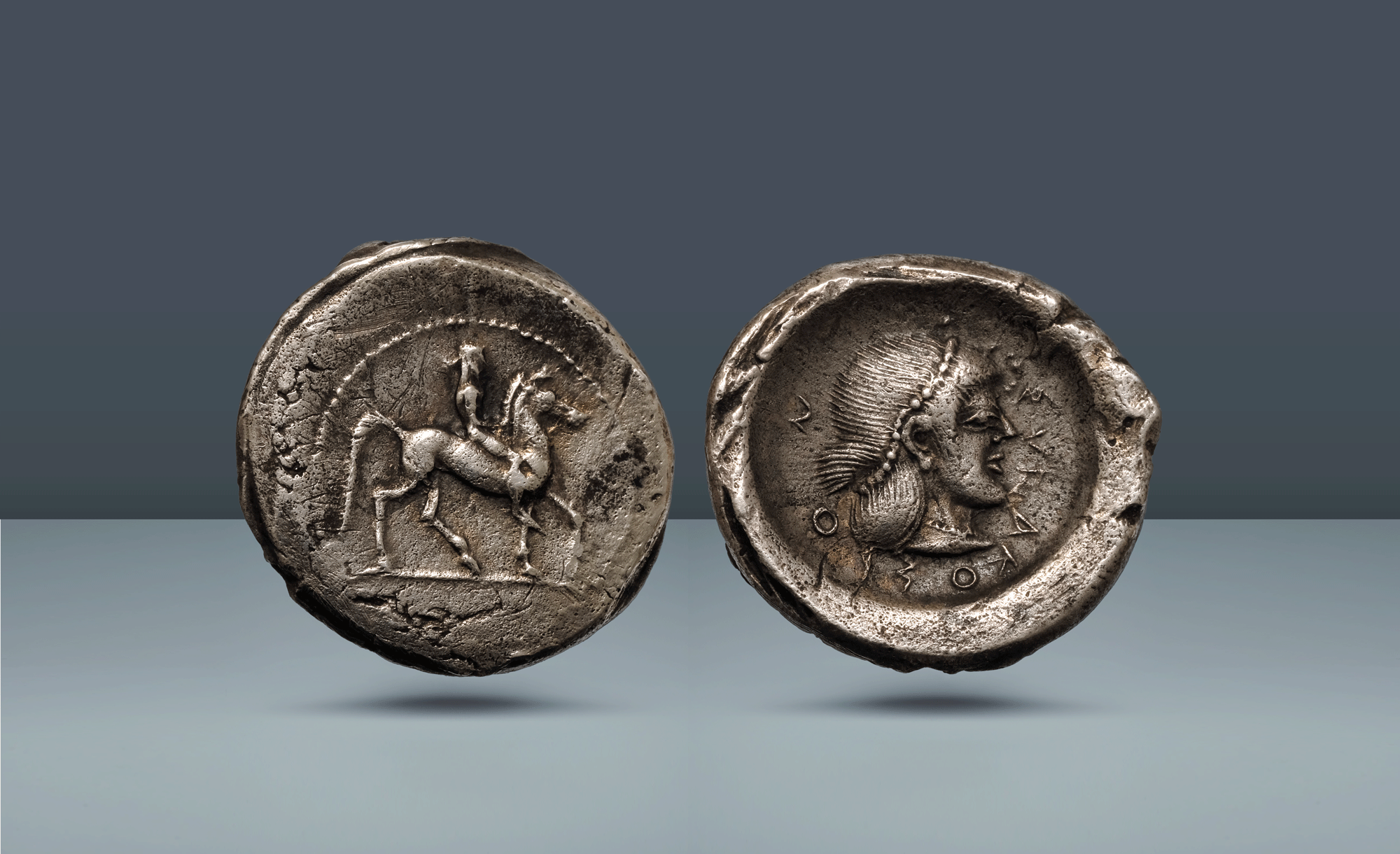
Sicily, Syracuse. Hieron. 478-467. c. 477-470 BC
AR Drachm, 4.12g (17mm, 9h)
Horseman riding r. within dotted border. / Head of Arethusa r. wearing pearl diadem and necklace. ΣYRAKOΣIO - N arround. All within incuse circle
Pedigree: Purchased privately from Harlan J. Berk Ltd. in the early 2000's. Ex G&M 265, 14 October 2019, lot 113. Ex. G&M 219, 10 March 2014, lot 56. Ex Peus 392, 4 May 2007, lot 4185. Ex Peus 386, 26 April 2006, lot 91. Ex Rauch 76, 17 October 2005, lot 210
References: Boehringer-357 (same dies)
Grade: Porous surfaces with some isolated areas of corrosion. Reverse imagery very nice. Rare denomination. Good VF
gk1848
Scroll down for more information about this coin.
This silver drachm of Syracuse was struck during the reign of Hieron I around 477 - 470 BC. The reverse depicts the head of Arethusa, the water nymph whose mythology is closely associated with the city of Syracuse. In the myth, Arethusa was pursued by the river god Alpheios while bathing in a stream. Seeking to escape him, she called upon Artemis for protection and was transformed into a spring. Her waters were believed to have traveled beneath the sea before emerging on the island of Ortygia at Syracuse. The Fountain of Arethusa became one of the city's most celebrated landmarks and remains visible today.
Arethusa's portrait became one of the most recognizable designs on Syracusan coinage and continued to appear for generations. This drachm belongs to an early period in the development of her portrait, long before the celebrated engravers Kimon and Euainetos produced their masterpieces in the late fifth century BC. Here she is depicted wearing a pearl diadem and necklace, with her hair carefully arranged and the ethnic of Syracuse surrounding her portrait. The treatment of her features reflects the transition from the more rigid conventions of Archaic Greek art toward the increasingly naturalistic style of the Classical period. The portrait is particularly attractive for an early Syracusan issue and provides an example of the artistic development that would eventually make the coins of Syracuse among the most admired and collected in the ancient Greek world.