
France, First Republic. Napoléon Bonaparte, as General de l'armée d'Orient. Dated 1798 Paris, 1798
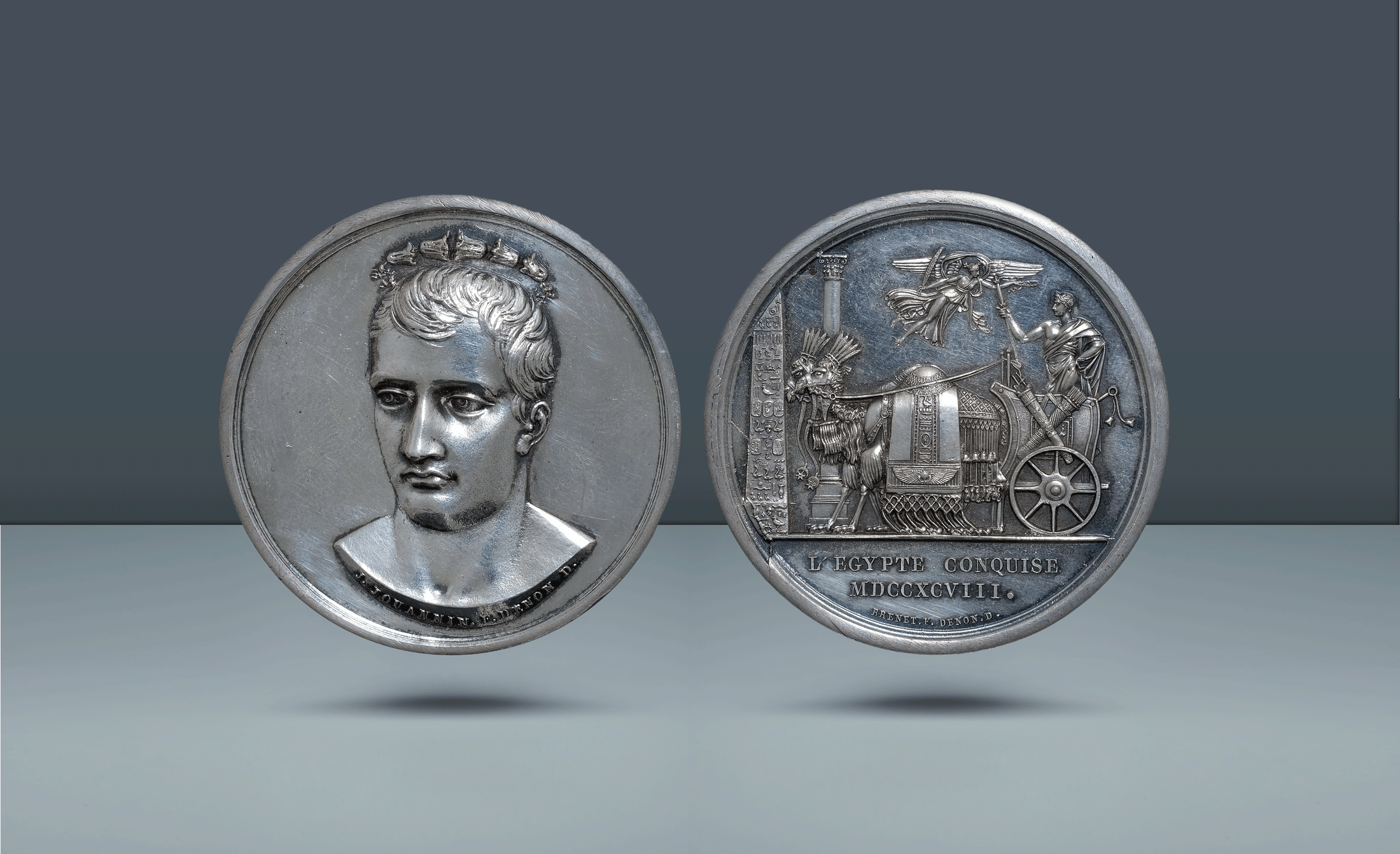
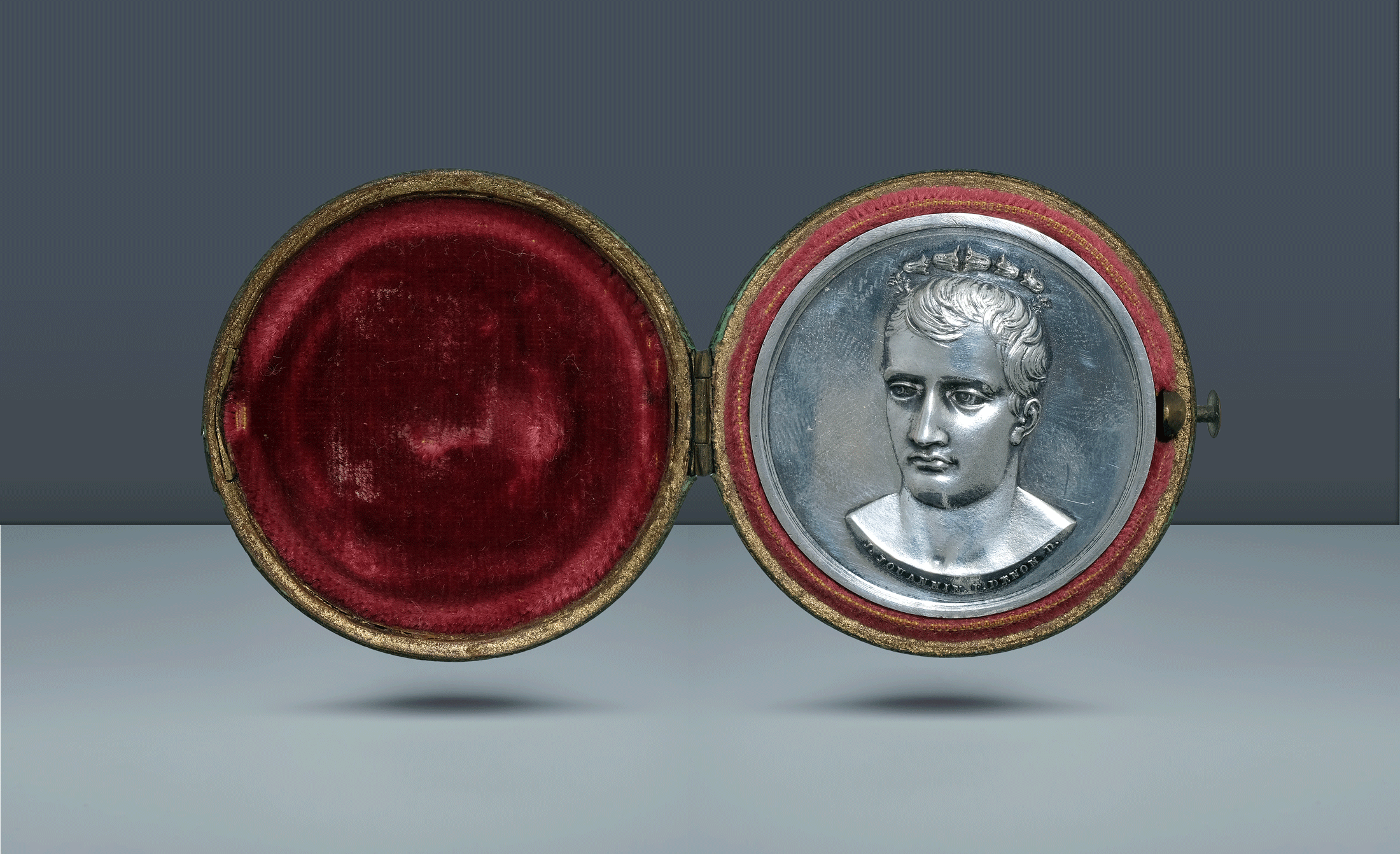
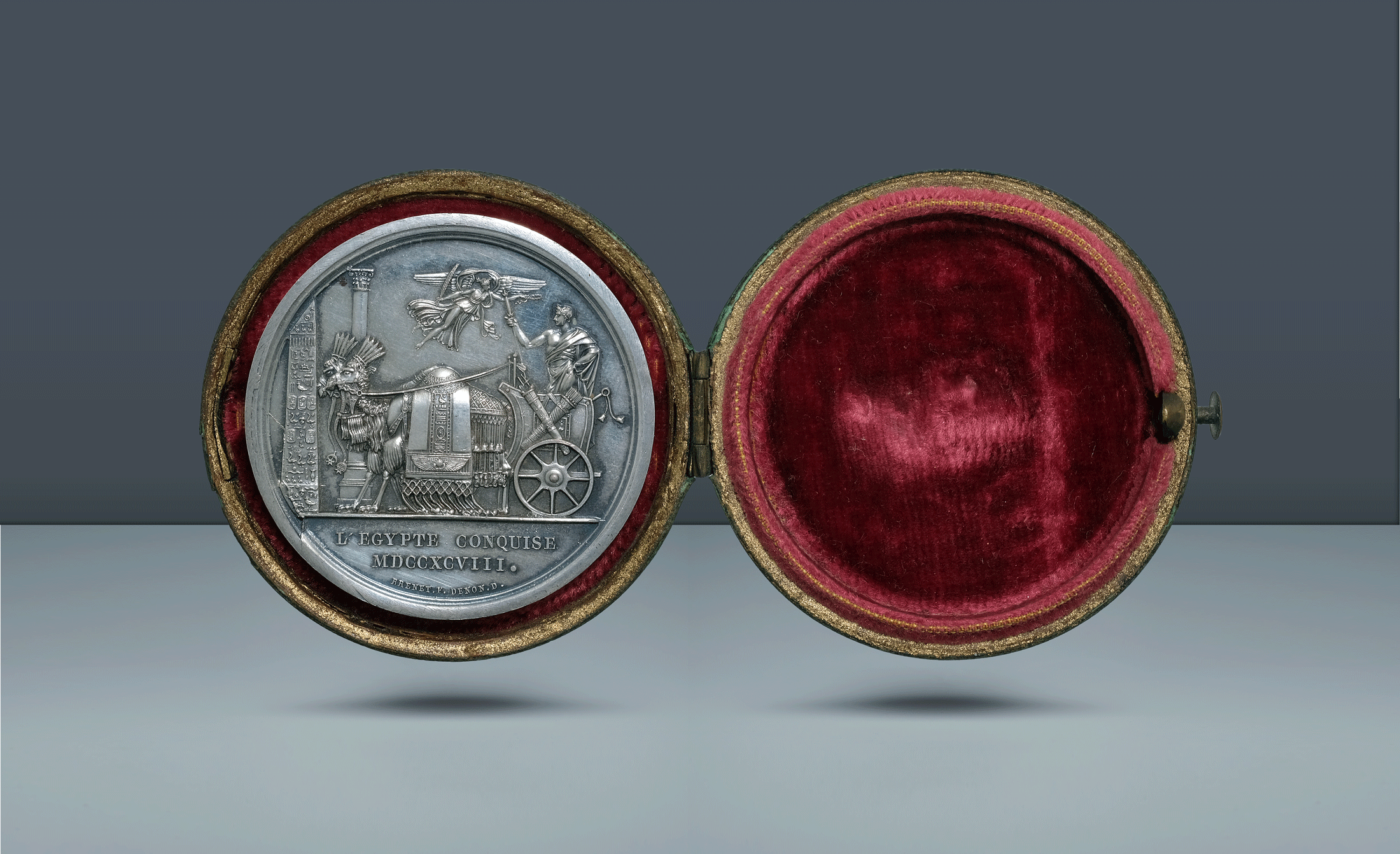
France, First Republic. Napoléon Bonaparte, as General de l'armée d'Orient. Dated 1798 Paris, 1798
AR Medal, 37.75g (40mm, 12h).
Celebrating the conquest of Egypt. Dies by Jouannin and Brenet; Denon, mintmaster. Bust facing to l., wearing lotus wreath/ Napoléon riding to l. in biga of pulled by camels, holding sceptre and being crowned by Victory flying to r., holding palm and wreath; obelisk and Corinthian column to l.. In original green case with velvet interior. Collectors mark on rim.
References: Hennin 879
Grade: Accompanied with the original green exterior, red velvet interior case. Obverse is shiny from some wiping. Medallic reverse with fascinating imagery. VF/EF
wc1351
Scroll down for more information about this coin.
This medal was the product of a propaganda system: Napoleon's histoire métallique. This serialized program was modeled on Louis XIV's medallic output and intended to record Napoleon’s reign.
Its driving figure was Dominique Vivant Denon (1747–1825), an engraver, diplomat, and an old-regime survivor. He joined the Egyptian expedition in 1798 as a savant, sketching monuments while the army fought, and the connections he made there carried him to the directorship of the Musée Napoléon in 1804. From that post he ran the medal program, choosing subjects, approving designs, assigning engravers, signing everything DENON D. - direxit, "directed”. Other signatures encode the division of labor. Two engravers, one die each, both fecit under Denon's direxit. Julien-Marie Jouannin (Saint-Brieuc, 1780–1813) cut the portrait, a young pupil of the sculptor Chaudet who took second grand prix at the Institut's 1809 competition. Nicolas-Guy-Antoine Brenet (Paris, 1773–1846), who cut the reverse, was the establishment professional.
The strike postdates the event: museum records place production from the Consulate onward, with the Louvre dating its specimens to around 1810. Denon backfilled early victories to complete the narrative. The Mint then continued to restrike the type for decades.