Norway, unknown Mint, "Moathisa". Olav III "Kyrre", Gunnar (Moneyer), 1067-1093 AD, c. 1065-1080 AD
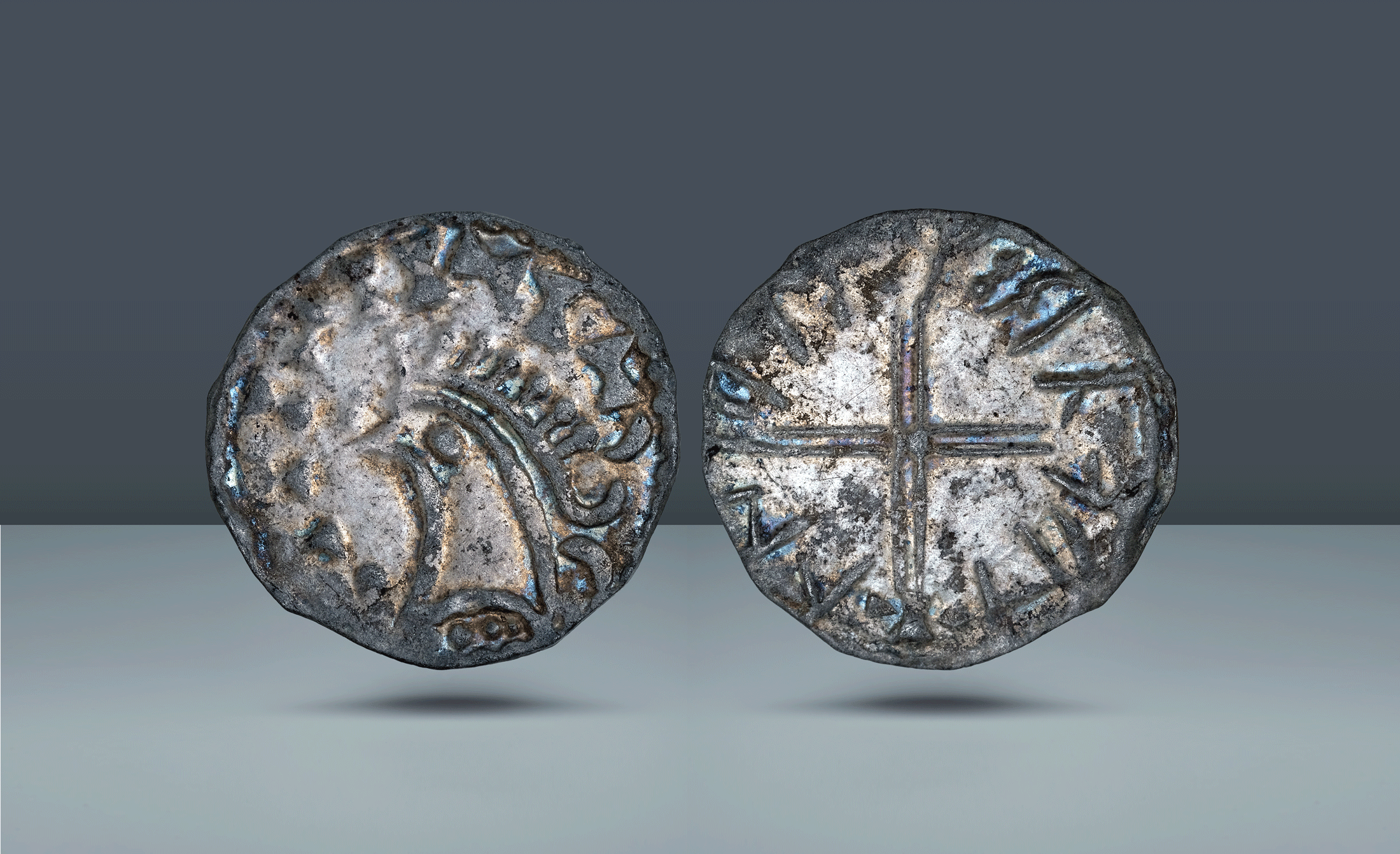
Norway, unknown Mint, "Moathisa". Olav III "Kyrre", Gunnar (Moneyer), 1067-1093 AD, c. 1065-1080 AD
AR Penny, 0.93g (16.7mm, 12h).
Armored bust left, in the form of a dragon-like creature / Voided long cross
Pedigree: From the L. E. Bruun Collection, Countship of Brahesminde Collection (Private Sale - 1922), From the Gresli (Græslid) Hoard, Southern Trøndelag, 1878. Accompanied with original red Bruun cabinet ticket
References: Schive-II:34, NM-1, Stenersen-Class S, 75, Bruun-8894 (this coin)
Grade: Previously graded NGC MS-63. A rare and sought after early penny from Norway. These coins are not allowed to be exported out of Norway if they are purchased there. A wonderful old pedigree along with a superior example. Mint State for issue.
wc1331
Scroll down for more information about this coin.
This rare and historically important silver penny of King Olav III “Kyrre” belongs to the earliest phase of Norwegian royal coinage. Olav III, whose epithet Kyrre means “the Peaceful,” ruled Norway during a period of relative stability following the turbulent Viking Age. His reign is remembered for the consolidation of royal authority, the strengthening of ecclesiastical institutions, and the development of urban centers such as Bergen, which grew into a major commercial hub during this period.
The obverse presents an unusual and highly stylized armored bust facing left, rendered in a form that resembles a dragon-like creature, a striking feature characteristic of early Scandinavian numismatic art. The abstract and almost zoomorphic representation reflects the lingering influence of Viking artistic traditions, where animal forms and stylized motifs dominated visual culture. The imagery evokes the decorative vocabulary seen in contemporary metalwork and runic art.
The reverse shows a voided long cross, a design widely used in northern European coinage of the eleventh century. The cross type served both religious and practical purposes: it reflected the growing influence of Christianity in Scandinavia while also helping to divide the coin into quarters for small transactions in an economy where cutting silver was still common practice.
Coins of Olav III are closely connected to the early development of the Norwegian monetary system, which was heavily influenced by Anglo-Saxon and continental European models. The attribution of this piece to the mint named “Moathisa” remains uncertain, though it likely represents one of the early Norwegian minting centers active during the late eleventh century. The named moneyer Gunnar appears on several issues of this period and reflects the adoption of the Anglo-Saxon practice of identifying mint officials on coinage.
This example is remarkable not only for its state of preservation but also for its exceptional pedigree. It originates from the famous L. E. Bruun Collection, one of the most important numismatic collections ever formed. Bruun’s collection of Scandinavian coins, assembled in the late nineteenth and early twentieth centuries, remains foundational to the study of Nordic numismatics. The coin also traces its provenance to the Brahesminde Collection, sold privately in 1922, and ultimately to the Gresli (Græslid) Hoard, discovered in southern Trøndelag in 1878-one of the significant hoards contributing to our understanding of early Norwegian coinage.
Coins from the Bruun cabinet are particularly prized, especially when accompanied by their original cabinet tickets, which preserve the scholarly documentation of early twentieth-century collecting practices.
Norwegian cultural heritage law today restricts the export of such coins if they are purchased within Norway, reflecting the national importance of early medieval Norwegian numismatics.
A superb specimen for the type, previously graded NGC MS-63, and best described as Mint State for the issue, with clear devices and exceptional historical pedigree.