
Roman Empire, Nerva. 96-98 AD. Rome, c. September-December 96
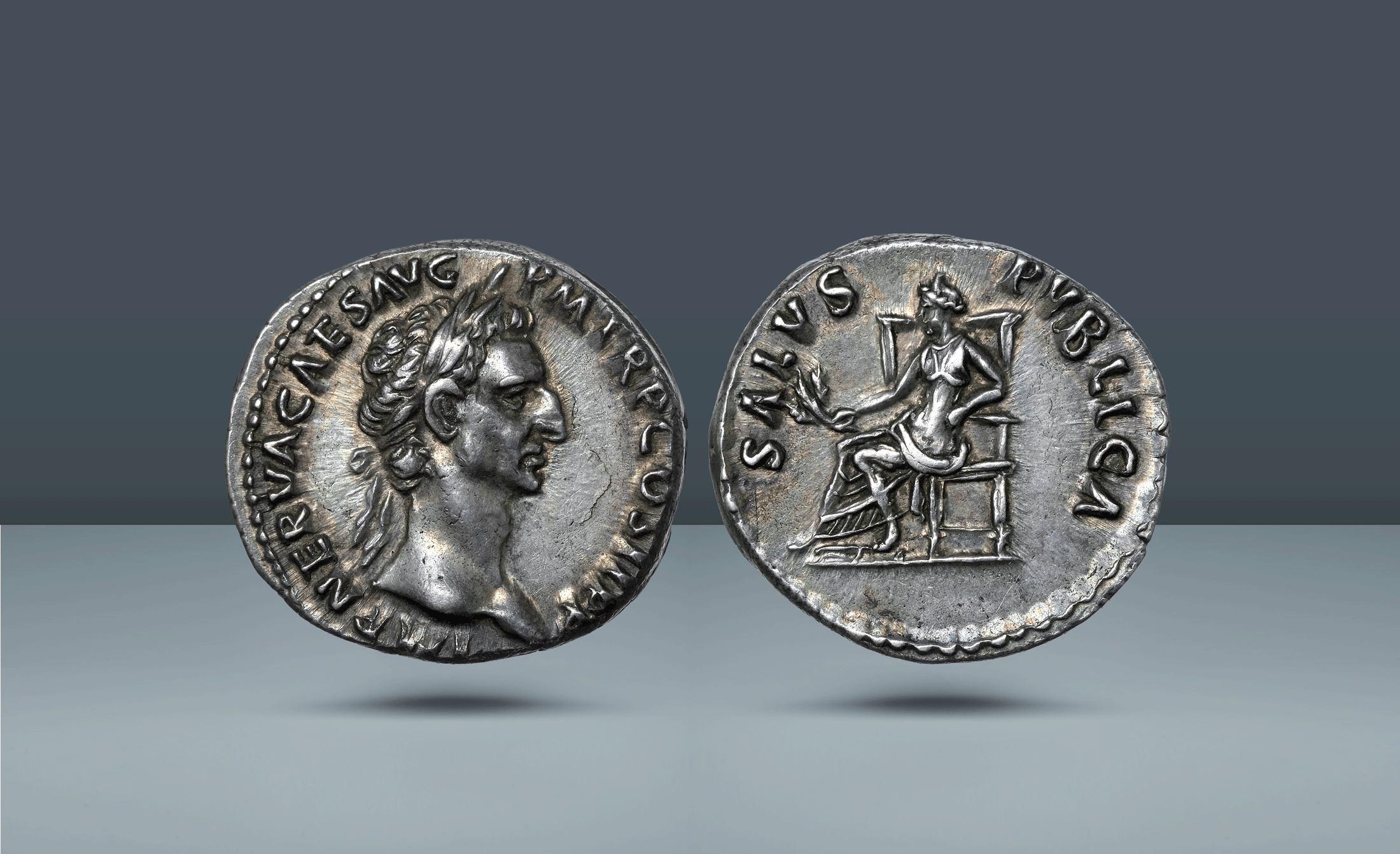
Roman Empire, Nerva. 96-98 AD. Rome, c. September-December 96
AR Denarius, 4.00g (18mm, 6h)
IMP NERVA CAES AVG PM TR COS II P P, laureate head r. . / SALVS - PVBLICA, Salus seated l. holding ears of grain.
References: RIC II, 9. Cohen 132.
Grade: Beautifully sculpted portrait of Nerva. Cabinet toning with hints of iridescence. Slight wear on the reverse. almost Mint State
re1508
Scroll down for more information about this coin.
On 18 September 96 the emperor Domitian was stabbed to death in his palace in a plot that reached into his own household. The Senate had suffered under his last years of suspicion and treason trials. That same day it acclaimed as his successor Marcus Cocceius Nerva, an elderly senator and experienced statesman in his mid-sixties. Nerva had served every dynasty since Nero without making enemies. He had no sons and no military reputation, and his main qualifications were that he was respected and unthreatening. The Senate ordered Domitian's memory condemned, and the new government set out to present itself as a fresh start after years of fear and misrule.
This denarius comes from the first issue of the reign, struck in the last months of 96 while Nerva held his second consulship. Its reverse puts that message into a single image. Salus Publica, the welfare and safety of the Roman people, sits enthroned and holds out ears of grain. Salus was usually shown feeding a serpent, the attribute of health. Here she holds grain instead, which ties the public good to the food supply and the material relief Nerva's government promised. His short reign brought land allotments for poor citizens, relief from some of the harsher tax burdens, and support for the children of Italian towns, an early form of the alimenta that Trajan would later expand.
The promised new age came under strain within a year. In 97 the Praetorian Guard, still loyal to Domitian's memory, besieged the palace and forced Nerva to hand over the conspirators for execution. Humiliated and in need of military support, Nerva adopted Marcus Ulpius Traianus, governor of Upper Germany, that October. The choice set the pattern of succession by adoption that gave Rome its age of the "Five Good Emperors." Nerva died in January 98, after barely sixteen months in power.
His coinage is correspondingly brief, and portraits of this quality are hard to find. This example shows the aged emperor's lean, deeply lined face, long nose, and firm mouth with unusual sculptural depth, and it has kept the old cabinet toning that collectors prize. A superb denarius of the emperor whose short reign opened Rome's great second-century era.