
Roman Empire, Asia Minor. Maximian, 286 - 305 AD Cyzicus, c. 287 AD
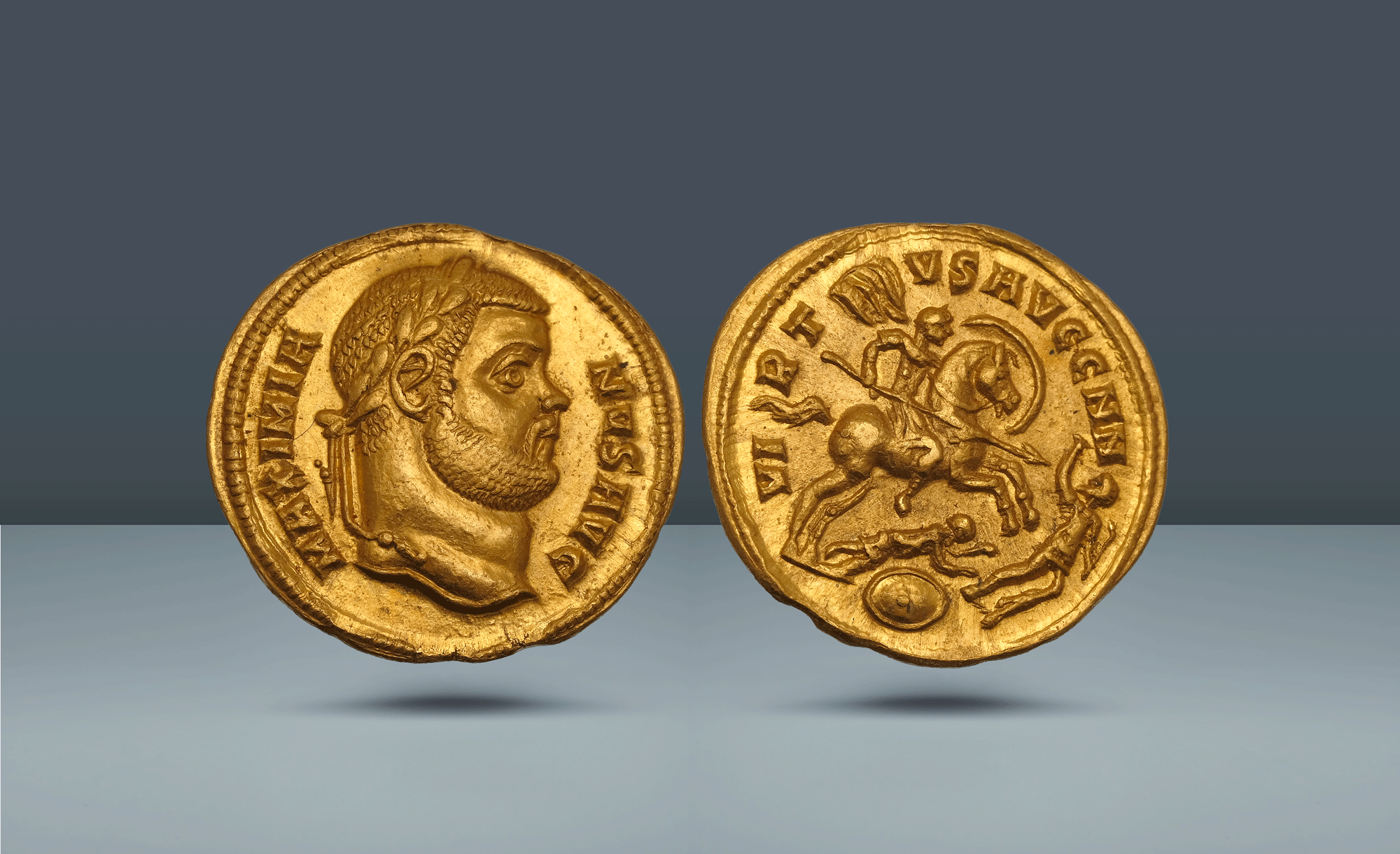
Roman Empire, Asia Minor. Maximian, 286 - 305 AD Cyzicus, c. 287 AD
AV Aureus, 5.55g (18mm, 12h).
MAXIMIANVS AVG, laureate head to r. / VIRTVS AVGG N N, Maximian, cuirassed and holding shield in l. hand and spear in r., on horseback to r., leaping over fallen enemy prostrate over oval shield, and preparing to strike second enemy before.
Pedigree: Ex Rauch 83, 2008, lot 427. Ex Rauch 85, 2009, lot 909. Ex NAC 91, 2016, lot 60
References: Craw 613. RIC 3. Depeyrot 15/4. Calico 4743
Grade: Sharply struck with minimal wear. lustrous EF
re1406c
Scroll down for more information about this coin.
Struck at Cyzicus in 287 CE, this coin represents a particularly significant moment in Maximian's early coinage. Cyzicus had recently been reactivated as a major imperial mint under the Tetrarchy, and its issues for Maximian are notable for their distinctive style and iconography that reflected both the propaganda, economic, and military needs of the emperor. In fact, this particular reverse design is one of the most dynamic and aggressive reverse types of all Roman imperial aurei with the dramatic composition depicting Maximian as a mounted warrior, his horse rearing or leaping over a barbarian adversary who lies defeated beneath. The composition itself draws on long standing Roman iconographic traditions of the triumphant emperor, but presents it with particular energy and movement that characterizes late 3rd-century imperial propaganda, when military prowess was the essential foundation of imperial legitimacy.
These coins are significant for understanding Maximian's self-presentation during this formative period of the Tetrarchy. In 287, Maximian was actively campaigning against Germanic tribes along the Rhine frontier and dealing with the usurpation of Carausius in Britain, making military imagery particularly salient. The prostrate barbarian, likely representing Germanic or other northern enemies, serves as a visual shorthand for Rome's external threats now subjugated by imperial power. The choice to depict such aggressive imagery on gold coinage, which circulated primarily among the elite and military, reinforced Maximian's credentials as a warrior-emperor.