Roman Empire, Claudius I, 45-54 AD Rome, c. 49/50 AD
Roman Empire, Claudius I, 45-54 AD Rome, c. 49/50 AD
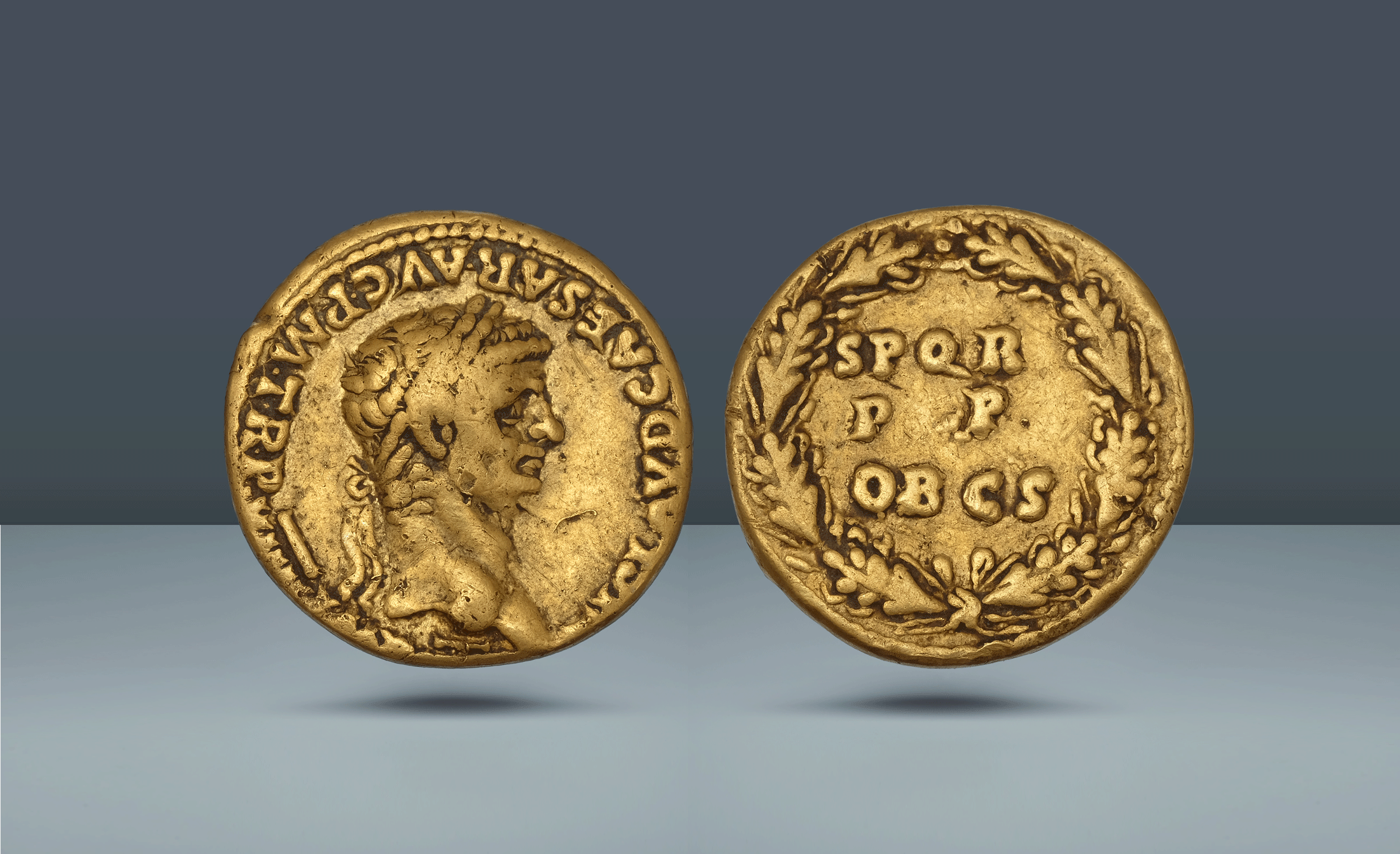
AV Aureus, 7.68g (18mm, 6h).
TI CLAVD CAESAR AVG P M TR P VIIII IMP XVI, Laureate head r. / SPQR / P P/ OB C S in wreath
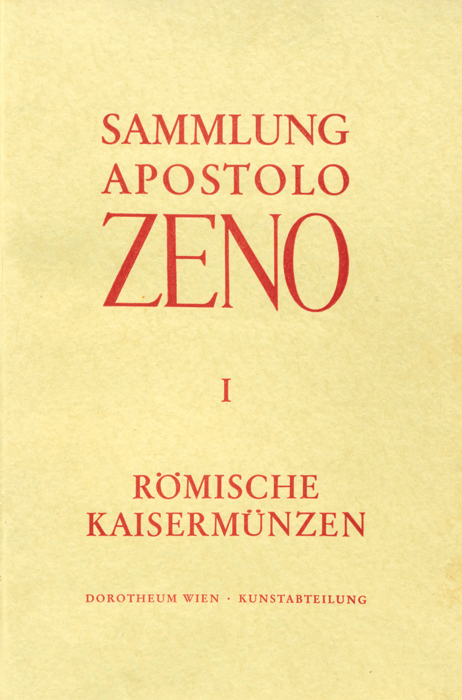
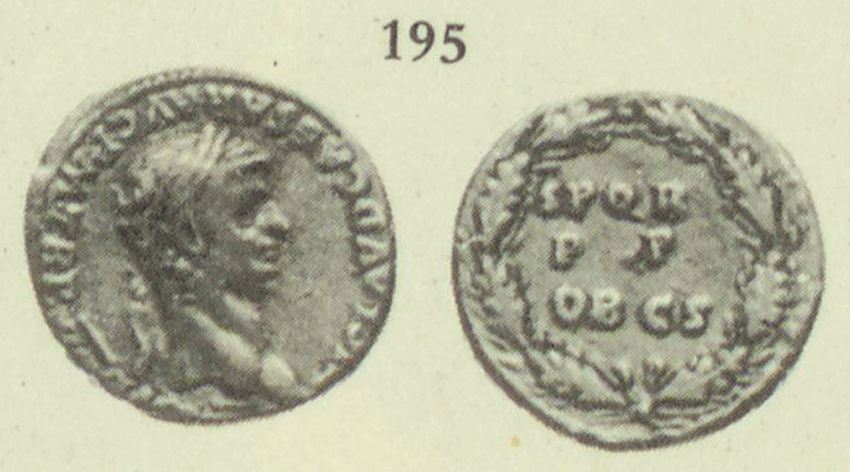
Pedigree: Ex Dorotheum Auktion Zeno I, Juni 1955, Nr.195 (1.080 ATS), ex Slg. Apostolo Zeno 1668-1750
References: RIC 48; Calico 381
Grade: From an old well-respected collection formed in the 1700's. Overall wear and some minor marks. Good VF
re1473
Scroll down for more information about this coin.
The reverse legend of this aureus, OB CIVES SERVATOS, "for citizens saved," set within the oak wreath that was itself the corona civica, Rome's most ancient and revered military honor, originally awarded for saving the life of a fellow citizen in battle and adopted by Augustus as a permanent emblem of his own civic legitimacy. By Claudius's reign the device had become a fixture of imperial coinage generally, a visual shorthand for the emperor as protector and preserver of the Roman people, deployed here on a gold issue datable by the accompanying tribunician and imperatorial titulature to around AD 49-50, years that fall squarely within the complicated and consequential middle period of Claudius's reign, encompassing his marriage to Agrippina the Younger and the political maneuvering that would eventually secure the succession for her son Nero over Claudius's own son Britannicus.
What truly sets this aureus apart, though, has less to do with type or preservation than with the hands it passed through. It once belonged to Apostolo Zeno, and that name alone commands attention among students of the field's history. A Venetian by birth, Zeno built his reputation first as a poet and librettist, eventually rising to serve as court poet under Emperor Charles VI in Vienna, but coins became a genuine scholarly pursuit for him rather than a passing diversion. He brought the same exacting standards to his cabinet that he applied to his literary and historical work, exchanging letters with the foremost antiquarians of his era and steadily building a collection that would come to rival the emperor's own, eventually swelling past ten thousand coins, several hundred of them struck in gold. Unusually for a collection of this scale and era, it did not pass down through family hands after Zeno's death. In 1747, three years before he died, he arranged instead to place the coins with the Augustinian monastery of St. Florian in Upper Austria, and it was there that the cabinet remained intact and undisturbed for the better part of two centuries, spared the slow, lot-by-lot dispersal that so often erased the identity of even the great 18th-century collections.
It was this monastic holding that finally came to market in the mid-20th century, when the collection was sold at auction by Dorotheum in Vienna, dispersed across three sales between 1955 and 1957, with Roman coins forming the substantial first installment in June 1955, the present aureus among them. The resulting catalogues are regarded as landmark references in the field, valued not merely as sale records but as important documentary tools for tracing individual coins as they continue to circulate in the trade today, a scholarly legacy that testifies to the seriousness with which Zeno's cabinet was assembled and has since been studied. To hold a coin that passed through Apostolo Zeno's hands, sheltered for two centuries at St. Florian, and re-emerged into the market through one of the most cited Vienna sales of the postwar era, is to hold a tangible link not only to the Julio-Claudian dynasty itself, but to nearly three centuries of continuous, documented numismatic stewardship. This example, showing overall even wear consistent with its long collecting history, remains an exceptionally desirable representative of both its imperial type and its extraordinary provenance.