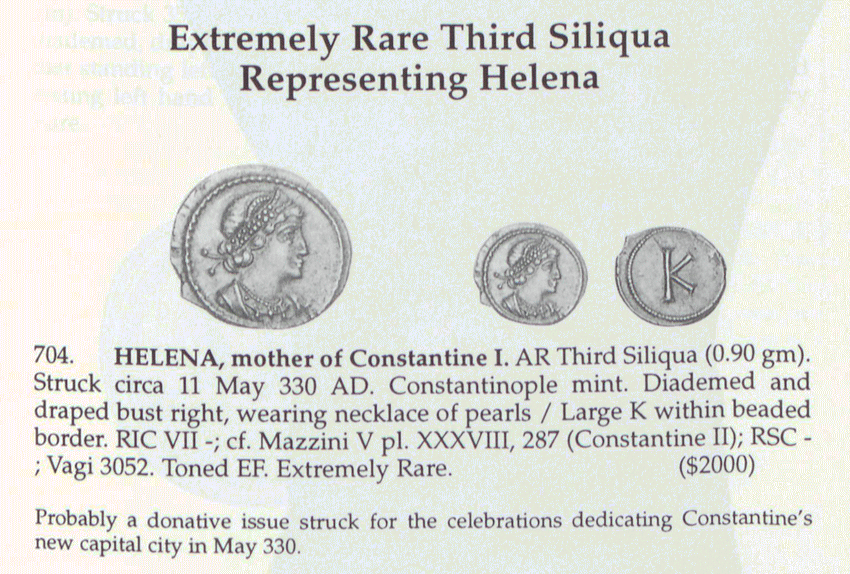
Roman Empire, Constantinople. Helena, mother of Constantine I (Struck under Constantine I), c. 330 AD on May 11
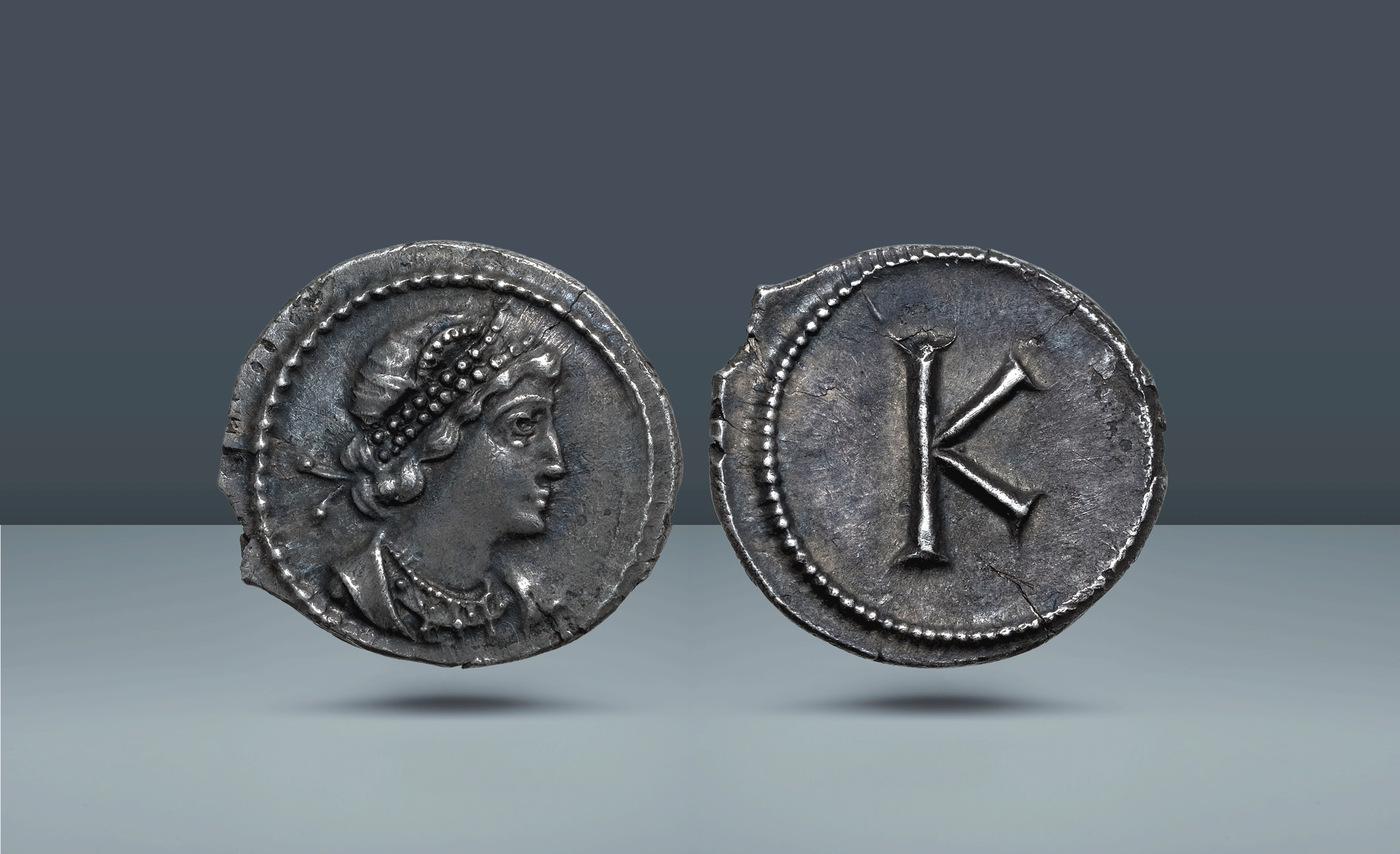
Roman Empire, Constantinople. Helena, mother of Constantine I (Struck under Constantine I), c. 330 AD on May 11
AR 1/3 Siliqua, 0.92g (12mm, 6h).
Diademed and draped bust right, wearing necklace of pearls / Large K within beaded border
Pedigree: Ex Lars Ramskold collection, Stockholm. Ex Triton IV (collaboration with Freeman & Sear and NAC), 5 December 2000, lot 704
References: Bendall, "Anonymous silver," RN 158, 4; Ramskold, Coins & Medallions, p. 144, 11A (this coin); cf. Mazzini V pl. XXXVIII, 287 (Constantine II)
Grade: Probably a donative issue struck for the celebrations dedicating Constantine's new capital city in May 330. Beautifully toned and sharply struck. EF
re1456
Scroll down for more information about this coin.
The donative 1/3 siliqua is a fascinating and exceptionally rare denomination from the Late Roman period that reflects the intersection of monetary innovation and imperial ceremonial practices. These coins were struck in 330 AD at Constantinople under Constantine I to commemorate the formal founding or dedication of the city of Constantinople. These tiny silver coins represented one-third of the standard siliqua, with the denomination sometimes being referred to as a scripulum. The commemorative third siliquae are among the most interesting Roman coins, with the types representing Constantinopolis with a large K. These were not regular circulation coins but rather special donative issues distributed on ceremonial occasions, following the Roman imperial tradition of largesse. Their importance today, with some types known from only a handful of specimens, combined with their small size, makes them fantastic additions to any collection.