
Roman Empire, Constantinople. Theodosius, 402-450 AD, c. 408-420 AD
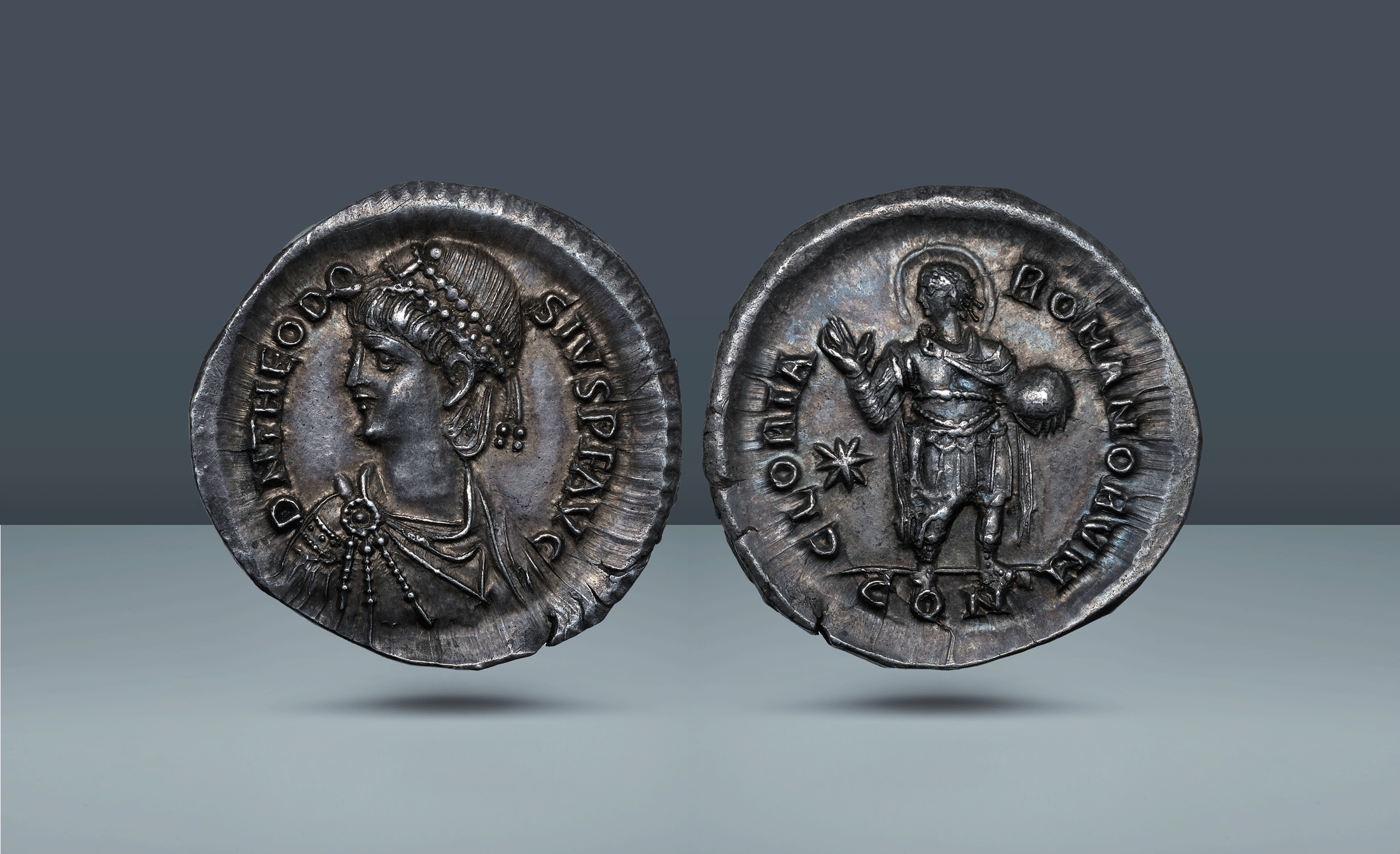
Roman Empire, Constantinople. Theodosius, 402-450 AD, c. 408-420 AD
AR Miliarense, 4.27g (22mm, 11h).
D N THEODO – SIVS P F AVG. Draped armored bust with pearl diadem to l. / GLORIA ROMANORVM CON. The emperor standing with nimbus facing with head to l., r. hand raised and holding globe in l. Star in l. field
Pedigree: Acquired in 2002 from Spink, London.
References: RIC X 268, 370, DOC 306, MIRB 61a.
Grade: Very minor die break in back of head on reverse. One of the nicer examples we have encountered in the last years. Beautifully struck with wonderful surfaces and cabinet toning. Mint State
re1448
Scroll down for more information about this coin.
This exceptional miliarense exemplifies the refined coinage of Constantinople during the reign of Theodosius I, one of the Late Roman Empire's most significant emperors. The piece dates to the later years of his reign, a period marked by his stabilization of the Eastern Roman state and his role in establishing the religious foundations of Byzantine Christianity.
The obverse presents Theodosius in idealized portrait-the pearl diadem signaling imperial authority, the armored bust conveying military strength and protection of the realm. The reverse invocation of Gloria Romanorum, paired with the standing emperor holding the orb of earthly dominion, was a powerful statement of legitimacy and divine favor during a politically turbulent era. The nimbus encircling the emperor's head reflects the growing influence of Christian imperial theology on Eastern Roman coinage.
During the years 408–420 AD, when this coin was struck, the Eastern Roman Empire faced mounting pressure from Gothic and other barbarian forces pressing across the Danube frontier. Within Constantinople itself, political factions jostled for influence in the imperial court, yet the city remained the unshaken administrative and commercial heart of the Eastern state. The coinage of this period reflects a determination to project stability and divine favor even as the Western Empire fragmented around the Eastern throne. Military resources were stretched thin, and the maintenance of a reliable coinage system at the Constantinople mint was itself an assertion of imperial continuity and control.
The miliarense itself occupied an important place in the Late Roman monetary system, valued at approximately twelve denarii and struck in high-quality silver. This example exhibits the technical competence of the Constantinople mint at its height-the strike is forceful and complete, the surfaces display the warm patination that comes only from centuries in the ground or in discerning collections, and the cabinet toning speaks to careful stewardship. The die break noted on the reverse is characteristic of ancient coinage and adds rather than detracts from the piece's authenticity and character.