
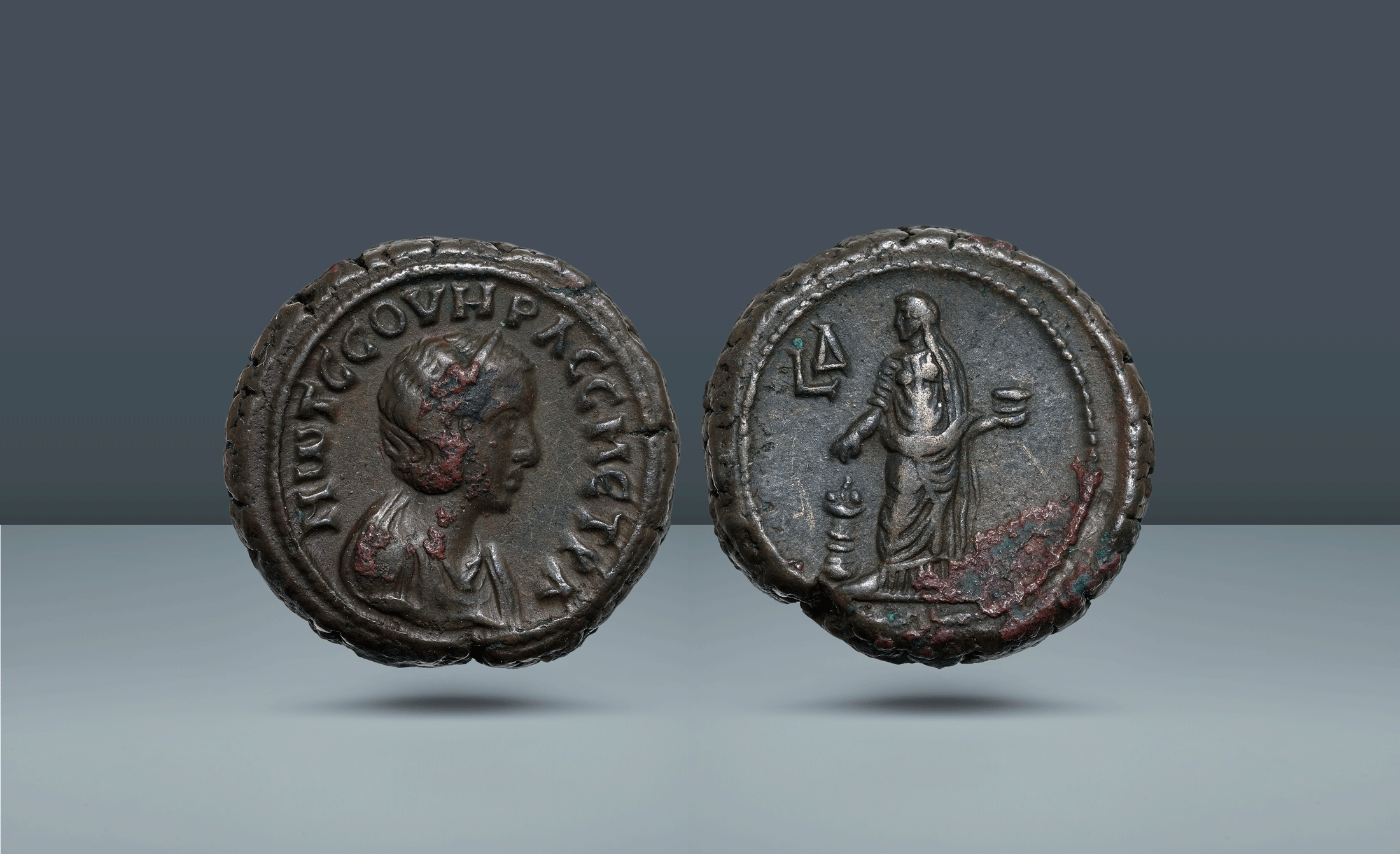
Roman Empire, Egypt. Otacilia Severa, wife of Philip I, 244-249 AD Alexandria, c. 246/7 AD (RY 4 of Philip I)
Roman Empire, Egypt. Otacilia Severa, wife of Philip I, 244-249 AD Alexandria, c. 246/7 AD (RY 4 of Philip I)
Potin Tetradrachm, 13.83g (24mm, 12h).
Diademed and draped bust right / Eusebia standing facing, head left, dropping incense on lit altar and holding box; L Δ (date) to upper left
References: Koln 2770; Dattari 10420; K&G 75.44; Emmett 3549.4
Grade: Some small areas of thick encrustation present on the surfaces, otherwise good VF
re1458
Scroll down for more information about this coin.
On issues struck in Rome, Otacilia’s coinage stays conventional. She embodies Pudicitia, Concordia, and Pietas, the standard virtues expected of an imperial consort. But on provincial coins struck in Alexandria, the message is translated, not just linguistically but culturally. Pietas becomes Eusebia, and that distinction matters. In Latin, Pietas represents a duty performed, or a ritual obligation carried out correctly. In Greek, Eusebia carries a more introspective weight. Reverence shaped by understanding, a proper relationship with the divine rather than mere compliance. That nuance comes through on the coins themselves. Eusebia appears quietly at an altar, making an offering with restrained focus.
For Otacilia and the regime of Philip I, this mattered. The mid-third century was unstable, and legitimacy depended on clear, flexible messaging. In Rome, she is the ideal matron; in the provinces, she becomes a figure of thoughtful piety. Same empress, yet different images of authority.