
Roman Empire, Gaul. Civil War, Rhine legions, c. 68 AD
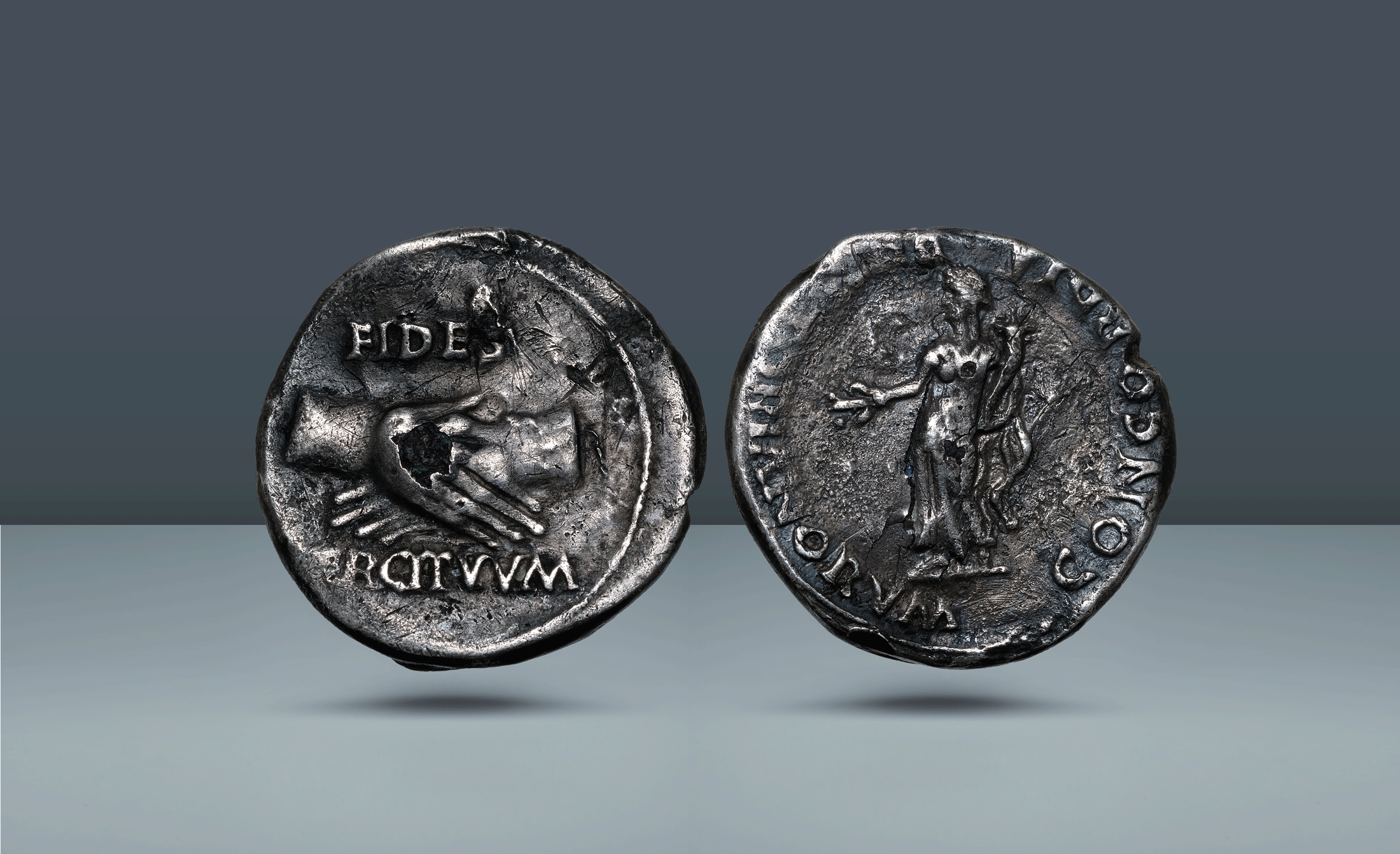
Roman Empire, Gaul. Civil War, Rhine legions, c. 68 AD
AR Fouree Denarius, 2.46g (17mm, 6h).
FIDES - EXERCITVVM. Two r. hands shaking hands. / CONCORDIA – PRAETORIAN ORVM. Concordia standing to the l. with an olive branch and cornucopia
Pedigree: Acquired on June 14, 1919, from V. Luneau, Paris. V. Luneau's collection of ancient coins was later auctioned by C. Platt, Paris, in 1922.
References: C 359 (Galba), BMC RE 61, BNC 74, RIC 118, Martin The Anonymous Coins... No. 3.
Grade: Intriguing civil war issue. Area on obverse where the base metal is visible. Minor roughness, otherwise aVF
re1449
Scroll down for more information about this coin.
Fourées represent one of the most fascinating categories of ancient numismatics. Consisting of a base metal core covered with a thin plating or foil of precious metal, they were to deceive users into accepting them as genuine solid precious metal coinage. The term comes from the French word meaning "filled". These ancient counterfeits were produced throughout antiquity, with particularly large numbers appearing during times of economic stress, debased official coinage, or when precious metal shortages made legitimate coins scarce. The prevalence of fourée coins in the ancient economy and their discovery in archaeological contexts complicates our theory of ancient monetary practices. Since many fourée coins show significant circulation wear, it is believed that they passed through multiple hands before the plating wore through to reveal the base metal core. It is assumed that they were undetected and believed to be real, since some examples have been found in hoards of genuine coins. Alternatively, they may have been accepted or tolerated under certain circumstances, perhaps when precious metal shortages made even debased currency preferable to none at all.