Roman Empire, Gaul. Tiberius, 14-37 AD Lugdunum, c. 14 AD
Roman Empire, Gaul. Tiberius, 14-37 AD Lugdunum, c. 14 AD
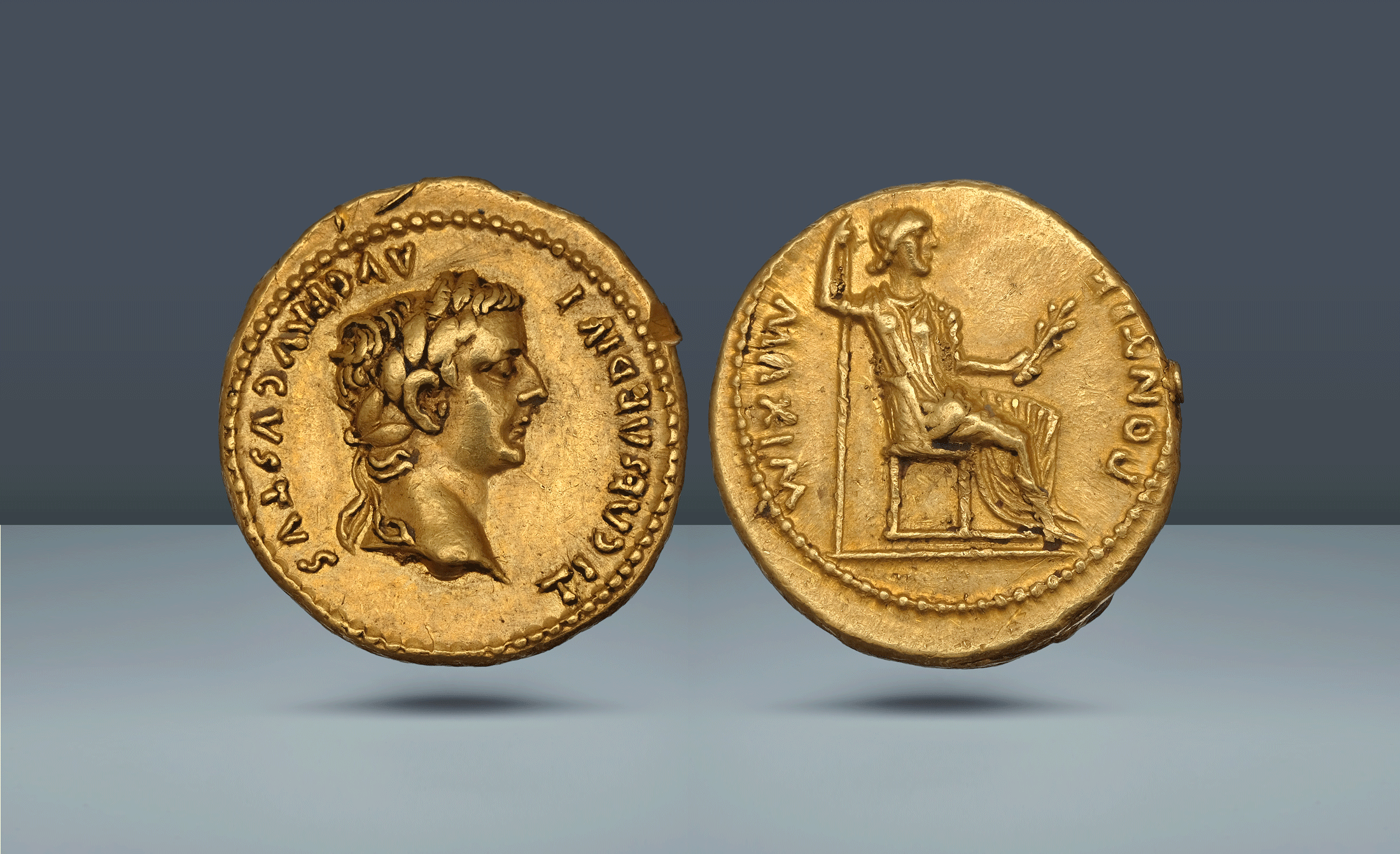
AV Aureus, 7.63g (18mm, 7h).
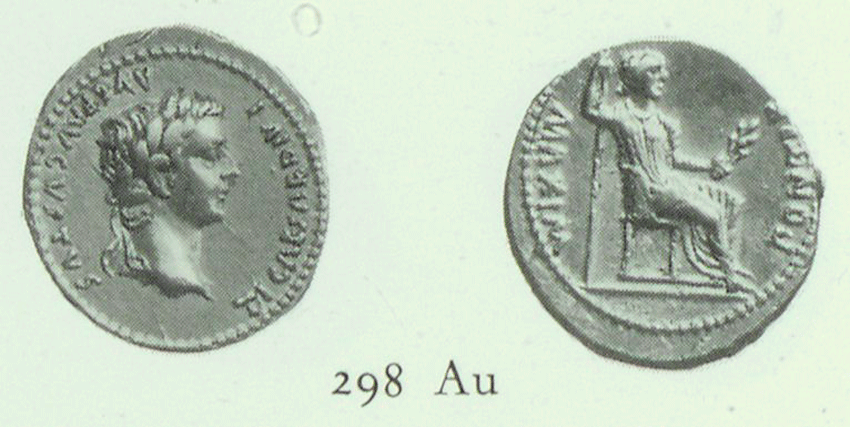
TI CAESAR DIVI - AVG F AVGVSTVS Small laureate head r. / PONTIF - MAXIM Female figure (Iustitia ?), wearing long dress, seated r. on throne with low back rest, holding laurel branch in her l. hand, long sceptre with her r. hand.
Pedigree: Münzen und Medaillen AG, Basel 75 (1989), lot 298
References: RIC 95, 25; C.15; BN Paris 41, 13; Giard, Lyon 124, 143; Calicó I, 74, 305.
Grade: Insignifiant dig at edge at 2h on obverse. Nicely struck with lustrous surfaces. EF
re1481
The gold counterpart to Rome's most famous and most theologically freighted coin type, this aureus shares its dies and design with the celebrated silver denarius long identified - since at least the seventeenth century - as the "Tribute Penny" of the Gospels, the coin Christ is said to have called for when confronted with the question of Roman taxation: "Render unto Caesar the things that are Caesar's" (Matthew 22:15–22; Mark 12:13–17; Luke 20:20–26). Whether the evangelists had the denarius specifically in mind, or simply the ubiquitous Tiberian coinage circulating in Judaea, the type has become inextricably bound to that narrative in the numismatic imagination, and examples in gold - vastly scarcer than their silver counterparts, minted in far smaller volume and reserved largely for donatives, military pay to senior officers, and elite transactions - carry a rarity that transforms a familiar iconography into something considerably more exclusive.
The obverse portrait is among the most consistently fine of the Julio-Claudian series: a mature, almost severe likeness of Tiberius in his later years, the laureate wreath rendered with careful, individuated leaves, the profile conveying the guarded reserve for which the emperor was known even to contemporaries.
The reverse, sharing its general composition with the celebrated Tribute Penny type but here bearing a laurel branch rather than the long vertical sceptre and olive branch pairing of the more famous variant, has invited identification of the seated figure as Iustitia rather than Pax or Livia - an ambiguity that has occupied numismatists since Cohen and Mattingly, and one born of the deliberate polyvalence with which Tiberian coin engravers seem to have treated the seated female enthroned, allowing the image to gesture simultaneously toward imperial virtue, toward the person of Livia in venerated guise, and toward abstract concepts of justice and peace without committing fully to any single reading. The low backrest of the throne, distinct from the more elaborately scrolled chair of later strikes in the series, offers a useful die-diagnostic for placing this issue early within the sequence Giard and the RIC compilers have worked to establish for Lugdunum's output across Tiberius's twenty-three-year reign.
Struck at Lugdunum, the principal mint for gold and silver throughout Tiberius's reign, this type continued the die arrangement and fabric established under Augustus with remarkable consistency, evidence of the administrative continuity Tiberius prized. Aurei of this issue rarely appear on the market in choice condition, and their combination of biblical association, art-historical interest, and outright scarcity in gold makes them a perennial centerpiece for collectors building a Julio-Claudian gold series or seeking the single most historically resonant coin of the early Empire.