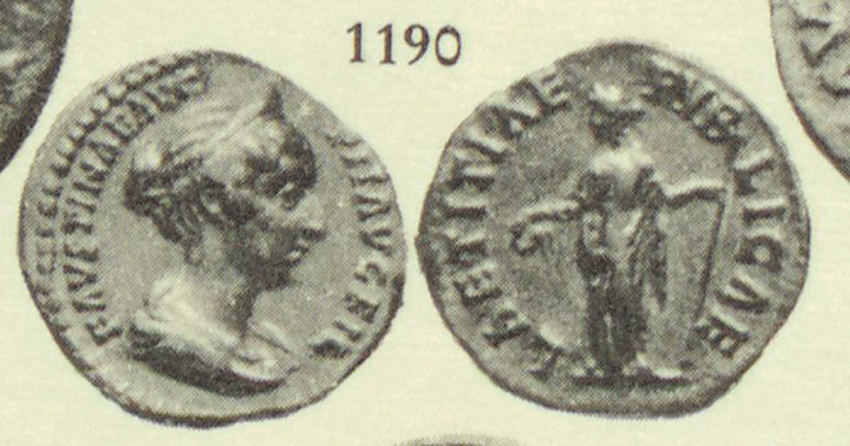
Roman Empire, Italy. Faustina, Rome, c. 147-152 AD
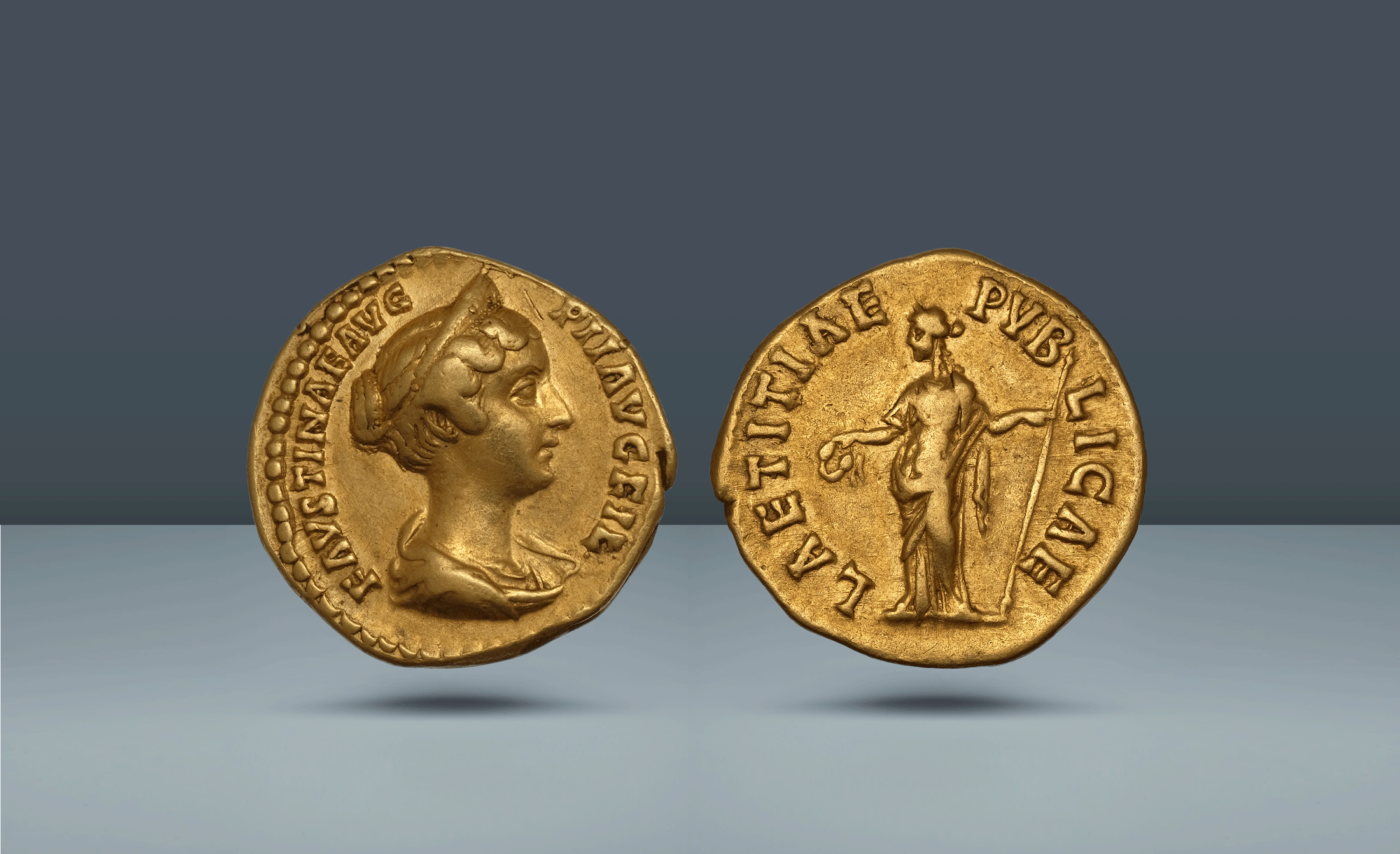
Roman Empire, Italy. Faustina, Rome, c. 147-152 AD
AV Aureus, 7.00g (19.3mm, 12h).
FAVSTINAE AVG PII AVG FIL, draped bust with Stephane r. / LAETITIAE PVBLICAE, Laetitia stands left, holding wreath and scepter
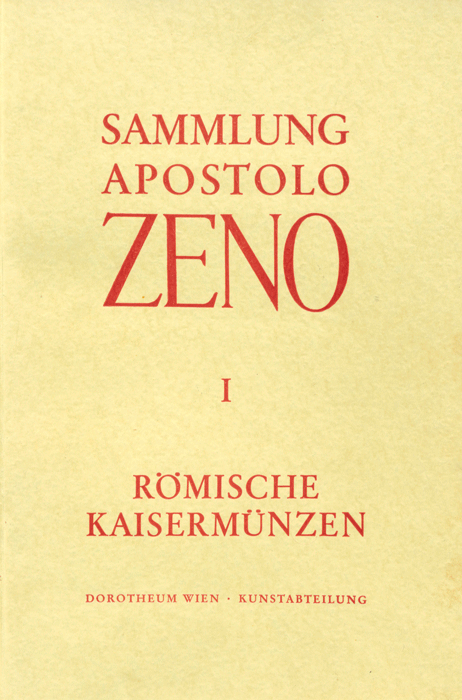
Pedigree: Ex Dorotheum Auction Zeno I, June 1955, Lot 1190 (1.800 hammer), exApostolo Zeno 1668-1750
References: RIC (Antoninus Pius) 506c; Calico 2069; =6,99 g, 12h= III
Grade: Minor wear at the top of hair. Pleasant and from an excellent collection. Good VF+
re1475
Scroll down for more information about this coin.
Apostolo Zeno (1668–1750) occupies an unusual position in the history of collecting. Known to posterity as a man of letters, he assembled one of the most important private coin cabinets of the eighteenth century. Born into an old Venetian patrician family, Zeno co-founded the Giornale de' letterati d'Italia, the first critical literary journal in Italy, and wrote opera libretti set by Scarlatti and Vivaldi, before serving from 1718 as court poet and historiographer to Emperor Charles VI in Vienna. On his return to Venice in 1729 he withdrew from public life, and it was in these later decades that the collection assumed its final form.
Its scale was remarkable. Comprising approximately 11,000 ancient coins, of which nearly 500 of them were gold. Contemporaries judged the cabinet as comparable to the imperial collection itself. In 1747 Zeno offered it to the Augustinian monastery of St. Florian in Upper Austria, whose purchase followed an assessment of its scholarly value by the Jesuit numismatist Erasmus Frölich. There it remained substantially intact for two hundred years. Portions entered the scholarly literature early: Khell's 1767 Vienna edition of Vaillant described and occasionally illustrated Zeno specimens, and Kenner published the St. Florian cabinet's principal pieces in 1871.
The dispersal came only in the mid-twentieth century, when the monastery consigned the collection to Dorotheum in Vienna for three sales: Roman imperial coinage, Augustus to Julian, in June 1955 (2,328 lots); the remaining Roman material with Byzantine, Republican, aes grave, contorniate, Celtic, and gold issues in June 1956; and the Greek series in March 1957, closing at lot 4430. The consequence for provenance research is considerable. Few documented eighteenth-century cabinets remain accessible on the market, and the illustrated Dorotheum catalogues permit secure identification.