
Roman Empire, Italy. Macrinus, 217-218 AD Rome - 1st officina. 3rd emission, c. 218 AD
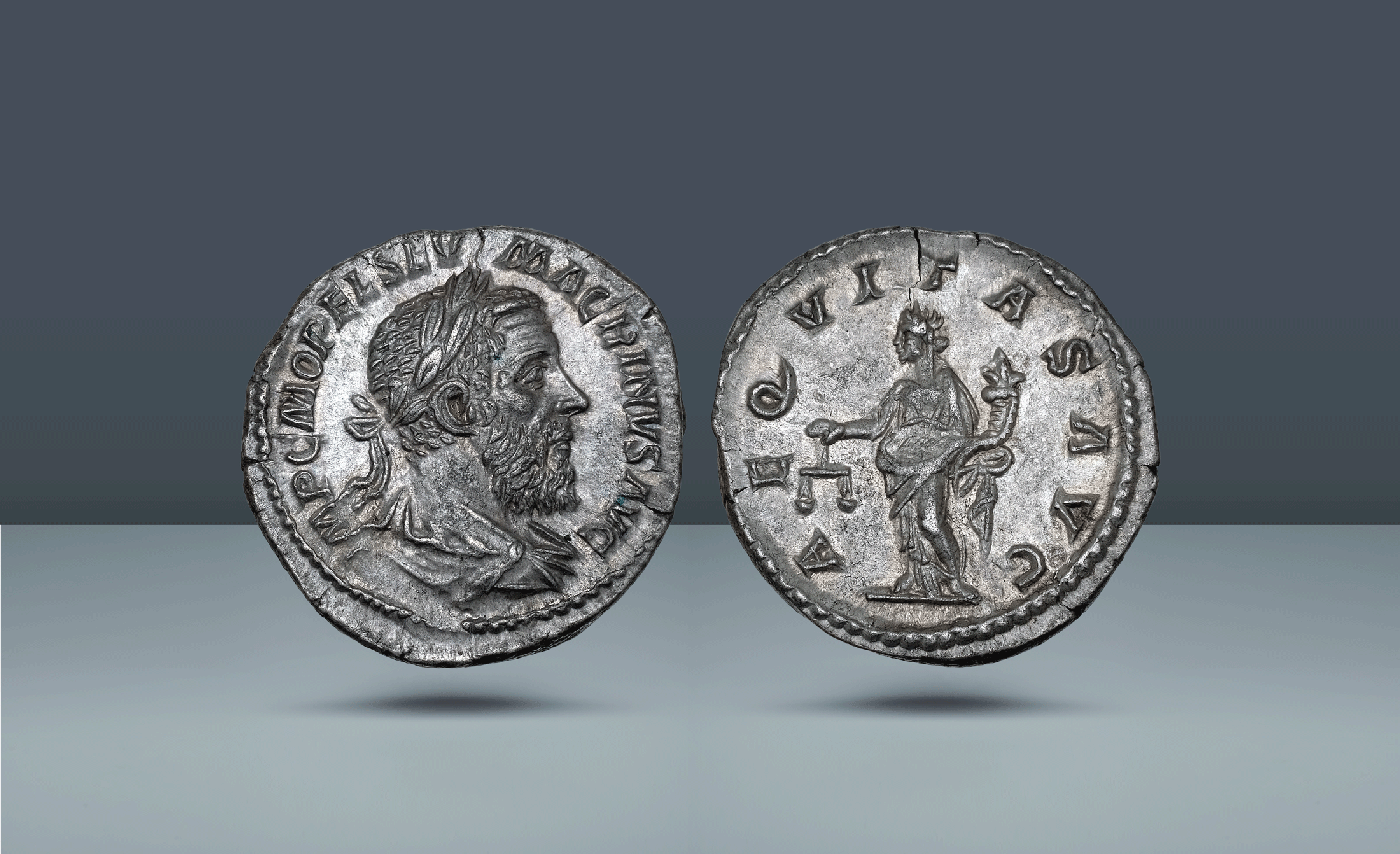
Roman Empire, Italy. Macrinus, 217-218 AD Rome - 1st officina. 3rd emission, c. 218 AD
AR Denarius, 13.37g (18.7mm, 12h).
IMP C M OPEL SEV MACRINVS AVG, Laureate and draped bust right, wearing long beard / AEQVITAS AVG, Aequitas standing left, holding scales and cornucopia
Pedigree: Ex CNG 118, 13 Sept 2021, lot 1116; ex Spink Numismatic Circular CXVI.5 (Ocrt 2008), No. RM3892. From the Trevor Hadley Collection
References: RIC IV 53, Clay issue 3. RSC 2 (Antioch)
Grade: Lightly toned, hairline flan crack at 12h on obverse. Exceptional portrait. Choice EF
re1477
Scroll down for more information about this coin.
Aequitas, the divine personification of equity and fair dealing, occupied a position of particular ideological significance in 3rd century Roman imperial self-presentation. Represented numismatically as a draped female figure bearing a balance and cornucopia, she articulated a dual imperial claim: the just administration of law, and more pointedly the integrity of the coinage itself. This second dimension warrants emphasis. The balance scale held by Aequitas was the instrument of the mint used to verify the coins weight, and her iconography converges closely with that of Moneta, the tutelary deity of coin production. The legend AEQVITAS AVG(usti) thus functioned as an implicit assertion that imperial currency remained of full and honest standard.
The historical context however renders this assertion increasingly ironic. Across the 3rd century, and acutely during the crisis decades following 235, successive administrations debased the antoninianus from a substantially silver denomination to a billon issue of negligible fineness by the reign of Gallienus. Paradoxically, the frequency of Aequitas types increased as monetary integrity deteriorated, a pattern scholars have read as compensatory propaganda, an intensifying rhetorical claim to precisely the virtue the state could no longer demonstrate.