Roman Empire, Italy. Marcus Aurelius, 161-180 Rome, c. 162/163 AD
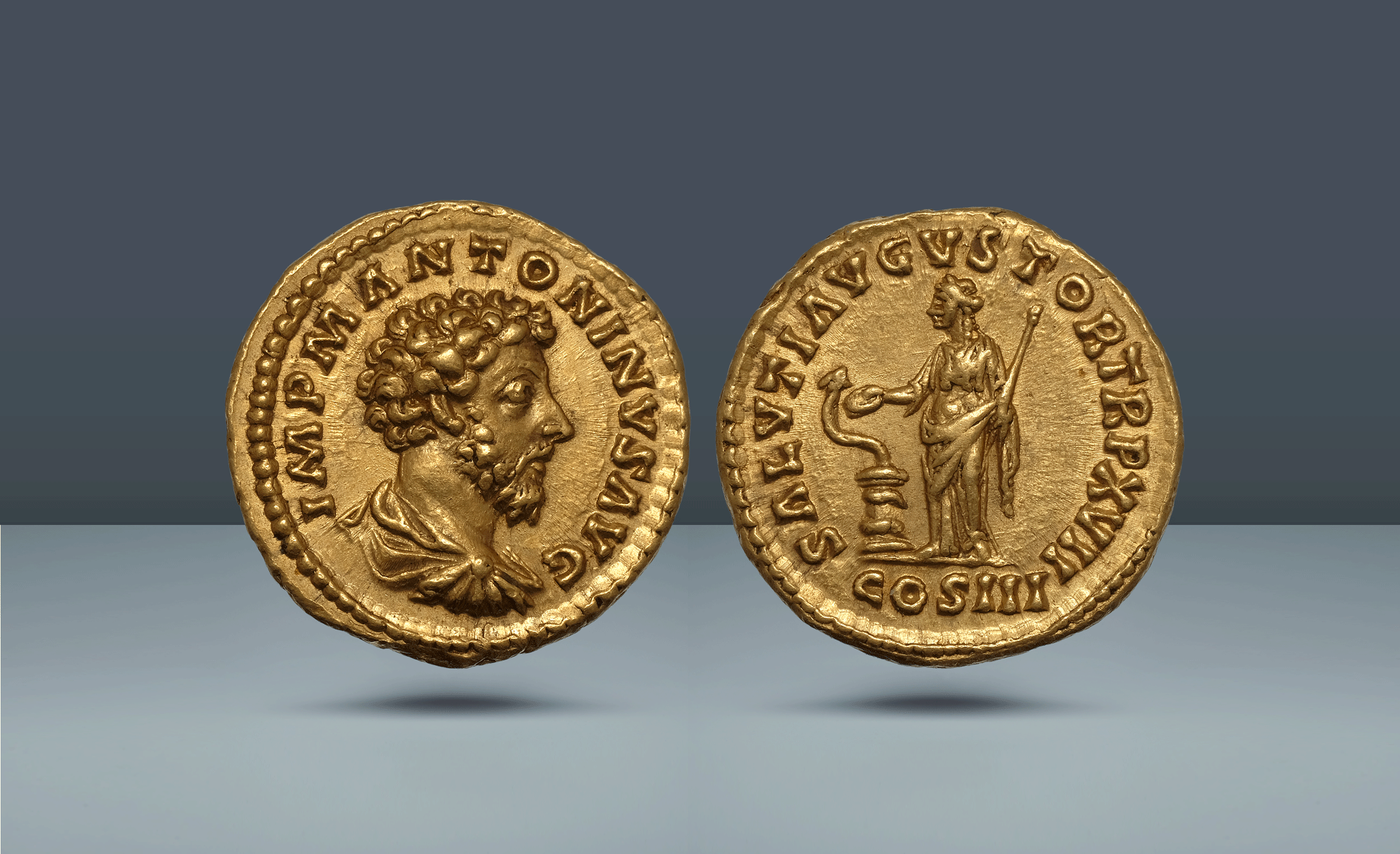
Roman Empire, Italy. Marcus Aurelius, 161-180 Rome, c. 162/163 AD
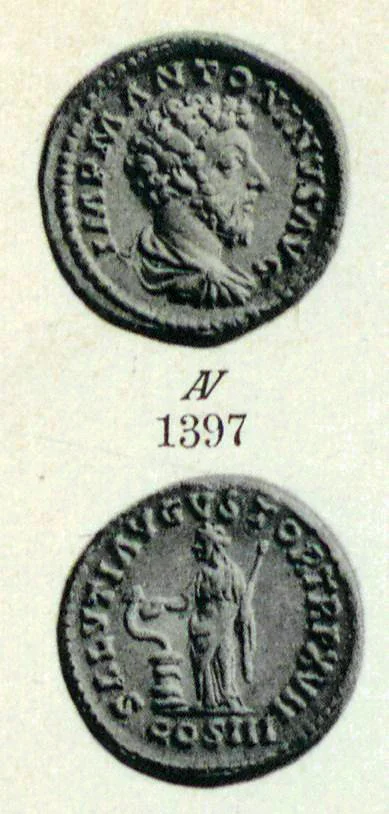
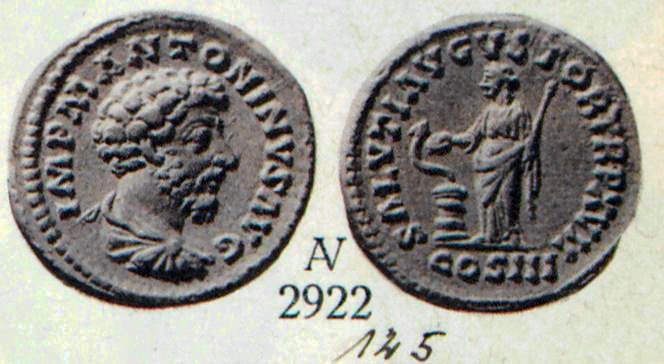
AV Aureus, 7.23g (19mm, 6h).
Draped bust to r. / Salus standing to l. with a scepter, feeding a serpent coiled around an altar.
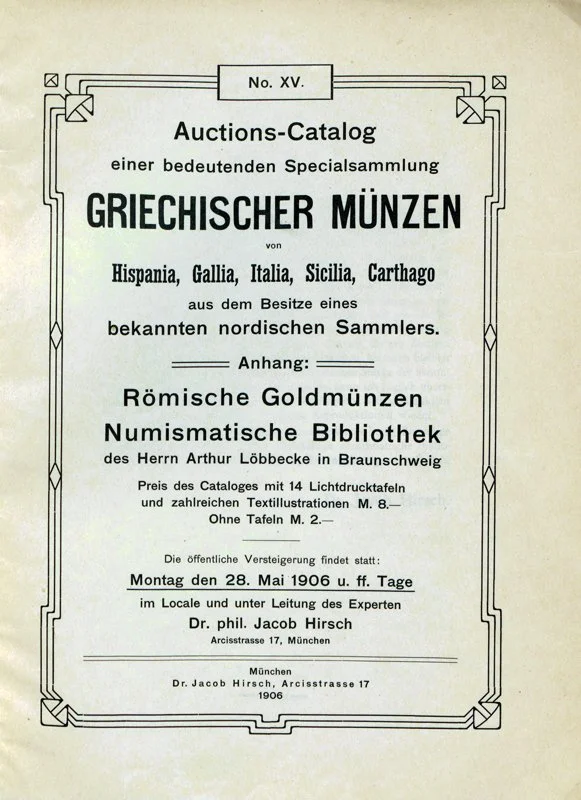
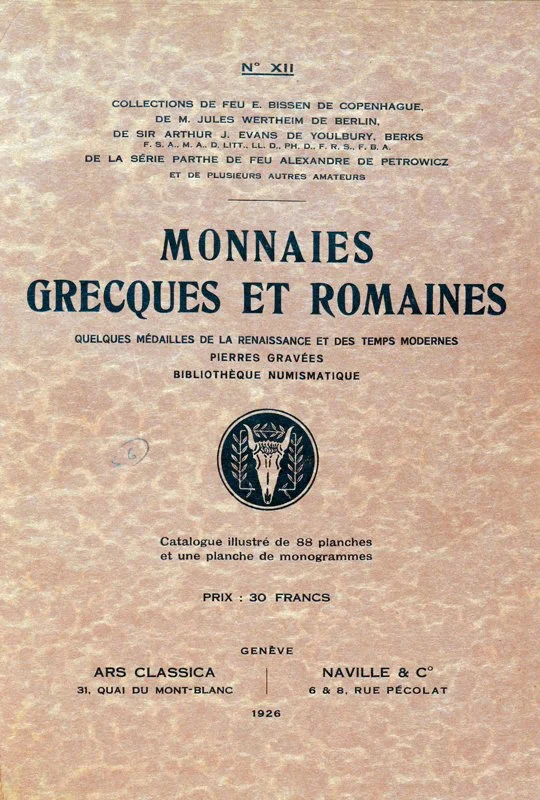
Pedigree: Ex Auktion Grün 90, Heidelberg 2025, lot 250. Previously acquired from Münzen und Medaillen AG, Basel. Ex Jacob Hirsch XV, Munich 1906, Lot 1397. Ex Ars Classica XII, Luzern 1926, Lot 2922.
References: BMC 226, Calicó 1915, Coh. 560, RIC 77.
Grade: Nicely struck with full details. A wonderful old pedigree to match. Mint State
re1464
Scroll down for more information about this coin.
Struck in 162/163 CE, this aureus depicts Salus feeding a serpent coiled around a lit altar, a classic appeal to the goddess of public health. However, the timing of this issue is what makes it so historically resonant. Within just a few years of its striking, the Roman Empire would be devastated by what we now call the Antonine Plague.
The timeline begins in 161 CE, when Marcus Aurelius dispatched his co-emperor Lucius Verus east to confront the Parthian invasion of Armenia. After several years of campaigning, Roman legions sacked the Parthian capital of Ctesiphon in 165 CE. However, victory came at a horrifying cost. Returning soldiers carried back a mysterious disease, thought to be smallpox, which the contemporary physician Galen observed firsthand and described as causing high fevers and black pustular rashes. By 166 CE, the plague had reached Rome itself. Modern estimates suggest the pandemic killed between 5 and 10 million people over roughly 15 years. Notably, Lucius Verus died in 169 CE, possibly from the plague, while Marcus Aurelius would succumb to it in 180 CE. In hindsight, this coin's prayer for the health of both Augusti carries a rather tragic weight.